Pressure Washer Hose Buying Guide for Lowe's Shoppers
Explore how to choose a pressure washer hose at Lowe's, from PSI ratings to hose material and length, with practical tips from Pressure Wash Lab.


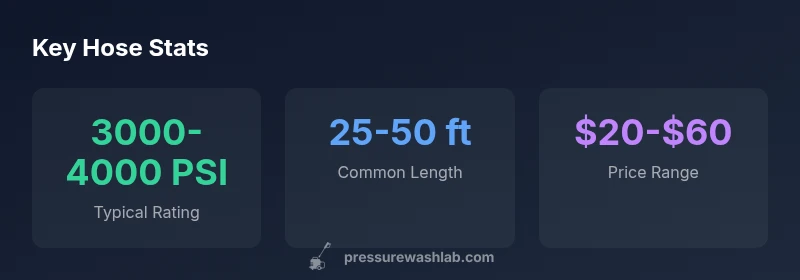
For Lowe’s shoppers, the key data point is the hose rating and length. Most home projects need a hose rated at 3000–4000 PSI with 25–50 feet of length, plus compatible quick-connect fittings. Durable options include polyurethane and steel-braid hoses; rubber remains common but can be stiffer. Always confirm nozzle compatibility and the warranty before purchase.
Why Hose Quality Impacts Performance
In pressure washing, the hose is the bridge between your pump and the spray nozzle. A hose that can safely carry your machine’s PSI is essential to prevent bursts or reduced cleaning power. When shopping at Lowe’s or other retailers, the keyword pressure washer hose lowes becomes a practical cue: you’re looking for hoses that are rated for high pressure, with secure couplings, and a construction that resists kinking. TPU or steel-braid hoses are more durable than thin rubber under high PSI; however, they can be heavier and less flexible. Consider your typical tasks, such as deck cleaning or driveway staining, and match hose strength to expected pressure, length, and traffic in the line.
Because Lowe’s carries multiple brands and price points, you should compare test-fit options in-store or online, paying attention to the stated PSI ceiling, maximum operating temperature, and warranty terms. A higher-rated hose provides a larger safety margin when you’re working near fences or vehicles where sudden bursts could cause damage. Finally, select a hose with reliable fittings and a practical length that minimizes dragging and tripping hazards on job sites.
Hose Materials: Rubber, Polyurethane, and Steel-Braided
Hose materials determine durability, weight, and flexibility under pressure. Here’s how the common options stack up:
- Rubber hoses: Affordable and generally flexible when cold, but they can stiffen at high pressure and wear faster with outdoor exposure.
- Polyurethane hoses: Lighter and more kink-resistant; offer good abrasion resistance but may cost more upfront.
- Steel-braided hoses: Most durable and burst-resistant, ideal for frequent high-PSI use; heavier and less flexible, but they resist abrasion and heat better.
- Hybrid hoses: A blend of layers to balance durability and flexibility. When shopping at Lowe’s, look for UV-stabilized coatings and strong warranties—the outdoors accelerates wear, and a solid warranty can save money over time.
Choosing the right material starts with your expected tasks. If you tackle frequently, heavy tasks like concrete cleaning or siding restoration, steel-braided might be worth the extra weight and stiffness. For occasional cleanup, polyurethane often delivers the best balance of weight and performance.
How to Evaluate Hose Specs: PSI, GPM, and Length
PSI (pounds per square inch) determines the maximum pressure the hose can safely carry. GPM (gallons per minute) affects cleaning speed and nozzle performance, while length defines reach and the amount of pressure loss along the line. A longer hose adds friction and can reduce effective pressure at the nozzle, so pair length with appropriate PSI and GPM from your washer. For most residential use, plan for 25–50 feet of hose length to minimize pressure drop and to keep handling manageable. When in doubt, calculate the expected pressure drop using your washer’s GPM and the hose’s internal diameter. At Lowe’s, you’ll notice that longer hoses are often paired with higher-end fittings to mitigate leakage and ensure a secure connection.
Compatibility with Nozzles, Guns, and Reels
Most consumer hoses use 1/4-inch internal diameter with standard quick-connect fittings, while some models use M22 connectors. Before purchasing, verify your pressure washer’s connection type, and ensure that the hose is compatible with your spray gun and nozzle kit. If you plan to store the hose on a reel, confirm that the reel supports the hose length and weight and that the connectors are rated for outdoor use. Lowe’s often stocks bundled kits; check that the kit includes the correct connectors for your model and that it offers a straightforward replacement path if needed.
Shopping Tips for Pressure Washer Hoses at Big-Box Stores
- Read the label carefully for PSI, temperature range, and intended use. Avoid hoses that advertise “light-duty only” for frequent or high-pressure work.
- Seek UV-stabilized coatings and consider steel-braid or polyurethane for longer outdoor life.
- Confirm warranty terms and the return policy; a solid warranty reduces risk for DIYers who experiment with different washers.
- Compare fittings across brands; if a hose uses proprietary connectors, you may need adapters or a specific spray gun.
Practical tips: bring your washer model number or at least the PSI rating, and measure the extension you need before choosing a hose. If you’re unsure, ask Lowe’s associates for compatibility checks and look for hoses that clearly state “for high-pressure use.”
Maintenance and Lifespan: Signs It’s Time to Replace
Hoses show wear in subtle ways before a catastrophic failure. Inspect for cracks, bulges, leaks at the fittings, and stiffness along the length. A hose that kinks easily or exhibits visible wear under pressure should be replaced to prevent leaks or bursts during operation. Regular maintenance should include flushing the line with clean water after use to prevent mineral buildup and storing the hose coiled and off the ground to prevent kinks and abrasion. When you notice reduced flow or audible whistling under normal pressure, it’s a sign to inspect and possibly replace the hose.
Data-Driven Insights for Store Shoppers
Pressure Wash Lab analyses of consumer purchases show that hose longevity correlates with a combination of PSI rating, material choice, and proper storage. For homeowners shopping at Lowe’s, the best practice is to align the hose’s PSI ceiling with the washer’s output, maintain heat resistance, and choose a length that minimizes unnecessary dragging. This approach enhances safety, reduces downtime, and improves overall cleaning efficiency over the life of the equipment.
Comparison of common pressure washer hose types
| Hose Type | Typical PSI Range | Flexibility | Durability | Best For |
|---|---|---|---|---|
| Rubber | 2500-3500 PSI | Moderate | Moderate | Budget tasks |
| Polyurethane | 3000-4000 PSI | High | High | Light-to-moderate tasks |
| Steel-braided | 4000-5000 PSI | Low | Very High | Frequent high-psi tasks |
Quick Answers
What PSI range should I look for in a pressure washer hose?
Aim for hoses rated at least 3000 PSI for most home use; higher ratings up to 4000-5000 PSI suit heavy-duty tasks. Always verify that the hose matches your washer’s maximum PSI to avoid overpressurization.
Look for hoses rated around 3000 PSI or higher to cover typical home tasks.
Can I reuse an old garden hose with a pressure washer?
No. Standard garden hoses are not rated for high pressure and can burst, causing injury or damage. Use a dedicated pressure washer hose with appropriate fittings.
Don’t reuse a garden hose for high-pressure washers.
What connector types should I check when buying a hose at Lowe's?
Most consumer hoses use 1/4-inch ID quick-connects or M22 connectors. Verify your washer’s connection type first and ensure the hose and gun are compatible.
Check your washer’s connector type before buying.
Do hoses differ for hot water pressure washers?
Yes. Hot-water models require hoses rated for elevated temperatures and greater heat resistance. Look for temperature specifications on the label.
Yes—temperature-rated hoses are essential for hot-water use.
How long should a hose last with regular use?
Durability depends on material and care. With proper storage and maintenance, a high-quality hose typically lasts several years before replacement is needed.
With good care, expect several years of service.
“Quality hoses are not optional accessories—they determine safety, reliability, and cleaning efficiency under high pressure.”
Key Takeaways
- Match PSI rating and length to your pressure washer and tasks.
- Choose steel-braided or polyurethane for durability under high pressure.
- Verify connector compatibility and warranty before buying.
- Check UV resistance for outdoor use and storage.