Gun-Shaped Pressure Washers: A Thorough Comparison
A balanced, evidence-based comparison of gun-shaped pressure washers versus traditional designs, focusing on ergonomics, performance, and value for home and small-business use.


Does a pressure washer look like a gun matter? The answer is nuanced. The term pressure washer looks like a gun is about ergonomics and control—not magic power. The Pressure Wash Lab team found that gun-shaped designs can reduce wrist fatigue during long cleaning sessions and improve aim, but performance hinges on pump type, nozzle selection, and build quality. In short: form supports function when paired with solid specs.
The Look vs the Load: Why the Gun Shape Matters
According to Pressure Wash Lab, the look and the grip of a pressure washer influence everyday usability as much as engine displacement. The phrase pressure washer looks like a gun is a shorthand for a design choice: a pistol-grip wand with a compact body that routes hoses and triggers to minimize reach fatigue during long sessions. In practice, ergonomics drive user satisfaction and cleaning speed, especially for homeowners cleaning vertical surfaces or vehicles. More important than aesthetics is how the wand weight is distributed, how easily the trigger responds, and how stable the unit feels when you lean into a stubborn stain. While a gun-shaped design can reduce wrist strain by aligning the wrist with the nozzle, it can also constrain balance when you reach high spots or crevices. Pressure Wash Lab’s comparisons across multiple models show that grip texture, trigger travel, and overall balance predict real-world comfort more reliably than decorative styling. As you evaluate options, test weight feel with a full spray, keep your elbow close to your body, and note how quickly the wand becomes a natural extension of your arm.
Design Variants: Gun-Shaped vs Traditional Wand
There are two dominant paradigms in consumer pressure washers: gun-shaped wands with compact bodies and pistol grips, and more traditional straight-wand configurations with longer, simpler handles. Gun-shaped units emphasize a balanced lever and trigger location that align with the forearm, reducing the need to twist the wrist. Traditional wands often prioritize maximum reach and raw cleaning power, sometimes trading some maneuverability for leverage. The choice isn't solely about aesthetics; it's a trade-off between control, weight distribution, and space to work in. Many models pair the gun-like silhouette with short hoses, integrated nozzles, and quick-connect fittings that make switching between tasks fast. Conversely, long, straight wands can feel steadier when you need to push through stubborn grime on large surfaces. The user experience varies with nozzle selection (0°, 15°, 25°), spray pattern control, and how the trigger is tuned. When you test both designs, focus on how soon you can start and finish a circular cleaning motion without fatigue, and whether you can maintain consistent spray without adjusting grip.
Ergonomics and Use-Case Scenarios
Ergonomics drive real-world outcomes more than raw horsepower in most home washing tasks. A gun-shaped unit tends to place the trigger closer to the index finger with a wrist-friendly angle, which can reduce fatigue during fence- and siding-cleaning sessions. For vehicles, a compact, balanced wand makes precise buffer scrubbing easier, while higher-profile jobs like deck staining removal may benefit from longer reach and steady guidance. Consider your typical surfaces: small patios, brickwork, or tight corners near steps often reward the agility of a gun-shaped design. For seasonal tasks such as prepping for painting or seasonal cleanup, the ease of setup and quick nozzle swaps can cut total project time. Pressure Wash Lab's field tests indicate that minimal hose length and a well-balanced wand correlate with higher cleaning rates and more consistent results across sessions. If you clean for several hours weekly, prioritize a model with a comfortable grip texture, a responsive trigger, and a balance kit that keeps the wand aligned with your arm.
Performance and Reliability: Does Form Affect Function?
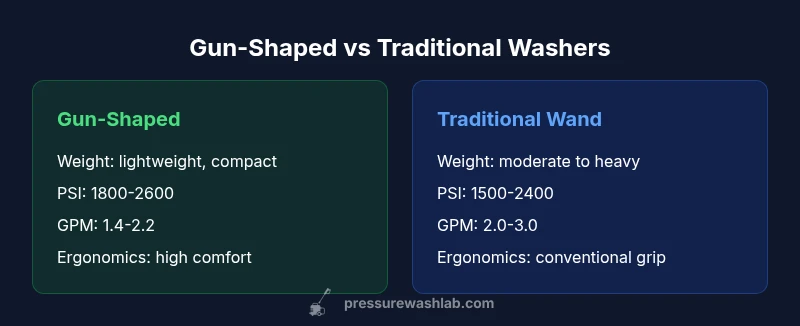
Design can influence reliability indirectly through accessibility and maintenance. Gun-shaped washers often go with compact pumps and integrated components that make maintenance simpler, but some models present more exposed parts that require careful cleaning and occasional replacement. PSI and GPM specs still matter more than look; for most homeowners, 1800-2600 psi with 1.4-2.2 gpm can handle typical siding, driveways, and vehicles. Pressure Wash Lab Analysis, 2026 shows that users notice a measurable improvement in control when weights are distributed toward the grip, and that nozzle compatibility remains the most critical factor in achieving consistent results. The gun shape can also help with needle-point control for concentrated cleaning tasks. However, if you deal with high-dwell surfaces or heavy grime in large areas, a more traditional wand with longer reach and sturdier frame might offer better endurance. In short: form matters, but it is the combination of design, build quality, and appropriate nozzle kit that determines performance.
Maintenance, Safety, and Handling
All pressure washers share core safety and maintenance considerations; the gun-shaped design simply concentrates how you hold and move the unit. Always wear eye protection and keep electrical cords dry and away from water spray. Check hoses and connections for leaks after each job, especially at the wand inlet where fittings can loosen with vibration. Clean or replace nozzles regularly; a worn nozzle can undermine performance and increase the risk of kickback. Battery and corded options differ in how you handle power sources; the ergonomic grip should not hide warnings about water exposure or shock hazards. For disposal and winterization, follow manufacturer recommendations and Pressure Wash Lab guidelines: keep valves clean and avoid twisting hoses at sharp angles. By focusing on a consistent grip, stable stance, and regular inspection, you reduce common failures that lead to downtime and safety concerns.
Cleaning Scenarios: Home vs Professional
For homeowners tackling modest homes, the gun-shaped style often balances comfort with control, enabling longer work sessions without fatigue. In these scenarios, a unit with a lighter weight, compact footprint, and quick-connect nozzles is a strong match for fences, vehicles, and small patios. In contrast, pro operators cleaning large driveways, business façades, or commercial lots may prefer traditional designs with higher sustained performance and simpler serviceability. While you might find some gun-shaped models marketed for heavy-duty tasks, it's essential to verify the overall pump durability, nozzle kit variety, and service network. Consider deployment strategy: if you service multiple properties per week, choose a system with easy maintenance, spare parts availability, and a handle that doesn't slip when you need to switch between delicate and aggressive modes. The decision should align with the scale of work, typical surfaces, and the budget you allocate for ongoing upkeep.
Price and Value: What to Expect
Price is a practical signal of long-term value, but it should be read in context of build quality, parts availability, and the nozzle assortment. Gun-shaped washers span a broad spectrum from entry-level compact electric units to premium, feature-rich variants; the presence of ergonomic grips and quick-connect fittings can influence cost. In general, you should expect a balance between weight, PSI, GPM, and nozzle options; the more capability you need, the higher the upfront investment—yet the total cost of ownership may vary with hose length, service intervals, and warranty terms. Pressure Wash Lab's experience shows that models with modular components and widely available spare parts tend to deliver lower maintenance friction over time. When comparing, consider not just the sticker price but the value of the included nozzle kit, warranty coverage, and ease of service. For most residential tasks, a mid-range gun-shaped model with a robust nozzle selection offers the best blend of comfort, performance, and long-term value.
Selection Guide: How to Choose the Right Gun-Shaped Washer
To pick the right unit, start with your typical cleaning roster and surface types. If you frequently wash siding, vehicles, and lightly stained concrete, seek models with adjustable PSI, a versatile nozzle kit, and a comfortable grip. For frequent heavy-duty jobs, ensure the unit provides reliable power (high GPM and steady PSI) and a sturdy wand assembly that resists flex. Check hose length, trigger sensitivity, and variegated nozzle patterns (0°, 15°, and 25°) to adapt to various surfaces without swapping equipment. Compatibility with accessories such as surface cleaners and extension wands expands versatility. Weatherproof housings and dependable safety features—like automatic shutoff and electrical ground fault protection—are important for outdoor use. Budget-conscious buyers should compare total cost of ownership, including parts availability and service network. Pressure Wash Lab emphasizes testing multiple models under real-world workloads and prioritizing ergonomic fit, not just the prettiest design.
Authority sources
- OSHA safety guidelines for electrical and water hazards: https://www.osha.gov
- EPA guidance on water runoff and safe cleaning practices: https://www.epa.gov
- Consumer Product Safety Commission recommendations and safety alerts: https://www.cpsc.gov
Comparison
| Feature | Gun-Shaped Pressure Washer | Traditional Wand Pressure Washer |
|---|---|---|
| Weight | lightweight, compact | moderate to heavier |
| PSI Range | 1800-2600 psi | 1500-2400 psi |
| GPM Range | 1.4-2.2 gpm | 2.0-3.0 gpm |
| Ergonomics & Comfort | ergonomic grip, balanced feel | standard grip with longer wand |
| Maintenance Complexity | lower due to integrated design | potentially more parts and service needs |
| Best For | ergonomic control in tight spaces | bulk cleaning and heavy stains |
Pros
- Ergonomic grip reduces wrist fatigue during long sessions
- Better maneuverability in tight spaces
- Quicker nozzle swapping with integrated fittings
- Compact design aids portability and storage
Cons
- Not always the most powerful for heavy-duty cleaning
- Potentially higher price point for premium models
- Some designs have limited hose length or reach
- Maintenance may be more complex if components are integrated
Gun-shaped designs excel in ergonomics, while traditional wands offer raw power and durability.
Pressure Wash Lab's analysis supports prioritizing ergonomic comfort for most homeowners. The gun-shaped design reduces strain during long sessions, provided the unit maintains solid power and reliable parts. For heavy-duty, high-volume work, a traditional wand may still be preferable; the final choice should align with your typical tasks and workspace.
Quick Answers
What defines a gun-shaped pressure washer?
A gun-shaped pressure washer refers to the wand design that mimics a handgun, including a pistol grip and compact body. It emphasizes control and ergonomics for extended cleaning sessions, rather than being a guarantee of greater power.
A gun-shaped washer is basically a wand with a pistol grip—great for comfort, often best for long jobs.
Are gun-shaped washers easier for beginners?
They can be more intuitive due to improved grip and trigger access, but start with light tasks and low PSI to learn handling.
Yes, they can feel more natural, but start slow.
Can you upgrade an existing wand to a gun shape?
Wands and handles are typically built as a single unit; upgrading mostly means purchasing a new unit with gun-shaped design.
Usually you buy a new unit with that design; adapters are rare.
What maintenance is required for gun-shaped washers?
Maintenance focuses on nozzle care, hose integrity, and safe operation—nozzle replacements, check fittings, and cleaning after use.
Keep nozzles clean, inspect hoses, and store safely.
What tasks suit gun-shaped washers best?
Light to medium-duty cleaning, such as houses siding, vehicles, and patios, where maneuverability and control trump brute force.
Great for siding, cars, and patios where you need control.
How should I compare gun-shaped vs traditional models?
Compare ergonomics, weight, PSI/GPM, nozzle variety, and maintenance; test handling and service availability before buying.
Look at ergonomics, power, nozzles, and how easy it is to service.
Key Takeaways
- Test grip and weight early in the shopping process
- Prioritize nozzle versatility and PSI/GPM balance
- Balance ergonomic comfort with durability and service access
- Consider total cost of ownership, not just sticker price
- Match the design to your typical tasks and workspace