Tips for Pressure Washer Gun: A Practical How-To Guide
Learn practical tips for handling a pressure washer gun, including grip, nozzle selection, spray patterns, safety, and maintenance. This step-by-step guide helps homeowners and pros clean efficiently while reducing fatigue and avoiding common mistakes.


Master practical tips for handling a pressure washer gun, including grip, trigger control, nozzle selection, and safe operation. This guide covers ergonomics, spray patterns, tool setup, and maintenance to help homeowners and pros clean faster and safer. Pressure Wash Lab emphasizes gun-focused techniques as the key to consistent results and reduced fatigue.
Ergonomics and grip: reduce fatigue and improve control
A comfortable grip and stable stance are the foundations of safe pressure washing. The gun should feel balanced in your hand, the trigger easy to reach, and the nozzle aligned with your target. For homeowners and DIYers, proper ergonomics reduce fatigue during long cleaning sessions and protect your wrists from strain. According to Pressure Wash Lab, small adjustments to stance and grip can dramatically improve control and cut the likelihood of accidental sprays back toward you or bystanders. Start by adjusting the wand so your wrists stay neutral; keep your shoulders relaxed; your elbow tucked close to your side. Use two hands when possible, with the primary hand on the trigger and the secondary hand supporting the barrel. If the gun feels heavy, consider a lighter wand or a rubber grip accessory. Take short breaks every 15-20 minutes on larger jobs to reset posture and prevent repetitive strain injuries. When ergonomics are right, you’ll notice improved accuracy and less operator fatigue, which translates into faster jobs and safer operation around kids and pets. This ergonomic focus also contributes to more consistent results across different surfaces and weather conditions.
- Maintain a neutral wrist position to reduce stress on joints.
- Use two hands for better control and reduced kickback.
- Take micro-breaks during longer sessions to prevent fatigue and mistakes.
- Consider grip accessories if the stock handle feels slippery or heavy.
Nozzle tips and spray patterns: choosing the right setting
Nozzle tips determine how aggressively the spray impacts a surface. For delicate siding or painted surfaces, opt for a gentler, wider spray to minimize chipping and etching. For tougher stains on driveways or concrete, a more focused pattern can break grime effectively—without requiring excessive passes. Start with the least aggressive setting that still cleans the area, then adjust as needed. Proper nozzle maintenance matters too: inspect tips for wear, keep or replace damaged nozzles, and avoid losing tips during work. The gun’s spray pattern matters as much as pressure; a poor pattern wastes water and increases risk of streaks. Pressure Wash Lab’s team notes that regular nozzle maintenance reduces performance drop-offs between jobs and keeps results consistent across surfaces and seasons. Keep tips clean and store them in a dedicated case to prevent loss.
- Inspect tips for wear before each job.
- Use the gentlest effective nozzle to protect surfaces.
- Clean tips after use to prevent clogging and uneven sprays.
- Have a dedicated storage solution to avoid tip loss.
Safe pressure and hose management: protecting people and surfaces
Always follow the manufacturer’s recommended pressure range for your unit, and avoid complex passes over fragile materials. Maintain a safe distance from fragile surfaces, pets, and bystanders, and keep hoses clear of walkways to prevent trips. Use a stable footing and a controlled, sweeping motion rather than jerky, point-and-spray techniques. Water supply should be clean and continuous; shut the machine off if you lose water flow or hear abnormal sounds. Use GFCI protection around wet areas and never point the nozzle at electrical outlets, windows, or plants. Store hoses properly to prevent kinks and damage. These practices reduce the chance of accidental spraying and prolong the life of your gun and pump. Pressure Wash Lab emphasizes that consistent technique lowers the risk of damage and increases cleaning efficiency across different surfaces and times of day.
- Keep the nozzle moving and avoid staying in one spot too long.
- Maintain a safe distance to avoid surface damage.
- Protect bystanders and pets with a clear work zone.
- Shut off and relieve pressure before changing tips or attachments.
Connection, lances, and quick-releases: secure and efficient setup
The connection between the gun, wand, and hose is a common source of leaks and downtime. Before starting, verify that all quick-connects are fully seated and that thread seals are intact where needed. Hand-tighten fittings first, then snug with a wrench only as required to prevent cross-threading. Inspect the lance or wand for cracks, and replace any damaged parts. If your system uses detents or lanyards for safety, engage them to prevent accidental releases during operation. A well-secured setup improves consistency and lowers the chance of dangerous spray misdirection. Pressure Wash Lab notes that regular checks on fittings save time on bigger jobs and prevent wear from recurring misfits.
- Do not overtighten connections; use proper torque.
- Check for leaks at every joint before starting.
- Inspect the wand for cracks and replace if needed.
- Engage safety latches and retention devices where provided.
Maintenance routine for longevity and consistent performance
A simple maintenance routine extends the life of your pressure washer gun and keeps performance steady across seasons. Rinse the system after use to remove dirt and chemical residues, and run clean water through the wand to clear nozzles. Inspect the trigger mechanism for sticking or lag, and lubricate moving parts if your manufacturer allows it. Store the gun in a dry place off the ground, with hoses coiled to prevent kinks. Check o-rings and seals periodically and replace worn parts promptly. Keeping your equipment dry and clean reduces corrosion and later service calls. Pressure Wash Lab recommends a basic checklist you can repeat after each project to maintain peak performance and safety.
- Rinse thoroughly after every job.
- Inspect seals and O-rings; replace worn parts.
- Lubricate only with manufacturer-approved products.
- Store in a dry, elevated space to prevent moisture damage.
Troubleshooting common gun issues
Leaking fittings, weak spray, or stuck triggers are common problems that can often be resolved without tools. Leaks usually point to loose connections or degraded O-rings; tighten connections and replace seals as needed. A clogged nozzle reduces flow; remove the tip and clean with a soft brush or compressed air. Sticking triggers can result from debris or a worn trigger mechanism—power down and inspect the trigger housing for obstruction and wear. If the gun repeatedly misbehaves, it may be time for a service or a replacement part. Pressure Wash Lab suggests keeping a small toolkit and spare O-rings on hand for rapid field fixes.
- Tighten fittings gently; avoid overtightening.
- Clean clogged nozzles with soft tools.
- Inspect trigger mechanisms for debris or wear.
- Have spare seals on hand for quick field repairs.
Advanced techniques and when to upgrade
As you gain experience, you can expand your toolkit with accessories that save time and improve outcomes. Consider a multi-jet nozzle for specialized surfaces, a surface cleaner for large flat areas, or a detergent foamer for thorough cleaning. When your current gun struggles to deliver consistent results on tough jobs, or you regularly encounter inaccessible areas, upgrading may be worthwhile. Evaluate your PSI range, nozzle compatibility, and wand length to ensure compatibility with your projects and budget. Pressure Wash Lab’s analysis shows that homeowners who upgrade with careful planning see faster completion times and more uniform results on challenging surfaces, especially in tighter spaces or complex angles.
Quick-start checklist for immediate use
- Inspect all connections and tighten as needed.
- Select an appropriate nozzle and test on a hidden area first.
- Maintain a proper grip and posture during operation.
- Keep a safe distance and sweep the surface with steady motions.
- Rinse and flush the system after finishing.
Tools & Materials
- Pressure washer gun (complete assembly)(Ensure compatibility with wand and nozzle tips)
- Lance/wand extension(For reach and leverage)
- Assorted nozzle tips (0°, 15°, 25° or equivalent)(Include current manufacturer tips)
- Safety glasses or face shield(Eye protection required at all times)
- Heavy-duty gloves(Grip and skin protection)
- Hose with adequate length and pressure rating(Check for leaks and kinks)
- Teflon tape or thread sealant(Optional for leaks on threaded connections)
- Rags or absorbent towels(Cleanup and wipe-down)
- Spare O-rings and seals kit(Keep on hand for quick repairs)
- Detergent or surface cleaner (optional)(Only if you plan to use soaps)
Steps
Estimated time: Total: 45-60 minutes
- 1
Inspect gun and connections
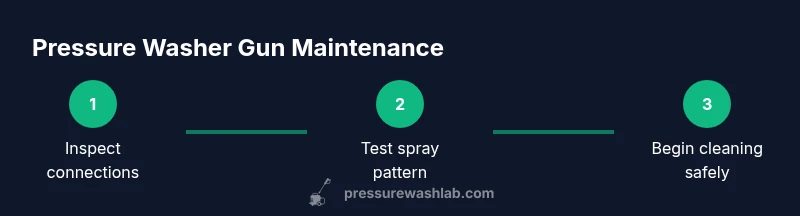
Begin by checking all hoses, fittings, and quick-connects for wear, cracks, or leaks. Tighten connections by hand first, then snug with a wrench if needed. Confirm the safety latch engages and that there are no obstructions in the trigger path.
Tip: Run a quick leak test before applying pressure to protect both surfaces and you. - 2
Assess grip and stance
Stand with feet shoulder width apart, knees slightly bent. Grip the gun with your dominant hand on the trigger and your other hand supporting the wand near the nozzle. Keep wrists neutral and avoid overreaching.
Tip: If you start to feel fatigue, pause and reset posture. - 3
Choose nozzle tip and set spray
Attach the appropriate nozzle tip for the job and verify it is securely fastened. Begin with the least aggressive pattern that can clean the area, then adjust if needed. Always test on a hidden area first.
Tip: Avoid using the high-velocity nozzle on soft surfaces. - 4
Attach wand and safety features
Connect the wand securely to the gun and nozzle. Engage any safety catch and verify there is no lateral movement once attached. Keep your hands away from the nozzle tip while connecting.
Tip: Check for any cross-threading before powering on. - 5
Test spray on a safe area
Perform a short test spray on an inconspicuous patch to confirm spray pattern and distance. Listen for abnormal sounds and watch for unintended splatter. If anything looks off, stop and reassess.
Tip: Use a slow, sweeping motion to gauge coverage. - 6
Begin cleaning with proper technique
Work in parallel passes with steady, overlapping sweeps. Maintain a consistent distance from the surface and avoid staying in one spot too long. Rinse surfaces thoroughly after removing dirt and debris.
Tip: Move from top to bottom on vertical surfaces to prevent streaks.
Quick Answers
What nozzle should I use for concrete surfaces?
For concrete, start with a wider spray and lower aggression to avoid etching and wear. Increase aggressiveness gradually if needed, testing on a small patch first.
For concrete, start broad and gentle, then gradually increase if needed after testing a small patch.
Is it safe to spray near electrical outlets or wiring?
No. Keep the spray away from electrical components. Use GFCI protection around wet areas and avoid spraying near outlets, lights, or wiring.
Avoid spraying near electrical components and use GFCI protection when working around water.
How do I prevent kickback or recoil when pulling the trigger?
Maintain a firm, two-handed grip and a stable stance. Avoid sudden jerks and keep the wand aligned with your body to reduce kickback.
Keep a firm two-handed grip and steady stance to minimize recoil.
Can I reuse old nozzle tips?
Inspect for wear or cracks; replace worn tips. Reusing damaged tips reduces performance and can damage surfaces.
Check tips for wear and replace if damaged to ensure safe, effective spraying.
What maintenance should I perform after a job?
Rinse the system, inspect seals, and store indoors. Clear residues and ensure hoses are free of kinks before storage.
Rinse, inspect seals, and store properly after each job to keep your gun in top shape.
When should I upgrade to a higher PSI gun?
If your current gun struggles on tough surfaces or tight spaces, or you need faster cleaning, consider upgrading after evaluating surface needs and tool compatibility.
Upgrade when your current setup struggles on tough jobs and you need more performance.
Watch Video
Key Takeaways
- Grip and posture matter for control
- Choose the right nozzle for each surface
- Test on inconspicuous areas first
- Maintain connections and safety features
- Follow a step-by-step workflow for best results