How to Use a Pressure Washer Gun: Step-by-Step Guide
Master the right technique, safety practices, and a detailed step-by-step guide for using a pressure washer gun on driveways, siding, vehicles, and outdoor surfaces.


Learn to operate a pressure washer gun safely and effectively. This quick guide covers nozzle selection, distance, trigger control, and basic safety. You’ll perform a safe test, choose the right nozzle for the task, and apply steady passes to avoid streaks. With the right setup, you can clean driveways, siding, and outdoor surfaces more efficiently.
Why mastering the pressure washer gun matters
A properly used pressure washer gun increases cleaning power while protecting your investment. When you pull the trigger, the high-pressure water stream can dislodge dirt quickly, but it can also damage surfaces if misused. According to Pressure Wash Lab, operators who verify nozzle choice, maintain consistent distance, and control the trigger achieve better results with less rework. This guide helps homeowners and DIY enthusiasts understand how to use the gun safely and effectively across driveways, siding, fences, and vehicles. By building a routine you apply every time, you reduce surface damage and exposure to spray-back.
Safety first: PPE, setup, and environment
Safety is non-negotiable when using a pressure washer gun. Put on eye protection, gloves, and sturdy footwear. Check hoses and fittings for wear before you power up. Clear the work area of people or pets, and cover sensitive plants or windows. Choose a clean, dry day to avoid slip hazards, and never point the wand at people, animals, or fragile surfaces. A quick safety checklist at the start ensures you avoid common injuries and equipment damage.
Understanding the gun components
Your pressure washer gun consists of a trigger, a wand, a quick-connect nozzle tip, and a safety latch. The nozzle tip determines the spray pattern and cleaning force; the trigger controls flow; the wand length helps you reach awkward areas without bending. Keep the latch engaged when not in use to prevent accidental spray. Inspect O-rings and connectors for wear and replace damaged parts promptly. Knowing these parts helps you pick the right tool for each job and avoid misfires that could damage surfaces.
Nozzle selection and cleaning tasks
Choosing the right nozzle is critical to balance cleaning power with surface safety. Wider spray patterns are gentler on soft surfaces like vinyl siding, while narrow angles cut through stubborn grime on concrete. For delicate surfaces, start with a broad spray and gradually move to more focused patterns only if needed. Avoid holding the nozzle too close to the surface, and keep the wand angled slightly downward to prevent spray from peeling paint or driving water under siding seams. Distance and angle matter more than raw pressure in many cases.
Test run and surface assessment
Before tackling a full job, test on a small, inconspicuous patch to observe how the surface responds. Note whether the spray leaves etching marks, streaks, or water intrusion. Adjust nozzle type and pressure as needed based on the test patch. Reset your stance to maintain balance, and ensure the nozzle is clean before continuing. If a surface looks strained, pause and switch to a gentler method or a different cleaning approach.
Step-by-step technique for common surfaces
Concrete and paver surfaces respond well to steady, overlapping passes with a medium spray pattern. For wooden decks, use a wider pattern and keep movement slow to avoid gouging. For vinyl siding, maintain a distance and use a gentle angle to push dirt outward rather than driving water behind panels. For vehicles, hold the wand at a safe distance and steer clear of chrome trims and seals. Always finish with a rinse to remove leftover debris.
Maintenance, detergent use, and storage
Rinse the system after use to clear detergent and prevent chemical buildup. If you use detergents, choose a product compatible with your unit and rinse thoroughly. Detach hoses and store in a dry area away from direct sun. Inspect the nozzle tips for wear and rotate them to distribute wear evenly. Regular maintenance reduces the risk of sudden failures and extends the life of your pressure washing gear.
Common mistakes and how to avoid them
Rushing through a job leads to surface damage or incomplete cleaning. Jumping between nozzle sizes without testing can cause streaks and burns. Using hot water or hot surfaces increases the risk of injury and chemical reactions. Neglecting safety gear and proper ventilation can lead to exposure to cleaners. By slowing down, testing first, and following a plan, you avoid most errors and save time overall.
Safety cooldown and aftercare
Once you finish, give the system a cooldown by running clean water through the pump briefly and wiping down the wand. Empty and rinse any detergents, then cap the ends of hoses to prevent dust intrusion. Store the gun with the trigger locked and the wand resting in a safe cradle. Pressure Wash Lab recommends performing routine inspections after each project to catch wear early and keep performance consistent.
Quick-start checklist before you begin
Create a simple pre-job checklist: safety gear, equipment checks, nozzle selection, test patch plan, and a daylight-friendly workspace. Confirm you have clear space, protective covers in place, and the correct detergent if used. With a plan in mind, you can start quickly and complete tasks more reliably, especially for beginners.
Tools & Materials
- Pressure washer(Ensure it’s in good working order and set to an appropriate PSI range for the surface)
- Pressure washer gun(Integrated trigger, compatible with your wand and nozzle)
- Nozzle tips (0°, 15°, 25°, 40°)(Color-coded tips; keep extra tips clean)
- Adjustable spray wand(For reach and control)
- Detergent compatible with cold-water washers(Only if used; follow manufacturer guidance)
- Safety goggles(Impact-resistant; protect eyes from debris)
- Gloves(Grip and moisture protection)
- Water supply hose and source(Stable water supply; avoid kinks)
- Tarp or drop cloths(Protect plants and windows)
- Sturdy footwear(Non-slip boots recommended)
- Soft-bristle brush(For gentle scrubbing after rinse)
- Surface cleaner attachment (optional)(For large flat surfaces)
- Tire gauge/pressure gauge (optional)(To monitor system pressure)
Steps
Estimated time: 45-75 minutes
- 1
Inspect equipment and prep
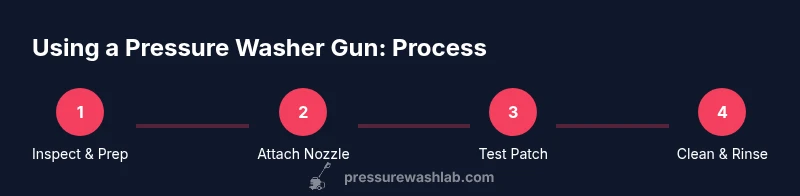
Inspect all components for wear; straighten hoses; choose a safe test area. This reduces the risk of surprises mid-job. Verify you have the right nozzle attached and your PPE is ready. Establish a clean workspace and plan your approach before you power up.
Tip: Take a moment to perform a quick walk-around to spot damaged hoses or leaks. - 2
Attach the correct nozzle
Select the nozzle appropriate for the surface and goal; attach it securely to the wand. Ensure the nozzle clicks into place and is tight to prevent detachment during operation.
Tip: Always verify the nozzle is fully seated before pulling the trigger. - 3
Test patch on inconspicuous area
Turn on the machine and test on a hidden patch; observe how the surface responds. If you see etching, changes in color, or leakage, adjust the nozzle or pressure. This minimizes the risk of visible damage on the main area.
Tip: Start with a broad spray and a distant hold for the test patch. - 4
Begin cleaning with controlled passes
From a safe distance, move the wand in steady, overlapping strokes. Keep the spray at a slight downward angle and avoid lingering on one spot. Gradually switch patterns as needed for stubborn grime.
Tip: Use smooth, continuous motions; avoid pausing too long on any single area. - 5
Rinse and inspect
Rinse the area to remove residue and inspect for missed spots or streaks. If needed, reapply softly with a broader pattern for uniform results. End with a final rinse to ensure a clean finish.
Tip: Work in sections to maintain consistent results and prevent recontamination. - 6
Shutdown and cleanup
Turn off the machine, release residual pressure, disconnect accessories, and store properly. Rinse hoses and nozzle to prevent chemical buildup. Store the gun locked and the wand in a safe cradle.
Tip: Let the system cool before touching any metal parts on hot days.
Quick Answers
What nozzle should I use for vinyl siding?
For vinyl siding, start with a broad spray pattern at a safe distance to push dirt outward. Avoid high-pressure near seams to prevent water intrusion or damage. If needed, switch to a gentler nozzle and test before continuing.
For vinyl siding, start broad and keep a safe distance. If needed, test with a gentler nozzle before continuing.
Can I use detergent with the pressure washer gun?
Detergents can be used if your unit supports them and the nozzle is suitable for chemical use. Follow the detergent label and rinse thoroughly after application to prevent residue.
Yes, if your unit supports detergents; follow the label and rinse well after use.
Is it safe to clean wood decks with a pressure washer gun?
Wood decks can be cleaned with care. Use a broad spray, maintain distance, and avoid concentrated pressure on edges or nails. Always test a small area first and consider using a deck-safe setting.
Yes, with caution—test first and avoid concentrated pressure on edges.
How do I prevent damage to surfaces?
Choose the appropriate nozzle, maintain a safe distance, and keep the wand moving. Do not linger on one spot, and always test on a hidden area before broader use.
Use the right nozzle, keep moving, and test first.
What maintenance should I perform after use?
Rinse the system to remove detergent, inspect and clean nozzles, and store the gun in a dry place. Check hoses for wear and replace any damaged parts promptly.
Rinse, inspect, and store properly after use.
What are the signs of a worn nozzle?
If spray patterns become uneven, or you notice cracks or excessive wear on the nozzle, replace it. Worn nozzles reduce cleaning efficiency and can damage surfaces.
Uneven spray, cracks, or noticeable wear mean you should replace the nozzle.
Watch Video
Key Takeaways
- Plan nozzle choice and distance before starting.
- Test patches to prevent surface damage.
- Use overlapping passes for even cleaning.
- Prioritize safety gear and safe handling.
- Flush and store equipment properly after use.