What to Use Pressure Washer For: A Practical Guide
Explore safe, effective uses for a pressure washer, surface-specific techniques, nozzle choices, and maintenance tips to get top results without damage.


A pressure washer is best for removing stubborn grime from hard outdoor surfaces and vehicles when you use the right nozzle and settings. It excels on driveways, sidewalks, siding, decks, fences, and masonry. Avoid delicate plants or soft wood at high power; consider lower pressure and protective covering for sensitive areas.
What surfaces respond best to pressure washing
Pressure washing is a versatile cleaning method for many outdoor surfaces. When used correctly, it can remove built-up dirt, mildew, algae, and stains more quickly than manual scrubbing. For homeowners, the most practical starting point is to identify surfaces that tolerate high-pressure cleaning without damage. According to Pressure Wash Lab, concrete driveways and cement patios respond exceptionally well to consistent, wide- to medium-jet patterns, while vinyl siding and brick can also benefit when you dial back the power and use wider nozzles. Always test a small area first to confirm you won't damage substrate or finish. For stone or natural surfaces like limestone or stucco, be mindful of their porosity and softness; use a lower PSI and a gentler spray pattern to avoid etching or gouging.
Driveways, sidewalks, and concrete: effective cleaning strategies
Concrete surfaces accumulate tire marks, oil stains, and mineral deposits. A general rule is to start with a wide spray (40-degree nozzle) from a few inches away and work in overlapping passes. Use mid-range pressure (not maximum) to avoid pitting; for stubborn stains, pre-treat with a detergent designed for concrete, per label directions. Pressure Wash Lab notes that consistent, even passes reduce streaks and ensure even cleaning. Avoid blasting loose concrete; stay off edges and joints to prevent chipping. After cleaning, rinse thoroughly and inspect for remaining spots. This approach yields a cleaner appearance without compromising surface integrity.
Siding, brick, and exterior walls
Siding materials range from vinyl to hardboard and brick veneer. Start with a higher nozzle angle (25–40 degrees) and keep the wand moving to avoid streaking. Don't hold the nozzle in one place for more than a second, especially on softer materials. For brick, a gentler wash with a wider spray helps prevent mortar damage; for vinyl, always test a small area and use cold water if possible. Pressure Wash Lab recommends avoiding chlorine-based cleaners on some plastics and paints unless specified by the manufacturer. Rinse frequently to prevent soap residue that could attract dirt again.
Decks, fences, and wooden surfaces
Wood surfaces tolerate pressure differently. Softwoods can splinter if you use too much pressure or hold the spray too close. Begin with a wide-angle nozzle and a low setting; keep two to three feet away and work with long, even strokes parallel to the grain. Consider a surface cleaner for flat decks to speed work and minimize chatter. After washing, seal or protect wood surfaces to prevent moisture uptake. Pressure Wash Lab emphasizes testing on a hidden area to verify finish compatibility.
Vehicles, trailers, and wheels
For vehicles and trailers, use the lowest effective PSI and a wider spray to avoid damaging paint, seals, and chrome. Keep the wand at a slight angle to prevent water intrusion into crevices. Pre-rinse so grit is loosened before you apply cleaning solution; use car-safe detergents and avoid mixing chemicals. Rinse frequently to prevent soap marks and water spots. Pressure Wash Lab's guidance stresses caution around electrical components and bearings on equipment like trailers.
Detergents and cleaners compatibility
Detergents can boost cleaning power, but not all cleaners are safe for every surface. Use detergents labeled for pressure washing and compatible with your surface type. Dilute according to the label, and never mix bleach with ammonia-based cleaners. For painted surfaces, test in a hidden spot first. Pressure Wash Lab notes that eco-friendly cleaners often perform on par with harsher formulas for typical residential tasks, reducing environmental impact while maintaining effectiveness.
Nozzles, PSI, and safe operation
Nozzle selection drives both cleaning effectiveness and surface safety. A 25–40 degree nozzle is suitable for most exterior surfaces; reserve 0- or 15-degree nozzles for stubborn dirt only on hard surfaces and with careful technique. Start with the lowest effective pressure and adjust as needed. Keep the wand moving, don’t spray at windows or vent openings, and never point at people, pets, or plants. Always engage the safety features on your machine before starting, and follow manufacturer guidelines.
Protecting plants, landscaping, and irrigation
Create buffer zones around vegetation. Use protective coverings or spray shields to prevent chemicals and mist from landing on foliage. If you must clean near plants, use a wider nozzle and lower pressure and direct away from roots. Water-sensitive areas should be watered after cleaning to reduce dehydration and stress. Runoff can carry detergents into garden beds; use biodegradable formulas and contain runoff when possible.
Maintenance, storage, and long-term care
Regular maintenance enhances performance and extends service life. After use, drain and clean the pump, check hoses for wear, and store in a dry location. Inspect nozzles for caking or degradation and replace worn ones. Use fresh water for rinsing to prevent buildup and corrosion. Periodic professional maintenance for high-use machines and storing detergents away from heat sources are recommended by Pressure Wash Lab.
Budgeting for projects and upgrades
New home projects can vary widely in cost depending on surface type and access. Plan a budget that includes detergents, replacement nozzles, and potential attachments like a surface cleaner. If you consistently tackle large, tough jobs, consider upgrading to a higher PSI machine or a model with a longer hose and better stability. Evaluate tool wear and energy efficiency to determine when an upgrade makes sense, rather than chasing the newest model.
Tools & Materials
- Pressure washer (electric or gas-powered)(Choose a model with adjustable PSI and a reliable safety shutoff)
- Nozzle tips (0°, 15°, 25°, 40°)(Use wider angles for general cleaning; reserve narrow nozzles for tough stains and hard surfaces)
- Extension wand(Adds reach and helps keep distance from the surface)
- Surface cleaner attachment(Speeds up cleaning of flat surfaces like driveways)
- Detergent or cleaner designed for pressure washing(Select appropriate formula for surface type; biodegradable options preferred)
- Hose with sufficient length and water supply(Ensure steady water flow; avoid kinks)
- Eye protection, gloves, and hearing protection(PPE is essential for safety)
- Tarps or plastic sheeting(Protect plants, furniture, and delicate areas)
- Stiff-bristle brush or deck brush(For stubborn spots and textured surfaces)
- Gutter-clearing tool or attachment(Only if cleaning gutters or edges overhead)
Steps
Estimated time: 1-2 hours
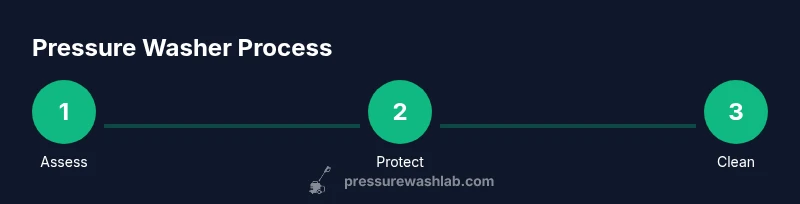
- 1
Assess the surface and plan
Survey the area to identify delicate finishes, loose debris, and the direction of staining. Decide on nozzle and PSI settings before you start to avoid surprises during cleaning.
Tip: Always test a small, inconspicuous patch first. - 2
Protect surrounding features
Cover plants, outlets, electrical components, and nearby vehicles. Remove loose items and secure doors or windows to prevent water intrusion.
Tip: Use a wide spray away from plants and windows. - 3
Attach the right nozzle
Attach a wide-angle nozzle (40°) for general cleaning; switch to 25° or 15° for stubborn stains on hard surfaces. Adjust pressure to the minimum required to remove grime.
Tip: Never start with the narrowest nozzle on a fragile surface. - 4
Apply cleaning solution if needed
Dilute detergent per label and apply evenly over the surface. Allow dwell time as recommended, but avoid letting cleaner dry on the surface.
Tip: Use a foam cannon or low-pressure sprayer to apply detergent evenly. - 5
Washing in overlapping passes
Begin at the top and work downward with smooth, overlapping passes. Maintain a consistent distance (usually 6–12 inches) and keep the wand moving to avoid streaks.
Tip: Work in small sections to control the cleaning angle. - 6
Rinse and inspect
Rinse from top to bottom to remove all residues. Check for spots that need a second pass and adjust technique as needed.
Tip: Rinse immediately after cleaning to prevent road grime from drying. - 7
Address stubborn stains
For tough spots, pause and reapply detergent or use a slightly narrower nozzle with shorter bursts, rather than holding pressure in one spot.
Tip: Avoid metal surfaces that can corrode from aggressive cleaning. - 8
Dry and recheck
Allow surfaces to air-dry; inspect for missed areas and re-treat if necessary. Moisture can reveal missed spots once it dries.
Tip: Drying time varies by temperature and humidity. - 9
Post-clean maintenance
Flush lines with clean water to prevent chemical buildup and store equipment properly. Check hoses and fittings for wear.
Tip: Keep small parts organized to simplify future maintenance. - 10
Evaluate equipment needs
If you notice frequent repairs or inadequate cleaning performance, consider upscaling PSI, adding attachments, or upgrading to a more robust unit.
Tip: Track use and wear to plan upgrades before failure.
Quick Answers
What surfaces should I avoid using a pressure washer on?
Avoid delicate siding, untreated wood, loose mortar, and glass surfaces. Always test a small area first and use lower pressure on fragile materials. If unsure, consult manufacturer guidelines or seek professional advice.
Avoid delicate surfaces and test a patch first. Use low pressure on uncertain materials.
Is it safe to use a pressure washer on wood decks?
Wood decks can be cleaned with care, but too much pressure can gouge or splinter. Use a wide-angle nozzle, keep distance, and consider a dedicated deck cleaner. Seal the wood afterward to protect it.
Yes, but with caution—use wide spray and keep distance, then seal the wood.
What PSI is safe for concrete?
Concrete generally tolerates higher pressure than many surfaces, but start with a moderate setting and adjust as needed. Avoid blasting edges to prevent chipping and always test on a small patch first.
Start moderate and adjust; test first.
Can I use bleach with a pressure washer?
Only if the manufacturer approves it. Mixing cleaners can create dangerous fumes or damage surfaces. Use only recommended cleaners for your unit and surface.
Use only approved cleaners; don’t mix chemicals without guidance.
How often should I maintain my pressure washer?
Regularly inspect hoses, fittings, and nozzles for wear. Flush with clean water after use and perform periodic professional service if in heavy rotation.
Inspect and flush regularly; plan professional service for heavy use.
Do I need a license to use a pressure washer?
No general license is required for typical home use, but follow local safety regulations and manufacturer guidelines to avoid injuries or property damage.
No license required for home use, but follow safety rules.
Watch Video
Key Takeaways
- Identify surfaces that tolerate water and pressure before washing.
- Use the right nozzle and PSI for each material to avoid damage.
- Protect plants and surroundings; test patches first.
- Maintain and store equipment properly for longevity.