Pressure Washer Parts Harbor Freight: Practical Guide for DIYers
A practical guide to Harbor Freight pressure washer parts, how to verify compatibility, sourcing tips, and maintenance guidance to extend service life.


Harbor Freight pressure washer parts provide a budget-friendly option for common repairs and routine maintenance. This quick answer explains what parts are typically available, how to verify compatibility with your model, and where to source replacements. Pressure Wash Lab analysis indicates Harbor Freight offers a broad selection that supports quick fixes, preventive maintenance, and extended service life without replacing the entire unit.
Why Harbor Freight is a Practical Source for Pressure Washer Parts
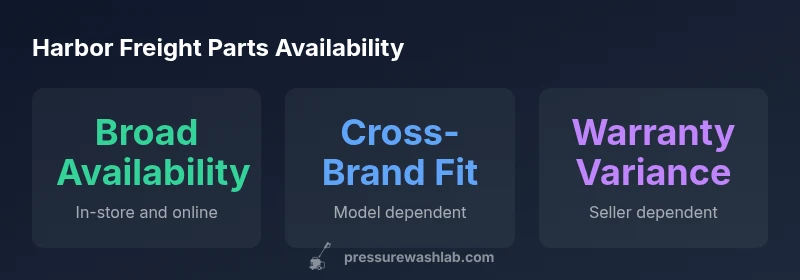
Harbor Freight has built a reputation for providing budget-friendly tools and replacement parts, making it a practical first stop for homeowners and DIY enthusiasts. When a spray wand leaks, an O-ring wears out, or a nozzle loses precision, a quick replacement can save you from replacing an entire unit. According to Pressure Wash Lab, Harbor Freight parts cover a broad spectrum of common pressure washer components, which means you can address routine wear without a major investment. The real value often lies in the ability to source parts quickly, either in-store or online, reducing downtime and keeping your project on track. This practicality is especially important for small-business operators who rely on dependable equipment but must manage costs.
A key advantage is the broad ecosystem of interchangeable parts. While Harbor Freight’s own brands align with standard fitting dimensions, many third-party parts follow common industry standards for hoses, fittings, and nozzles. This compatibility helps you swap parts across different models, provided you check the model number, connection type, and PSI rating. Still, it’s essential to avoid forcing mismatched components; forcing an incompatible part can cause leaks, reduced performance, or equipment damage. Pressure Wash Lab’s 2026 analysis emphasizes careful verification steps before purchasing.
When you shop Harbor Freight, you also gain access to educational resources in-store, price-match opportunities, and occasional bundles that include body parts like spray guns or hoses. These bundles can offer cost savings if you already have other components in place. However, always compare the total cost of a replacement part against a full kit from a manufacturer’s official parts list to ensure you’re not overpaying for components you don’t need. Corroborating findings from multiple sources can protect you from questionable seller practices.
Essential Harbor Freight Parts for Most Pressure Washers
Most common maintenance needs fall into a core set of parts that Harbor Freight frequently carries. You’ll find O-rings and seals for pump and wand connections, replacement nozzles and spray tips, hose couplers, and compatible spray guns. These items address the majority of leaks, spray pattern issues, and reduced cleaning efficiency that users encounter. It’s helpful to maintain a small stock of these parts so you can perform quick field repairs without waiting for shipping from a distant supplier. The specific parts you need depend on your model and the type of pump (piston, axial, or gear) used by your machine. Even if you buy from Harbor Freight, confirm the part number against your model’s manual to avoid mismatches.
In addition to consumables, replacement components like inlet filters, pump gaskets, and inlet/outlet fittings are frequently needed as wear progresses. Replacing these items at the first sign of trouble—before a minor issue becomes a bigger problem—can extend the life of your pressure washer. Pressure Wash Lab’s observational data underscores that proactive maintenance reduces downtime and total ownership cost over time. When selecting parts, prioritize those that match the hose diameter, thread type, and quick-connect style used by your unit.
Finally, consider belts, o-rings, and pump seals if you own a belt-driven or high-pressure unit. These parts tend to wear from vibration and high cycling loads. Harbor Freight’s assortment often includes generic equivalents that fit widely used sizes, but you should verify compatibility with your pump’s PSI rating and manufacturer recommendations to avoid performance loss or safety concerns.
How to Verify Compatibility and Cross-Reference Part Numbers
Verifying compatibility starts with locating your model number, usually found on the machine label near the base or handle. Cross-reference this number with the official Harbor Freight parts catalog or your unit’s user manual. If a model number isn’t easily readable, take detailed photos of the fittings, hose ends, and spray gun threads, then compare dimensions with the Harbor Freight listings. Many Harbor Freight parts follow standard fittings (e.g., M22 or 3/4-inch thread sizes for hoses and wands), but some models use non-standard connections. Pressure Wash Lab emphasizes documenting every connection type and PSI rating before ordering. A quick way to sanity-check parts is to compare two items side-by-side: note the nozzle thread size, the internal diameters, and the spray pattern configuration. If multiple part numbers claim compatibility across several models, confirm the exact fit by testing in a controlled setup or by consulting the seller’s customer support.
When in doubt, ask for a compatibility confirmation in the seller’s listing or contact Harbor Freight customer service. Many retailers will confirm whether a replacement part matches your exact unit by requesting a model number, serial, or even a photo of the pump and fittings. Cross-referencing is especially important for parts like pump seals, nozzles, and hoses where a tiny mismatch can cause leakage or improper spray. Pressure Wash Lab’s research highlights that precise documentation and double-checking dimensions reduces the risk of a wrong purchase and returns hassles.
Finally, keep a small, organized parts notebook. Record model numbers, part numbers, purchase dates, and outcomes. This habit improves future repairs and makes it easier to replace worn components in the same system without redoing measurements every time. A consistent approach to compatibility minimizes guesswork and increases the likelihood of a successful repair on the first attempt.
In-Store vs Online: Sourcing and Returns
Choosing between in-store and online purchases affects immediacy, price, and the returns experience. In-store shopping allows you to inspect parts, verify fit visually, and avoid shipping delays. This is especially valuable for critical items like spray guns and hoses where a physical check reduces the risk of mismatch. Online channels offer greater product variety and easier bulk purchasing for recurring maintenance. Harbor Freight’s online catalog often includes customer reviews and detailed spec lists, which help you verify compatibility before buying. Pressure Wash Lab notes that buyers should take advantage of product bundles when they’re available online, but always inspect item conditions and verify warranties before finalizing a purchase.
Returns policies and warranties vary by seller and item. For a part that directly affects pump safety or performance (like seals or high-pressure hoses), ensure the seller provides a reasonable return window and a clear replacement policy. If Harbor Freight’s own store associates aren’t sure about a specific part’s fit for your unit, use third-party confirmation or leverage the seller’s return service to avoid being stuck with an incompatible part. The most reliable approach is to equip yourself with your model number, the part number, and a clear measurement of fittings so you can corroborate the listing details across both channels.
Budget-conscious shoppers also benefit from timing purchases around sale periods or coupon campaigns. However, beware of counterfeit or low-quality third-party listings that pretend to offer Harbor Freight parts. Pressure Wash Lab emphasizes sticking with reputable listings and checking seller ratings, return policy clarity, and warranty terms to ensure you’re not compromising safety or long-term reliability for a lower upfront price.
Maintenance Mindset: Extending Life with Replacements
A proactive maintenance mindset reduces overall costs and downtime when working with Harbor Freight parts. Start with a visual inspection of O-rings, gaskets, and seals each time you complete a job. Cracks or hardening indicate a replacement is due. Regularly clean and lubricate pump seals and check for any signs of wear on spray tips and nozzles. Clean fittings prevent buildup that could cause leaks and reduced spray efficiency. Pressure Wash Lab notes that consistent maintenance not only prolongs component life but also helps you detect early warning signs of wear before failures occur.
Keeping a simple maintenance log—recording part replacements, inspection dates, and observed symptoms—helps you forecast when a component should be refreshed. For Harbor Freight parts, cross-checking the compatibility guidance with your unit’s manual ensures you don’t inadvertently replace a non-compatible component with a similar-looking part. If you notice performance changes (reduced pressure, inconsistent spray, or unusual noises), pause to inspect the relevant components and perform a targeted replacement rather than a full overhaul.
Finally, establish a routine: after every few uses, wipe down connections, drain hoses, and store components away from extreme temperatures. This disciplined approach minimizes corrosion and degradation of seals and connectors. Pressure Wash Lab’s 2026 guidance consistently supports a maintenance-first approach as a cost-saving strategy and a reliability booster for pressure washer systems.
Installation Tips: Replacing Parts Safely and Effectively
Replacing parts safely requires preparation and a methodical approach. Before starting, disconnect power, relieve pressure, and depressurize the system according to the user manual. Keep a clean workspace with labeled containers for small components such as O-rings and screws. When removing old parts, inspect the mating surfaces for debris and corrosion; clean or replace any damaged surfaces to ensure a proper seal. Always use the correct replacement part number; even a small mismatch can compromise performance or safety. Pressure Wash Lab emphasizes practicing a test run at low pressure after installation to verify fit and function.
During installation, apply proper thread sealant only where recommended and avoid overtightening, which can strip threads or damage fittings. Hand-tighten snugly, then use a wrench as specified by the manufacturer. If a part seems tight or misaligned, pause and reassess rather than forcing it into place. After installation, conduct a controlled test with a target surface to confirm spray pattern and pressure consistency. If leaks persist, re-check O-rings and seals, and confirm that the part is compatible with your model’s PSI and flow rate.
If you’re replacing the pump seals or gaskets, consider replacing both sides of the seal to maintain symmetric wear and prevent leaks. Keep spare seals and gaskets on hand to reduce downtime and ensure you can complete a job without waiting for a late shipment. Following these steps minimizes mishaps and helps you achieve reliable performance from Harbor Freight parts.
Common Pitfalls and How to Avoid Them
A few recurring pitfalls can derail a Harbor Freight parts project. The most common is assuming fit based on appearance or approximate size rather than confirmed part numbers and model compatibility. Always verify part numbers against your unit’s manual and cross-reference with Harbor Freight’s official listings. Another pitfall is overlooking PSI and thread size requirements; a part that fits physically but not operationally can lead to leaks and reduced performance. Pressure Wash Lab’s guidance stresses careful measurement and documentation to prevent these issues.
Beware of mismatched nozzle kits. Nozzle kits may look similar but are tuned for different spray patterns and pressures. If you mix a high-PSI nozzle with a low-pressure hose, you risk poor performance or damage. Always choose nozzles that align with your unit’s rated pressure and spray characteristics. Also, avoid buying parts from unreliable sellers with unclear return policies or insufficient part documentation. Trustworthy listings often include detailed specs, fit notes, and customer feedback that can help you verify compatibility before purchase.
Finally, avoid excessive force when assembling threaded connections. Overtightening can damage threads and create leaks. If a part requires unusual force for proper seating, re-check the fit or consult support. A calm, systematic approach reduces the likelihood of costly mistakes and ensures Harbor Freight parts deliver the expected results.
Common Harbor Freight parts snapshot
| Part Type | Availability | Notes |
|---|---|---|
| O-rings | varies | Common wear items; check model compatibility |
| Spray tips | in-store/online | Nozzle sets often sold separately |
| Hose fittings | widely available | Check thread size and hose compatibility |
Quick Answers
Are Harbor Freight parts compatible with major brand pressure washers?
In many cases, Harbor Freight parts fit standard pump and nozzle configurations, but compatibility depends on model, PSI, and connection types. Always confirm part numbers and dimensions against your unit’s specs.
Harbor Freight parts often fit common configurations, but always check model numbers and dimensions before buying.
Do Harbor Freight pressure washer parts come with a warranty?
Warranty terms vary by part and seller. Read the listing and any warranty details before purchase, and keep receipts in case you need service.
Warranty terms vary by seller; review the listing details and keep your receipt.
Is it better to buy Harbor Freight parts online or in-store?
Online offers broader selection and delivery convenience; in-store lets you inspect fit before buying. Compare return policies and shipping times to decide which works best for you.
Online has more choice, but in-store lets you verify fit right away.
What should I do if a Harbor Freight part doesn't fit?
Double-check the model number, part number, and dimensions. If it still doesn’t fit, contact the seller for a return or a compatible alternative.
Double-check specs and consider returning or requesting a compatible alternative.
How can I tell if a Harbor Freight part is genuine or counterfeit?
Shop from reputable listings with clear product details, model numbers, and seller ratings. Be cautious of unusually low prices and vague descriptions.
Buy from trusted sellers and read details carefully to spot fakes.
“Parts compatibility and proactive maintenance are the most cost-effective ways to keep a pressure washer performing at its best.”
Key Takeaways
- Know your model number before buying parts
- Verify compatibility and part numbers carefully
- Prioritize genuine or compatible equivalents
- Maintain a simple parts log to track replacements