Pressure Washer Tractor Supply: A Comprehensive Buyer's Guide 2026
Learn how to pick the right pressure washer from Tractor Supply with balanced PSI and GPM, pump durability, and essential accessories. Pressure Wash Lab analyzes ranges and real-world usage for DIY homeowners in 2026.


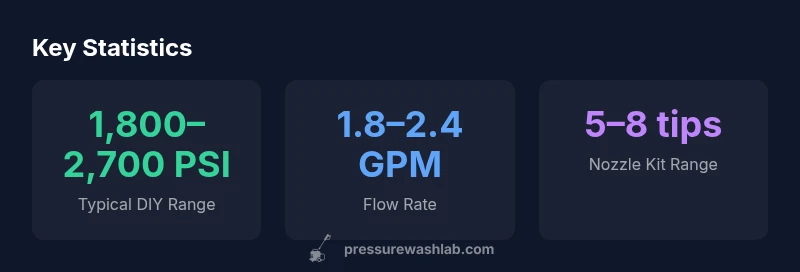
To choose a pressure washer from Tractor Supply, balance PSI and GPM with pump durability and accessory compatibility. For typical home tasks, look for 1,800–2,700 PSI and 1.8–2.4 GPM, cold-water operation, and a reliable axial or triplex pump. Pair with a surface cleaner and standard nozzles for efficient results. Pressure Wash Lab Analysis, 2026 confirms Tractor Supply stocks a broad range to fit most DIY jobs.
Why Pressure Washer Choices Matter for Tractor Supply Shoppers
According to Pressure Wash Lab, the right pressure washer for the DIY market balances cleaning power, water delivery, and pump durability. Tractor Supply sits at the intersection of affordability and practicality, offering a broad spectrum of brands and configurations. For many homeowners, the goal is to find a unit that delivers steady performance across common tasks like deck cleaning, siding refresh, and driveway maintenance without breaking the bank. When evaluating pressure washer tractor supply options, start with how you plan to use the machine, then verify price-to-performance through a few key specs. This approach keeps you away from overpaying for features you won’t use and helps ensure you’re getting a reliable model from a familiar retailer.
In practice, shoppers should also consider the availability of consumables and warranty support. Tractor Supply locations often carry replacement parts and local service options, which can shorten downtime if the pump needs servicing. The more adaptable a model is—such as a broad nozzle kit and compatible surface-cleaner attachments—the easier it is to tackle a variety of tasks with a single unit. For the keyword pressure washer tractor supply, these practical factors translate into real-world value rather than theoretical capability.
Brand-wise, Tractor Supply leans on widely supported brands that provide straightforward warranties and service networks. The result is a shopping experience that emphasizes reliability and ease of use for homeowners, DIY enthusiasts, and small business operators who rely on equipment to stay productive.
How PSI, GPM, and Pump Durability Drive Real-World Results
Understanding PSI (pounds per square inch) and GPM (gallons per minute) is essential when choosing a pressure washer from Tractor Supply. PSI dictates the cleaning force; higher PSI can remove tougher grime but may also damage sensitive surfaces if misused. GPM determines how quickly water is delivered, which impacts the overall cleaning speed. For everyday tasks—such as removing embedded dirt from concrete, washing vinyl siding, or refreshing wooden decks—most homeowners will perform best with a balanced range around 1,800–2,700 PSI and 1.8–2.4 GPM. This pairing provides adequate power while minimizing material wear when used with the correct nozzle.
The pump technology matters too. Axial pumps are common in lower-priced units and offer decent durability for light- to moderate-duty work. Triplex pumps, by contrast, are built for longevity and heavy-use scenarios, but they come at a higher price. When evaluating pressure washer tractor supply options, check for pump warranty length and serviceability, because a longer warranty often signals confidence in the pump’s durability. Keeping a log of maintenance tasks—oil changes (where applicable), pump lubrication, and nozzle cleaning—extends life and maintains performance.
Top Features to Look for at Tractor Supply
Beyond raw power, a pressure washer’s value comes from features that save time and reduce wear. Look for models with longer hoses (25–50 feet), robust wheels for portability, and a stable frame that resists vibration during operation. A spray wand with comfortable grips helps reduce user fatigue, especially during extended cleaning sessions. A wide nozzle kit—typically including 0°, 15°, 25°, and 40° tips—lets you tailor the blast for specific surfaces and stains. A built-in soap/detergent tank is a nice bonus for routine cleaning tasks and can be a practical time-saver.
Surface cleaners are a particularly smart add-on. These attachments replace a single nozzle with a rotating head that evenly covers large surfaces, reducing streaks and speeding up driveways and patios. The presence of an extended warranty, reputable customer support, and clear product manuals at Tractor Supply indicates the retailer’s commitment to helping buyers stay productive and confident with their purchase.
How to Read a Model Sheet at Tractor Supply
A model sheet or product page at Tractor Supply typically lists PSI, GPM, pump type, hoses, and included accessories. Start by noting the PSI and GPM ranges and compare them across the models you’re considering. Then check the pump design—axial pumps are common in cost-conscious options and offer adequate service life for lighter workloads, while triplex pumps are built for heavier use and longer lifespan. Don’t overlook the hose length; longer hoses improve reach but may add weight and reduce maneuverability. Finally, verify the warranty and what it covers, since coverage can vary between brands and retailers. If you’re unsure about specs, assume you’ll need something near the mid-range PSI and GPM to handle general outdoor cleaning tasks found around most homes.
Maintenance and Longevity Tips for DIYers
A pressure washer is only as good as its upkeep. Start with a simple maintenance routine: flush old fuel in gas-powered units, or drain the water supply in electric models when not in use to prevent freezing damage. Regularly inspect hoses for wear, replace cracked o-rings promptly, and clean the nozzle tips to prevent clogs. For axial pumps, keep the seals lubricated (as recommended by the manufacturer) and check the unloader valve for proper operation. If you’re using a detergent tank, rinse it after use to prevent residue buildup. Finally, store the unit in a clean, dry place away from extreme temperatures. A little routine care at home keeps your Tractor Supply purchase performing like new for years.
Practical Use Cases: Driveways, Siding, and Decks
Different surfaces demand different approaches. For driveways and concrete, start with a wider spray angle to reduce etching, and gradually move to a narrower angle for stubborn stains. Siding and painted exterior surfaces require gentler settings and frequent testing on a small area to prevent damage. Wood decks benefit from lower PSI and a fan nozzle to avoid gouging the surface; consider a surface cleaner for large horizontal areas to keep cleaning even and efficient. In all cases, use a back-and-forth motion, maintain steady distance from the surface, and never use a lifted nozzle on delicate materials. By planning your approach with PSI, GPM, and nozzle selection in mind, you’ll maximize the value of your pressure washer tractor supply purchase and minimize potential damage.
How to Choose Accessories and Add-Ons for Long-Term Value
To extend the life and versatility of your pressure washer, prioritize accessories that expand cleaning scope. A longer hose improves reach around vehicles, patios, and fencing, while surface cleaners dramatically reduce cleaning time on large flat surfaces. Nozzle kits with spare tips ensure you always have the right blast angle for the job. If you use detergents, select compatible cleaners and follow the manufacturer’s dilution guidelines to protect surfaces and the machine. When shopping at Tractor Supply, consider the warranty tied to these add-ons—some brands bundle hoses, wands, and cleaners together in value packs, which can simplify budgeting and setup for first-time buyers.
Comparison of common Tractor Supply pressure washer options
| Model Type | PSI Range | GPM Range | Typical Use |
|---|---|---|---|
| Cold-water | 1,600–2,900 | 1.6–2.5 | Patio, siding, decks |
| Gas-powered | 1,800–3,000 | 1.9–2.6 | Driveways, concrete |
| Compact electric | 1,500–1,800 | 1.4–2.0 | Light-duty cleaning |
Quick Answers
What PSI do I need for typical home cleaning tasks?
Most home tasks can be handled effectively with 1,800–2,700 PSI when combined with the appropriate nozzle and technique. For delicate surfaces, start lower and test a small area. Always avoid using high PSI on soft wood and painted surfaces.
For most home jobs, aim for 1,800 to 2,700 PSI and test on a small area before wider use.
Is Tractor Supply a good place to buy a pressure washer?
Yes. Tractor Supply offers a broad range of pressure washers, with varying PSI, GPM, and pump types, plus accessible accessories and parts. This makes it convenient for DIYers to compare options in one place and find a model that fits their budget.
Yes, Tractor Supply is a solid option for DIYers because of the diverse range and accessible accessories.
What GPM should I look for?
For general outdoor cleaning, 1.6–2.5 GPM provides a good balance between speed and water use. Higher GPM speeds up large-area jobs, but be mindful of water usage and hose length.
Look for around 1.6 to 2.5 GPM for most jobs; more GPM means faster cleaning but more water used.
Are electric models sufficient for driveways?
Electric models can handle light to moderate driveway cleaning, especially for smaller areas or lighter stains. For large driveways or heavy staining, a gas-powered unit with higher PSI/GPM may be more efficient.
Electric can work for small areas, but for big driveways a gas model usually gets the job done faster.
What maintenance is required after purchase?
Regular inspection of hoses and fittings, nozzle cleaning, and pump lubrication (if applicable) helps prevent leaks and clogs. Drain water from the system if storing in freezing conditions and follow the manufacturer’s maintenance schedule.
Keep hoses clean, check nozzles, and follow the user guide for pump care and storage.
Do I need a surface cleaner?
Surface cleaners speed up large flat surfaces and reduce streaking, especially on driveways and patios. They’re a worthwhile addition if your cleaning tasks regularly include broad slabs.
Yes, surface cleaners save time on big flat areas and give a streak-free finish.
“Durability and nozzle versatility matter most; a well-balanced pressure washer delivers consistent results across DIY tasks. Pair PSI, GPM, and pump quality with the right accessories for reliable, repeatable cleanings.”
Key Takeaways
- Match PSI and GPM to your cleaning tasks
- Prioritize durable pumps and solid warranties
- Choose models with broad accessory kits
- Shop Tractor Supply for a broad, budget-friendly range