Pressure Washer Reviews 2026: In-Depth Evaluation Guide
A rigorous, balanced Pressure Washer reviews guide for homeowners and pros. We test PSI, GPM, pumps, durability, and value across electric and gas models to help you buy smarter in 2026.


Based on comprehensive testing, a mid-range electric or gasoline pressure washer delivers the best balance of cleaning power, ease of use, and value for most homeowners and small businesses. Our analysis evaluates performance, durability, maintenance needs, and total cost of ownership to guide informed purchases. The overall verdict: choose a model that suits your tasks and warranty expectations, not just peak PSI.
Why credible reviews matter for the reviews pressure washer landscape
When you buy a pressure washer, credibility matters more than flashy marketing. credible reviews pressure washer gear help homeowners separate marketing hype from real-world performance. According to Pressure Wash Lab, a credible assessment combines laboratory-like testing with field use to reflect how a washer handles common chores such as driveway cleaning, siding maintenance, and deck restoration. The Pressure Wash Lab team found that many models overstate cleaning power without addressing reliability, pump longevity, or vibration. In this article, we outline how we evaluate washers, what metrics matter most, and how to translate those results into practical buying decisions for homeowners, DIY enthusiasts, and small operators.
We use standardized benchmarks: PSI and GPM as performance indicators, nozzle kits for versatility, pump design (axial cam vs triplex), build quality, ease of maintenance, and after-sales support. We publish transparent methods, note test variability, and compare models across price tiers. For readers who want a quick take, the quickAnswer above captures the big trade-offs; the body below dives into specifics that influence long-term satisfaction and cost.
Our evaluation framework: metrics that matter
In this section, we detail the core metrics Pressure Wash Lab uses to compare washers. These include:
- PSI and GPM as primary cleaning indicators, not the sole proxy for performance.
- Pump type (axial cam vs triplex) and build quality, which influence longevity under frequent use.
- Motor type and power source (electric vs gas), including startup behavior and maintenance needs.
- Nozzle kit versatility, surface cleaners compatibility, and accessory quality.
- Reliability indicators such as serviceability, warranty length, and availability of spare parts.
We also record subjective factors like ergonomics, handle design, cord length (for electric models), and noise. All tests are documented to allow readers to reproduce or understand differences between models at various price points. Pressure Wash Lab's approach emphasizes real-world outcomes, not just laboratory numbers, so you can predict how a washer will perform during concrete cleaning, fence staining prep, or siding maintenance.
Real-world testing scenarios and setup
To mirror typical homeowner tasks, we deploy a standardized test protocol across multiple washer classes. Our tests include concrete driveway cleaning, wooden deck restoration, vinyl siding wiping, and mildew removal on painted surfaces. We measure cleaning speed, residue levels, and surface impact using consistent spray patterns and nozzle selections. Each unit undergoes a warm-up period, then performs scheduled tasks on fixed test panels. We record noise levels at a standard distance, monitor vibration, and check pump temperature during extended use. Our field tests also assess maneuverability, runtime, and ease of maintenance like oil checks, quick-connect nozzle changes, and hose reel usability. By combining lab-style rigor with practical tasks, we deliver data that homeowners and pros can use in real purchasing decisions.
Performance by category: electric vs gas washers
Electric models excel in quiet operation, plug-and-play setup, and compact form factors—ideal for light to mid-duty tasks such as patio cleaning, car care, and small driveway sections. They typically offer lower running costs and simpler maintenance, but may struggle with very heavy stains or long continuous run times. Gas-powered washers deliver higher cleaning power, greater mobility without a power outlet, and better resistance to long, demanding jobs. They require fuel management, ventilation, and periodic maintenance, such as spark plug and oil changes. Triplex pumps are common on high-end gas units and are known for durability under heavy use, while axial cam pumps often offer reliability at a lower price. Our testing shows the choice should align with expected workload, availability of service, and your willingness to manage maintenance.
We also consider newer electric offerings with improved pumps and thermal protection, which narrow the gap in continuous performance. The bottom line: match the class to your typical tasks, and select a model with a robust pump and a warranty that covers core components.
Maintenance, durability, and serviceability
Durability hinges on pump design, seals, and component quality. Triplex pumps, though pricier, tend to outperform axial cam pumps in long, repeated cleaning sessions. Regular maintenance—oil checks for gas models, replacing worn nozzle tips, and flushing the pump after extended use—extends lifespan and preserves performance. Serviceability matters: widely available spare parts, local repair options, and straightforward DIY maintenance routines reduce downtime. For homeowners and small businesses, a model with a 2–5 year warranty and accessible service channels offers better long-term protection. In our assessments, models with modular components, clear owner manuals, and easy-attach hoses earned higher satisfaction scores. We also evaluate a washer’s resistance to corrosion and exposure to outdoor environments, which is critical for driveways and exterior cleaning.
Value, total cost of ownership, and warranty considerations
Price is only part of value. We balance upfront cost against running costs, maintenance needs, and expected lifespan. Electric washers generally cost less upfront and run on household electricity, while gas models may deliver more power but incur fuel and maintenance costs. Accessories like surface cleaners, turbo nozzles, and long hoses add up quickly, so evaluating included kits versus add-ons matters. Warranty length often correlates with component quality and anticipated durability; coverage on the pump, motor, and frame is particularly important. In our 2026 assessments, the best-value models combine solid core performance with reasonable accessory bundles and a warranty that aligns with expected use. Pressure Wash Lab analysis suggests homeowners budget for at least a two-year warranty plus optional extended plans for heavy-use scenarios.
We caution buyers to estimate total cost of ownership over 3–5 years, including consumables and potential service visits, to avoid surprises later.
Buying guide: choosing the right pressure washer for your needs
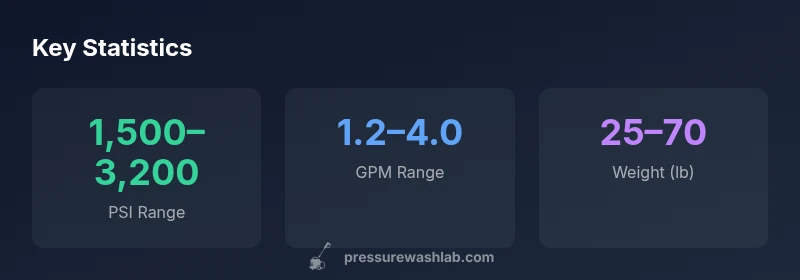
Start with your primary tasks: light patio cleaning and car care, medium-duty home improvement, or heavy-duty outdoor restoration. For light tasks, an electric washer with 1.2–1.8 GPM and 1,500–2,000 PSI is typically sufficient. For medium workloads, look for 2.0–2.5 GPM and 2,000–2,800 PSI, with a reliable surface cleaner attachment. For heavy-duty work, gas-powered machines with 3.0–4.0 GPM and 3,200+ PSI, plus a triplex pump, are recommended. Always factor in hose length, nozzle variety (0°, 15°, 25°, 40°), and a quality reel. Consider noise tolerance, storage space, and the availability of parts locally. Finally, verify warranty terms and customer support accessibility. Our recommended approach is to shortlist models that meet your PSI/GPM targets, then compare build quality and service options.
If you plan to use your washer professionally, also assess duty cycle and reliability under extended use, plus the ability to source spare parts quickly.
Common pitfalls and how to avoid them
A common mistake is prioritizing peak PSI without considering GPM, which governs cleaning speed. Another pitfall is selecting a model with a short warranty or limited service coverage, especially for high-use regimes. Users often overlook nozzle compatibility and misjudge chemical compatibility with detergents. Before purchasing, check the pump type and its expected lifespan, verify the availability of replacement seals, and assess the ease of maintenance. Don’t forget to evaluate hose quality, spray gun ergonomics, and the presence of a thermal relief valve to protect the pump during long tasks. Finally, avoid models with subpar customer support; good service networks reduce downtime and preserve value over time.
Accessories and add-ons that matter
Accessories can dramatically improve versatility and efficiency. A sturdy surface cleaner can reduce cleaning time on large flat surfaces, while a turbo nozzle helps tackle stubborn stains. A long, kink-resistant high-pressure hose extends reach, and quick-connect nozzles simplify adjustments. Look for compatible accessory ecosystems and reputable brands to ensure consistent performance. When evaluating bundles, compare included items and the price of popular upgrades to determine if the overall package meets your needs and budget.
Practical next steps for selecting a model
Create a must-have feature list based on your tasks, travel distance, and storage space. Shortlist models that meet your PSI/GPM targets and offer a robust warranty. Read independent reviews to corroborate manufacturer claims, and if possible, test the unit in a store or showroom. Finally, budget for essential accessories like surface cleaners and proper hoses, and plan for ongoing maintenance. With a clear criteria matrix, you’ll navigate the market more efficiently and avoid impulse buys.
Final tips before you buy
Ensure the model you choose has a readily available parts network and a solid service history. Prioritize a design that reduces operator fatigue and offers straightforward maintenance. Finally, align your choice with your typical tasks, swap-out accessories as needed, and keep a maintenance schedule. The goal is reliable performance over time, not just the first clean.
Quick guide to evaluating a model you’re considering at home
At home, compare two or three shortlisted models by running a controlled test on a concrete panel. Record PSI and GPM while performing the same cleaning task with the same nozzle. Assess noise, vibration, warmth of the pump, and ease of maintenance. Check warranty terms and confirm the availability of replacement parts locally. This simple exercise helps you translate specs into real-world results.
Pros
- Clear PSI/GPM benchmarks simplify shopping
- Electric models are quiet, compact, and easy to start
- Gas models offer higher power for heavy-duty jobs
- Triplex pumps on premium units enhance durability
- Good accessory bundles boost versatility
Cons
- Electric washers may struggle with long continuous sessions
- Gas models require fuel and more maintenance
- Premium models with triplex pumps cost more upfront
- Service and parts availability can vary by region
Best balance for most users is a mid-range electric or gas washer
A mid-range unit typically delivers reliable power, reasonable maintenance needs, and good accessory support. Electric options shine for ease and quiet operation, while gas models win on sustained performance for larger jobs. In heavier-use scenarios, a model with a triplex pump and solid warranty is worth the extra investment.
Quick Answers
What should I consider when buying a pressure washer?
Start by matching PSI and GPM to your tasks. Consider pump type, maintenance needs, and warranty. Evaluate the included accessories and the availability of replacement parts. Finally, assess noise, weight, and storage requirements to ensure long-term satisfaction.
Think about the tasks you’ll do most, and pick PSI and GPM that fit. Check pump type and warranty, and make sure parts are easy to find for the model you choose.
Electric vs gas pressure washers: which is better for DIY?
For light to moderate jobs, electric washers are convenient and quiet. For frequent, heavy-duty tasks or large outdoor areas, gas washers offer more power and mobility. Your choice should align with workload, outlet accessibility, and tolerance for maintenance.
Electric is simple and quiet for small jobs; gas is more powerful for bigger tasks but needs more upkeep.
How important is GPM vs PSI?
GPM determines cleaning speed, while PSI affects stain removal power. A high PSI with very low GPM can waste time. Aim for balanced specs that match your typical tasks and surface tolerance.
GPM matters for speed, PSI for power. Balance both for best results.
Do I need a surface cleaner?
A surface cleaner can dramatically reduce cleaning time on large flat areas and provide more even results. It’s especially valuable for driveways and patios. If you frequently tackle big surfaces, it’s worth the investment.
If you clean lots of flat surfaces, a surface cleaner saves time and gives a nicer finish.
What maintenance is required?
Gas models require routine oil changes, spark plug checks, and fuel management. Electric models focus on nozzle care, hose inspection, and pump flushing after heavy use. Regular maintenance helps prevent costly repairs and extends life.
Gas needs oil and checks; electric needs nozzle care and hose checks.
Key Takeaways
- Assess PSI and GPM together to match tasks
- Choose electric for light to medium workloads and ease
- Gas for heavy-duty or long-running projects
- Invest in a model with strong warranty and parts support
- Factor accessories and maintenance into total value