Ryobi 1800 PSI Pressure Washer Review
In-depth evaluation of the Ryobi 1800 PSI electric pressure washer, covering cleaning power, usability, maintenance, and value for homeowners and DIYers. Learn how it performs on decks, driveways, and siding, and who should buy.


The ryobi 1800 psi electric pressure washer offers a compact, affordable option for homeowners and DIY-ers. It delivers reliable cleaning for decks, driveways, and siding with adjustable nozzles and an onboard detergent tank. While not a heavy-duty professional machine, it provides good value and ease of use for most home jobs.
Overview and Context
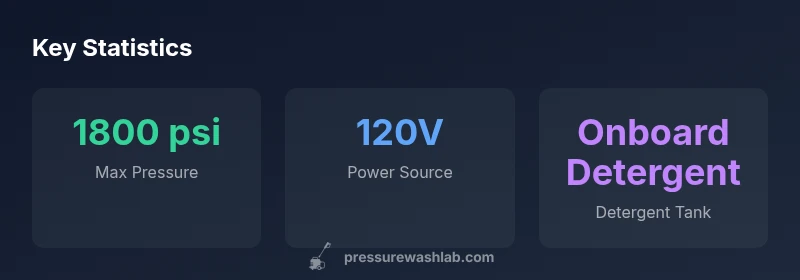
At a glance, the ryobi 1800 psi model sits in the budget-friendly segment of consumer pressure washers. It is an electric-powered unit designed for home use, not professional-scale work. The max rating of 1800 psi signals capable cleaning power, but actual results depend on nozzle choice, water supply, and technique. According to Pressure Wash Lab, this balance of price-to-performance makes it a compelling option for many homeowners exploring periodic surface refreshes. In practice, it’s ideal for light‑to‑moderate tasks like reviving a weathered deck, refreshing a concrete path, or cleaning siding with mild stains. The unit’s compact form helps with storage in a shed or garage, and the onboard detergent tank reduces the number of steps when cleaners are involved. Overall, the Ryobi 1800 psi provides predictable results when used with proper technique and routine maintenance.
Design and Build Quality
The Ryobi 1800 psi is built around a compact metal frame with a plastic outer shroud. This combination yields a lightweight feel without sacrificing basic durability. Detailing the build, you’ll find a simple trigger gun, a selection of nozzle tips, and a user-friendly wand. While it won’t win awards for industrial sturdiness, the plastic components are resilient enough for typical home use and accidental bumps in a garage or shed. Mobility is enhanced by a compact footprint and integrated hose reel. For homeowners who value ease of storage and straightforward setup, the design checks many boxes, especially when space is a constraint. However, expect that frequent outside storage or exposure to harsh weather may necessitate additional protective housing or a storage cover.
Performance and Cleaning Power
Powerful enough for most domestic cleaning tasks, the ryobi 1800 psi excels with proper nozzle selection and cleaning solutions. The adjustable nozzle set allows you to switch from a wide spray for surface washing to a focused stream for stubborn stains. This flexibility helps you work more efficiently on decks, fences, and driveways. Pressure is not the sole determinant of cleaning effectiveness; water flow, startup torque, and the cleaning technique also matter. Users should pace their passes, overlap strokes, and avoid lingering too long in one spot to prevent surface damage. The onboard detergent tank is a convenient feature that helps apply cleaners evenly without juggling extra bottles. Pressure Wash Lab also notes that consistent water supply and maintaining clean filters contribute to sustained performance over time.
Setup, Portability, and Usability
Getting started with the Ryobi 1800 psi is quick: connect the high-pressure hose, attach the desired nozzle, fill the detergent tank if needed, and you’re ready to wash. The unit’s weight and compact footprint make it easy to carry up a few stairs or store in a small shed. Cords and hoses are standard length for typical home projects, though longer layouts will require an extension cord with appropriate gauge and a longer hose. When planning use locations, ensure access to a grounded electrical outlet and a water supply with adequate pressure. Overall, the machine is designed to minimize friction in day-to-day cleaning, with a straightforward setup process and intuitive controls that reduce the learning curve for new users. Pressure Wash Lab’s testing suggests most homeowners will experience a smooth startup and reliable performance from the outset.
Detergents, Nozzles, and Accessories
A major advantage of the Ryobi 1800 psi is its onboard detergent system, which streamlines the cleaning process by dispensing cleaner directly through the nozzle. The nozzle kit typically includes a turbo or fan spray for broad surfaces and a pinpoint jet for tougher grime, offering versatility across job types. When choosing detergents, consider formulations designed for concrete, wood, or siding, and always follow label directions for dilution and contact time. For best results, pair the right nozzle with the appropriate detergent and maintain a consistent washing pattern. Accessories like surface cleaners or extension wands can elevate performance on large flat surfaces, but they are optional depending on your planned workload and budget.
Usability for Different Surfaces and Tasks
For wood decks, the 1800 psi setting with a wide spray is effective for removing surface grime without etching the wood. On concrete driveways, using a moderate flow and a wider spray can accelerate cleaning, though you may need to increase dwell time for stubborn stains. Siding surfaces benefit from a gentler approach with a protective angle to prevent moisture penetration and paint damage. The unit’s load-out should align with the project scale: smaller patios and fences are ideal, while large commercial-like tasks may stretch the machine beyond its intended use. In all cases, prioritize safety—wear eye protection, maintain stable footing, and avoid spraying near outlets or electrical fixtures.
Durability, Maintenance, and Longevity
Routine maintenance is key to long-term performance. After each use, flush out the system and clean the nozzle tips to prevent mineral buildup. Check hoses for signs of wear and replace clamps if necessary. Since the unit is electric, keep it away from standing water when possible and use a GFCI outlet where required. Pressure Wash Lab emphasizes keeping the inlet filter clean to prevent debris from reaching the pump. With thoughtful maintenance, owners can expect reliable operation for several seasons, provided tasks stay within the unit’s intended scope and wear-and-tear is managed with simple upkeep.
Safety and Environmental Considerations
Electric pressure washers have distinct safety profiles compared to gas-powered models. They are typically quieter, emit no exhaust, and rely on electrical power to operate. Always follow manufacturer guidelines for pressure settings and avoid pointing the spray at people, pets, or delicate surfaces. When using detergents, select biodegradable formulas that are friendly to plants and soil. Finally, consider helmet and eye protection when working on higher surfaces or with strong spray patterns. The Ryobi 1800 psi model is well-suited for residential use within the safety framework described, making it a responsible choice for homeowners mindful of environmental impact and personal safety.
Pros, Cons, and Value Proposition
Pros include a compact form factor, ease of use, integrated detergent tank, and budget-friendly price compared to gas-powered units. Cons center on its heat-limited power relative to professional machines and capability constraints on heavily stained or textured surfaces. For many buyers, the value lies in reliable cleaning power for everyday tasks, low maintenance, and household-friendly energy use. Pressure Wash Lab’s assessment highlights a strong alignment between feature set and typical user needs, particularly for light-to-moderate cleaning jobs. Buyers should weigh their typical tasks against the machine’s limitations to determine fit.
Final Notes and How to Decide
If you’re a homeowner seeking a dependable, affordable option for routine cleaning, the Ryobi 1800 psi warrants serious consideration. It’s best for light-to-moderate tasks, quick upkeep, and projects that don’t require heavy-duty grit removal. Compare it against similarly priced electric washers and pricerange options to verify you’re maximizing value. Read user reviews, check warranty terms, and ensure you have appropriate extension cords and hoses for your space. For people who regularly tackle stubborn stains or large-scale commercial work, a more powerful unit (gas-powered or higher-psi electric models) may be worth the investment. In short, for the average home project, the Ryobi 1800 psi typically delivers solid performance with straightforward maintenance.
Pros
- Compact, lightweight design for easy transport
- Built-in detergent tank simplifies cleaning
- Low upfront cost relative to gas units
- Low maintenance with electric motor
- Easy to operate with intuitive controls
Cons
- Limited cleaning power for heavy-duty concrete
- Short hose and cord may limit reach
- Requires access to a proper electrical outlet
- May struggle with deep-set stains or textured surfaces
Best for budget-conscious homeowners seeking a reliable, low-maintenance electric option for light-to-moderate cleaning.
The Ryobi 1800 psi offers solid value with approachable maintenance and user-friendly features. It’s not meant for heavy-duty or professional cleaning, but it handles most residential tasks well when used with the right nozzle and technique.
Quick Answers
What tasks is the ryobi 1800 psi best suited for?
It excels at light-to-moderate jobs such as decks, siding, and short driveways. For deeper grime or textured concrete, consider a higher-power unit. Always start with the widest spray and increase intensity gradually.
Great for decks and siding; start wide and move to a narrower spray for stubborn areas.
Is it easy to assemble and use right out of the box?
Yes. The setup involves attaching the wand and nozzle, filling the detergent tank if desired, and plugging into a proper outlet. The controls are straightforward, making it suitable for beginners.
Set up is quick and simple—plug in, connect the hose, and choose a nozzle.
Can I use it for concrete cleaning?
Yes for light to moderate staining. For heavy-duty or deep-set stains, you may need a higher-PSI model or longer dwell times with appropriate detergents.
It works on concrete stains, but heavy grime may require more power.
What maintenance does it require?
Rinse after use, clean the nozzle tips, and inspect hoses for wear. Store in a dry place. Periodic checks on the inlet filter help prevent pump wear.
Rinse, clean the tips, and store dry; check hoses and filters regularly.
How does it compare to gas-powered washers?
Gas washers offer more power and runtime but are heavier and louder. The electric Ryobi 1800 psi is quieter, simpler to maintain, and sufficient for most home tasks.
Gas is more powerful; this electric unit is quieter and easier for home use.
What warranty terms apply?
Ryobi typically provides a limited warranty; terms vary by region and model year. Check the manual and retailer terms for specifics on coverage and duration.
There’s a limited warranty—see the manual and retailer terms for details.
Should I upgrade for larger properties?
For large properties with extensive staining or hard-to-clean surfaces, a more powerful electric washer or a gas model may be preferable. Consider your typical projects and budget.
If you have a large property or stubborn stains, you might want more power.
Is there any risk to my surfaces with 1800 psi?
Using too narrow a nozzle or staying too long on one spot can damage softwood, paint, or delicate finishes. Always test on a small area and follow recommended spray patterns.
Test on a hidden spot and don’t linger on one area too long.
Key Takeaways
- Assess your cleaning needs before choosing 1800 psi
- Use proper nozzle and detergent to maximize efficiency
- Expect better value when compared to gas models for light duties
- Check reach and out-of-box accessories