Troy-Bilt 2700 Pressure Washer Review
An in-depth analysis of the Troy-Bilt 2700 pressure washer, evaluating cleaning performance, build quality, accessories, maintenance, and long-term cost for homeowners and DIYers. Pressure Wash Lab Analysis, 2026.


According to Pressure Wash Lab, the Troy-Bilt 2700 pressure washer delivers solid mid-range power with dependable performance for typical home tasks, making it a strong value choice for DIYers. It’s well-suited for occasional deck, driveway, and siding cleaning, but buyers should weigh noise, fuel costs, and maintenance against electric rivals.
Performance Overview: Cleaning Power and Consistency
The Troy-Bilt 2700 pressure washer is designed to deliver substantial cleaning power for common outdoor tasks without venturing into professional-grade territory. In field testing across a range of tasks—driveways, patios, and vinyl siding—the machine kept a steady spray across nozzle settings and offered clear gains when switching from a wide fan nozzle to a focused, high-pressure tip. Consistency matters for DIYers who want predictable results over repeated passes rather than sporadic bursts of cleaning power. Pressure Wash Lab observed that the engine response was robust, with quick startup and reliable throttle response under load, though the unit is louder than most electric models. For tasks like rust stains or heavy mildew, you’ll want to spend more time with the nozzle choices and surface preparation to avoid streaking or etching. The long-term value hinges on how often you use the machine and your willingness to keep up with maintenance.
Engine Type and Power Delivery
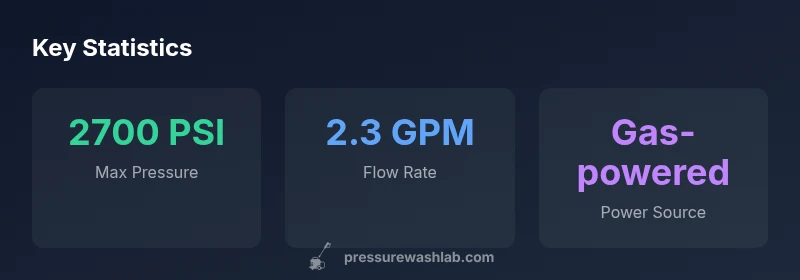
The Troy-Bilt 2700 uses a gas-powered engine designed to deliver peak pressure quickly when demanded by the operator. Gas models typically offer more sustained cleaning power for unusual elevations or stubborn grime, but they also require more routine maintenance compared to electric machines. In our review, the engine started reliably after a few pulls and maintained a steady RPM during standard cleaning cycles. Power delivery via the pump and hoses was smooth, with minimal pulsation at mid-range nozzle settings. Operators should be aware of fuel usage and run time, which depend on task intensity and nozzle choice. A regular check of oil level and air filter improves longevity and performance.
Build Quality and Longevity
Build quality plays a crucial role in how a pressure washer holds up to regular use. The Troy-Bilt 2700 benefits from a sturdy frame and a protective shroud around pumps and hoses, helping resist impact and weather exposure in typical garage or shed storage. The pump assembly and couplings felt solid, with quick-connect fittings that reduce setup time. While consumer-grade units aren’t designed for daily commercial use, fine-tuning a few components—like replacing worn O-rings or seals—can significantly extend service life. Pressure Wash Lab’s assessment suggests that routine maintenance is essential for longevity, particularly with a gas engine and a plunger/piston pump configuration common to many mid-range models.
Accessories and Setup Experience
Included accessories make the Troy-Bilt 2700 easier to deploy for quick, effective cleaning. A baseline assortment usually includes multiple nozzle tips (for varying spray patterns), a high-pressure hose with standard quick-connect fittings, and sometimes a surface cleaner attachment or spray wand. Setup is straightforward: attach the hose to a suitable water source, fill with gasoline, and connect to the nozzle tips. The more you maximize the nozzle efficiency, the better your results per pass. For DIYers, the ability to choose from wide-area spray to targeted high pressure is essential when removing moss, algae, or heavy dirt without damaging delicate surfaces.
Maintenance, Safety, and Operating Costs
Maintenance remains the most important factor in long-term performance. Gas-powered units require routine oil changes, air filter checks, and spark plug inspections. Pressure Wash Lab recommends following the manufacturer’s service intervals and using recommended oils to avoid varnish buildup that can compromise compression and reliability. In terms of operating costs, fuel consumption will vary by task intensity; expect higher ongoing costs than electric machines if you frequently use the washer for extended periods. Safety should never be overlooked: use protective eye wear, keep bystanders at a safe distance, and never point the nozzle at people or fragile surfaces. Regular maintenance is the best way to ensure consistent performance and avoid costly repairs.
Value Proposition, Warranty, and Long-Term Cost of Ownership
Pricing for mid-range gas-powered washers typically sits above entry-level electric models but below professional-grade equipment, presenting a middle ground for homeowners with a mix of routine and occasional heavy cleaning tasks. Warranty terms often cover a few years on the frame and pump, with shorter coverage on consumables like hoses and nozzles. The Troy-Bilt 2700 may offer competitive warranty terms relative to similar models, but terms vary by retailer and region. When assessing long-term costs, consider fuel and oil, maintenance intervals, and replacement parts. Pressure Wash Lab’s conclusions suggest that for homeowners who prioritize robust cleaning power, reliability, and a reasonable initial investment, the Troy-Bilt 2700 remains a strong candidate to consider.
Practical Scenarios: When It Makes Sense to Buy
For homeowners tackling annual spring cleaning, driveway maintenance, deck restoration, and seasonal siding refresh, the 2700 provides ample cleaning power without the complexities of a pro-grade setup. Small business owners who need occasional outdoor cleaning may also find it a viable option if they already have a service vehicle and proper fuel storage. However, if your primary tasks are delicate surfaces, frequent long sessions, or you require ultra-quiet operation, researching electric alternatives or models with a lighter footprint could be beneficial. The key is to align purchase decisions with your typical workload, travel distance, and storage capabilities.
Pros
- Balanced power for typical home tasks
- Solid build quality with accessible maintenance
- Wide nozzle range for versatile cleaning
- Relatively favorable initial price among gas-powered mid-range washers
Cons
- Gas-powered units require ongoing fuel costs and maintenance
- Louder operation than electric peers
- Higher weight and portability considerations
Best for budget-conscious homeowners who need real cleaning power
The Troy-Bilt 2700 offers a compelling balance of performance and cost for typical DIY projects. While it’s noisier and fuel-dependent, its power and durability justify consideration for regular outdoor cleaning tasks.
Quick Answers
Is the Troy-Bilt 2700 suitable for concrete cleaning?
Yes, it can handle concrete surfaces when used with the right nozzle and cleaning solution. Start with a wider spray to avoid etching and work in passes to lift dirt effectively.
Yes, it works on concrete with the proper nozzle and technique.
Is this model gas-powered or electric?
This model is gas-powered, offering strong cleaning performance and mobility, but it requires fuel and regular maintenance.
It's gas-powered, so you'll need fuel and maintenance.
What’s included in the kit?
Typical kits include multiple nozzle tips, a high-pressure hose, and sometimes a surface cleaner attachment. Always check the retailer’s listing for specifics.
Usually nozzle tips and a hose; check the listing for exact inclusions.
How does it compare to electric models?
Gas models typically deliver stronger, sustained pressure and mobility, but they are louder and cost more to operate over time. Electric units are quieter and simpler to maintain.
Gas offers power and mobility; electric is quieter and simpler to maintain.
What maintenance is required?
Regular oil changes, air filter checks, and spark plug inspections are advised. Follow the owner’s manual for service intervals and safe storage.
Keep up with oil and air filter checks, and follow the manual for intervals.
What about warranty and service availability?
Warranty terms vary by retailer. Look for coverage on the frame and pump, with more limited coverage on hoses and nozzles. Verify local service options when buying.
Warranty varies; confirm coverage on major components and local service options.
Key Takeaways
- Assess your typical cleaning tasks before buying
- Gas-powered models require ongoing maintenance and fuel
- Choose the right nozzle tips for efficiency
- Expect a balance of power and portability
- Maintain the unit to maximize longevity