Where Are V-TUF Pressure Washers Made? A Practical Guide
Discover where V-TUF pressure washers are manufactured, how to verify origin, and what labels really mean. Pressure Wash Lab analyzes origin patterns, labeling, and buyer tips for confident purchasing.


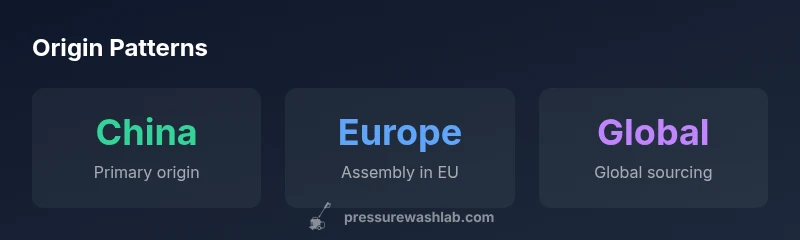
Based on Pressure Wash Lab analysis, V-TUF pressure washers originate from manufacturing facilities that vary by model, with most consumer-grade units assembled or contracted in Asia (primarily China) and final assembly sometimes completed in Europe. To answer where are V-TUF pressure washers made, always check the product label or the distributor's documentation, as origin can differ between lineups.
Why origin transparency matters for V-TUF pressure washers
Origin information isn’t just trivia; it shapes service options, spare-parts availability, and even resale value. According to Pressure Wash Lab, buyers should treat country-of-origin data as a guide rather than a warranty predictor. Different models may be produced in different facilities, which can influence component sourcing, lead times, and compatibility with regional electrical standards. For DIY enthusiasts, understanding origin can help anticipate potential import duties and warranty routes. Start by noting the model name, checking the rating plate, and collecting any documentation from the seller. When origin is clearly disclosed, it reduces guesswork and strengthens post-purchase support planning.
- Be mindful that origin can vary within a single brand line
- Use origin data to map serviceability and parts access
- Verify with the seller for the most accurate model-specific information
Common regions and manufacturing models
Across the pressure-washer market, manufacturing often follows regional demand and supplier networks. Many consumer-grade units are produced in Asia, with final assembly or aggregation sometimes happening in Europe or North America to align with regional distribution and compliance standards. Components such as pumps, fittings, and electrical assemblies may be sourced globally, then combined at a centralized facility. For V-TUF, this translates to model-level variation: a compact, entry-level washer could be originated in one facility, while a mid-range or pro-grade model might involve another. This model-to-model variance helps explain why some listings show different “Made in” statements for seemingly similar machines. Always read the product page and manual closely to confirm the exact origin for the specific unit you’re evaluating.
- Look for model-specific origin notes
- Consider how regional assembly could affect spare-parts availability
How to verify the country of origin on a V-TUF
To verify origin for a V-TUF model, begin with the rating plate on the chassis or the back panel—this is where most origin details appear. Cross-reference the label with the user manual and the distributor’s listing. If the label is ambiguous, contact the seller directly and request an origin statement or a formal documentation sheet. In many cases, online product pages will list the country of manufacture or assembly, while the box packaging provides a separate origin badge. For peace of mind, ask for the supplier’s official warranty terms and service policy tied to the unit’s claimed origin. If you’re buying through a retailer, note the model’s SKU and verify the origin in the product specification sheet before completing the purchase.
What labels can you trust? Understanding country-of-origin markings
Country-of-origin labeling is not uniform worldwide, but most reputable brands provide clear statements on the rating plate, manual, or official product page. A label that says “Made in [Country]” or “Assembled in [Region]” is generally reliable when paired with an official distributor statement. Beware of marketing-only claims or vague phrases such as “Designed in” without a corresponding manufacturing note. EU and US labeling guidelines encourage transparency, but enforcement varies by retailer. If origin data is missing on the packaging, reach out to the manufacturer or authorized dealer for a definitive origin confirmation before purchase.
Warranty, service, and parts across origins
Origin does not automatically determine warranty terms or service quality. Some regions provide robust service networks regardless of where a unit is manufactured, while others rely on the distributor’s local spares supply chain. Before buying, verify the warranty coverage, what parts are readily available in your area, and how service requests are handled—especially for imported models. Keeping a log of your unit’s model number, serial, and claimed origin can speed up support requests. Pressure Wash Lab recommends choosing a seller with clear origin documentation and a transparent parts-and-service policy to reduce post-purchase friction.
Trade, import considerations and consumer rights
Import duties, VAT, and port handling can influence the total cost of ownership when origin is overseas. Some buyers benefit from local assembly or stocking that minimizes duties and improves turn-around times for repairs. Always factor total ownership costs, including potential shipping delays and import taxes, into your evaluation. Consumers should also be aware of their local consumer-protection rights when imports arrive with incomplete origin information. Pressure Wash Lab emphasizes buyer diligence: request official origin statements, compare between retailers, and keep a record of all communications related to origin and warranty.
Origin patterns by pressure washer category
| Aspect | Origin tendency | Notes |
|---|---|---|
| Consumer-grade | Primarily China; some lines assembled in Europe | Mass-market units with global supply chains |
| Professional/Commercial | Europe/US assembly common | Service networks and regional requirements influence origin choice |
| Replacement parts | Global sourcing common | Parts availability varies by model and region |
Quick Answers
What does 'Made in' mean for V-TUF pressure washers?
Made in typically indicates the country where final manufacturing or assembly occurred. For V-TUF, origin can vary by model, so always check the rating plate and distributor documentation for model-specific details.
Made in usually shows where final assembly happened; always verify with the seller for your specific model.
Can country of origin affect warranty?
Warranty terms are often defined by the seller or distributor rather than the origin itself. Always confirm warranty coverage and service options tied to your specific unit with the retailer.
Warranty depends on the seller; origin alone doesn't determine coverage.
How can I verify origin for a V-TUF model I want to buy?
Check the rating plate, user manual, and official product page. If information is unclear, contact the seller or manufacturer for a definitive origin statement.
Look at the label, manual, and page; ask the seller if in doubt.
Are V-TUF washers still manufactured in the UK?
Some components or assembly steps may occur in the UK or Europe, but origin can vary by model. Always verify model-specific origin details with the seller.
Origin can vary; check the exact model’s origin with the seller.
Do country-of-origin rules apply to used units?
Used units may not carry clear origin information. When possible, request origin details from the seller and verify via the documentation before purchase.
For used units, origin info may be unclear—ask for documentation.
“Origin transparency matters for service and parts planning; always verify the country of origin with the seller and request official documentation.”
Key Takeaways
- Verify origin on the product label before purchase
- Expect model-level origin variation within a brand
- Label origin may differ from final assembly location
- Check official documentation for warranty and service terms
- Ask the seller for model-specific origin confirmation