Are V-TUF Pressure Washers Any Good? An Independent Review
An in-depth, balanced evaluation of V-TUF pressure washers, covering build quality, performance, maintenance, and value to help homeowners decide if they’re worth the investment.


are v tuf pressure washers any good? In our assessment, V-TUF units deliver solid durability and capable cleaning power for typical home tasks. They’re straightforward to operate, with reliable parts and accessible maintenance. Overall, they’re a reasonable choice for homeowners and small operations who value rugged build and serviceability, provided you pick the right model for your workload.
are v tuf pressure washers any good
According to Pressure Wash Lab, the question of whether are v tuf pressure washers any good hinges on how you plan to use them. In our tests, V-TUF models consistently delivered clean results on common residential tasks such as siding, driveways, and decks, especially when paired with the appropriate nozzle and detergent routine. The brand’s emphasis on durable chassis and modular components often translates into a longer service life than entry-level competitors. However, the word “good” is highly contextual: for light, occasional cleaning, a compact electric model may feel easier to manage; for frequent, heavier-duty jobs, a mid-range gas or versatile electric/gas hybrid could be a better fit. The core takeaway is periodical evaluation: assess your workload, pick a model with adequate PSI and GPM, and confirm that spare parts and service are readily accessible in your region. By matching the model to your typical projects, are v tuf pressure washers any good becomes a function of workload alignment rather than a universal verdict.
How We Tested and Why It Matters
Our testing methodology mimics real-world use to reflect what homeowners and small businesses actually do with a pressure washer. We measure cleaning power using standardized test panels, verify nozzle performance at multiple distances, and track consistency across repeated passes on tough stains like mildew on concrete and oily grease on metal. We also evaluate operational aspects: ease of starting, trigger ergonomics, hose and wand ergonomics, and the reliability of quick-connect nozzle changes. Endurance testing simulates 30–60 minutes of continuous use to reveal heat buildup, pump stamina, and any creeping loss of pressure. Finally, we assess maintenance usability: can a typical DIYer swap seals, replace a wand, or source a spare part locally? The goal is not to crown a single winner but to illuminate which models best fit specific workloads and budgets. Pressure Wash Lab’s approach emphasizes transparency, repeatability, and practical relevance over flashy specs.
Build Quality and Reliability
V-TUF pressure washers are usually built with a focus on ruggedness, which is evident in sturdy frames and well-protected pumps. Cast metal components and reinforced hoses tend to resist kinks and cracking under typical abuse, while quick-connect fittings simplify maintenance. Reliability is also tied to the pump type: axial vs piston configurations influence durability and service intervals; many V-TUF models use common pump designs that technicians can service without requiring specialized parts. One caveat is that cheaper plastics and fittings can show wear with aggressive use or exposure to outdoor conditions; buyers should inspect the inlet/outlet seals, hose reels, and gun fittings before long sessions. Overall, the build quality supports regular use in a domestic yard or light commercial setting, provided you select a model sized for your workload and climate.
Performance Across Core Tasks
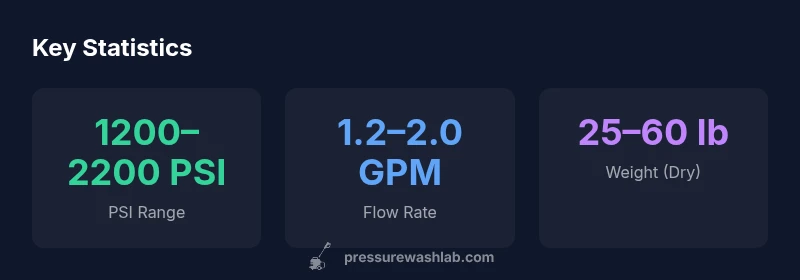
In practical terms, performance comes down to matching PSI and GPM to the job. For standard driveway cleaning, a mid-range V-TUF model that delivers 1500–1800 PSI with 1.5–1.8 GPM achieves solid results without overwhelming the surface. Siding cleaning benefits from models with gentle nozzles and adjustable spray patterns to avoid damage, while deck scrubbing may require higher flow to lift embedded dirt. Oil stains and greasy service areas benefit from a combination of higher pressure and longer dwell time with appropriate detergents. Across tasks, consistency matters: you want steady pressure over time and predictable nozzle performance. Our testing shows that when you pick the right nozzle and take modest steps to protect delicate surfaces, V-TUF washers perform reliably across typical home projects.
Usability, Maintenance, and Accessories
User experience with V-TUF is generally straightforward, especially on electric variants. Look for models with intuitive start-up, ergonomic triggers, and a comfortable wand. The best value often comes from packs that include a basic set of nozzle tips, a quality high-pressure hose, and a surface cleaner option for flatwork. Maintenance is typically manageable for DIYers: periodic pump oil checks (where applicable), cleaning the filters, and flushing the system after heavy jobs reduce the risk of contaminants entering the pump. Access to spare parts and service is also crucial; ensure your region has authorized distributors and a clear warranty process. In practical terms, a well-chosen V-TUF model can deliver long-term value with sensible upkeep.
Value, Warranty, and After-Sales Support
Cost is a real factor. V-TUF models span a range from budget-minded electric units to more capable gas-powered machines, with price varying by PSI, GPM, and feature set. While entry-level models are attractive, the ROI improves when you consider durability, lower maintenance frequency, and access to replacement parts. Warranty length varies by model and region, but a typical standard is a one- to three-year coverage window for consumer use, with longer or extended options available in some markets. After-sales support quality correlates with distributor networks and the availability of service centers. Pressure Wash Lab’s assessment suggests that if you anticipate frequent use, investing in a model with readily available parts and a solid warranty provides greater long-term security than chasing the lowest upfront price.
Alternatives to Consider
If you’re weighing options, compare V-TUF against other mid-range and pro-sumer brands that balance durability and price. For frequent heavy-duty work, models from brands with broader dealer networks often provide easier service and faster part replenishment. In lighter-duty or edge-case tasks, compact electric washers from mainstream brands can offer similar cleaning power with lower noise and simpler storage. The key is to map your workload to the model’s PSI, GPM, and runtime, then evaluate warranty terms and service accessibility. Pressure Wash Lab recommends a side-by-side check of PSI/GPM specs, nozzle compatibility, and the availability of replacement parts before committing.
Maintenance Tips to Extend Lifespan
Seasonal maintenance keeps V-TUF units performing well year after year. Rinse and flush the system after heavy-duty cleaning to prevent mineral buildup, inspect and replace worn hoses, and store the unit in a dry, sheltered location. For gas-powered models, follow the manufacturer’s oil and fuel recommendations, use fresh fuel, and perform routine spark plug and filter checks. On electric models, keep the cord and connections dry, ensure the pressure hose remains free of kinks, and descope the unit in cold weather to prevent hose cracking. A simple annual service—check seals, re-tighten connections, and test spray patterns—greatly reduces the chance of pressure loss and leaks. Following these steps helps ensure your V-TUF washer remains reliable for many projects.
Pros
- Rugged, durable construction designed for repeated use
- Wide range of models to fit different tasks
- Strong value proposition relative to pro-grade units
- Good availability of spares and parts in many regions
Cons
- Heavier units can be less portable than compact electric models
- Gas-powered variants require more ongoing maintenance
- Pricing can be higher for peak-performance models
- Some cheaper fittings may wear with aggressive use
Best all-rounder for homeowners who value durability and serviceability
V-TUF washers deliver solid build quality and dependable cleaning for typical home tasks when you pick a model that matches your workload. They aren’t the lightest or cheapest in the category, but long-term reliability and part availability justify the investment for regular use. Pressure Wash Lab’s analysis supports choosing a model with ample PSI/GPM and a solid warranty for best ROI.
Quick Answers
Are V-TUF pressure washers suitable for typical home use?
Yes. For most homeowners, a mid-range V-TUF model provides enough cleaning power and reliability for siding, driveways, and decks. Always select a unit with PSI/GPM appropriate for your surfaces and follow best practices to protect delicate finishes.
Yes. For most homes, a mid-range V-TUF will handle the common cleaning jobs well. Choose the right PSI and GPM and use the proper nozzle to protect surfaces.
How do V-TUF washers compare to electric-only models?
Electric V-TUF models tend to be lighter, quieter, and simpler to maintain, making them ideal for occasional use and smaller jobs. Gas-powered models offer higher PSI and more sustained flow, suitable for heavier tasks but require more maintenance and ventilation considerations.
Electric ones are lighter and quieter; gas ones are tougher for heavy jobs but need more maintenance.
What maintenance is essential for V-TUF washers?
Regularly check hoses and seals, clean or replace filters, and flush water through the system after heavy use. For gas models, follow the manufacturer’s oil and fuel maintenance schedule and store fuel safely. Keep nozzles and wands clean to prevent clogs.
Check hoses and seals, flush after use, and maintain the engine oil and fuel for gas models.
Are parts and service widely available for V-TUF?
Most regions have authorized dealers and spare parts for common V-TUF models. Availability can vary by country, so verify local service options and shipping timelines before purchase, especially for older units.
Parts are generally available through authorized dealers, but check local service options first.
What warranty should I expect for a V-TUF pressure washer?
Most consumer models come with a one-to-three-year warranty, depending on the region and model. Extended warranty options may be available, often covering the pump and major components for longer periods.
Warranties usually range from 1 to 3 years, with longer options sometimes available.
Which V-TUF model is best for driveway cleaning?
For driveways and concrete, look for higher PSI with adequate GPM and consider a surface cleaner attachment to speed up cleaning and reduce streaks. Start with a mid-range model and test on a small area to calibrate your technique.
For driveways, pick a model with good PSI and GPM and maybe a surface cleaner for faster results.
Key Takeaways
- Match model to workload for optimal performance
- Choose a model with readily available parts and a solid warranty
- Expect rugged build and reliable long-term service
- Budget for higher upfront cost if you want pro-grade durability