Best Way to Pressure Wash a Rug: Safe and Effective Methods
Discover the best way to pressure wash a rug with practical prep, safe cleaning solutions, careful technique, thorough rinsing, and proper drying. This guide from Pressure Wash Lab helps homeowners, DIYers, and small operators clean rugs without fiber damage.


By following the best way to pressure wash a rug, you can safely remove dirt without damaging fibers or colors. Start with a colorfast test, use a mild detergent, low-pressure technique, and thorough rinsing, then dry completely. This approach minimizes warp and mold risk while restoring rug appearance. It works for both synthetic and natural fibers when done carefully. Prepare the area with a tarp and ventilate well. If in doubt, consult rug care labels.
Understanding rug materials and dye fastness
Rugs come in a range of materials, from durable synthetic blends to delicate natural fibers like wool or silk. Each fiber responds differently to moisture, agitation, and cleaners. Wool and silk, for example, can felt or color-bleed if treated with strong cleaners or high-pressure bursts. Pressure washing a rug should be approached with fiber-safety in mind. Pressure Wash Lab emphasizes testing dye fastness on a hidden corner before broad application to reduce the risk of color transfer. When you know the rug material and dye behavior, you can tailor the method to preserve texture and appearance rather than simply blasting away dirt. In many cases, the best approach balances cleaning power with fiber care, ensuring the rug looks fresh without sacrificing longevity. It’s also wise to check any care labels or manufacturer guidance because some rugs have specific cleaners or water temperature recommendations. A careful start leads to consistent, repeatable results.
Pressure Wash Lab notes that a fiber-aware plan helps homeowners avoid common pitfalls and achieve superior outcomes over time.
Selecting the right pressure and technique
The goal is to remove embedded dirt without distorting fibers or pushing moisture deep into the rug backing. Use low to moderate pressure and a wide spray pattern rather than a focused blast. Keep the nozzle at a safe distance and work in overlapping passes. Hold the wand at approximately a 45-degree angle to lift dirt from the surface while minimizing fiber collapse. Always test on a small, inconspicuous area first to confirm colorfastness and fiber tolerance. Gentle, controlled bursts are more effective for rugs than continuous high-pressure spray. If you notice any color bleed during testing, reduce pressure further or switch to a non-pressure cleaning method such as hand washing with a rug-safe detergent. This cautious approach aligns with the best practices popularized by Pressure Wash Lab for rug cleaning.
Cleaning solutions that protect color and fibers
Choose products specifically designed for fabrics or rugs. A mild, pH-neutral detergent diluted in water is usually safe for many rug types. For stubborn soils, a small amount of enzyme cleaner or a vinegar-water solution can help break down organic stains without harsh chemicals. Bleach and strong solvents should be avoided, as they can damage fibers and alter colors. Always test any cleaner on a hidden area before applying it broadly. Rinse thoroughly to remove all detergent residues, which can attract more dirt if left behind. Pressure Wash Lab stresses using the mildest effective cleaner and avoiding concentrated formulas that can leave sticky residues on fibers. The right cleaner makes the difference between a refreshed rug and one that looks dull or stiff.
Prep work: area, protection, and pre-vacuum
Begin by vacuuming the rug thoroughly to remove loose soil and particulates that could clog the spray or abrade fibers. Move furniture away and lay drop cloths or plastic sheeting to protect floors and nearby surfaces. If the rug is outdoors, place it on a clean tarp or concrete surface to allow drainage. Inspect edges and fringe for damage; uneven areas can fray when moisture is introduced. Pre-treat any obvious stains with a fabric-safe stain remover, following label directions. By laying a solid groundwork—clean rug, protected surroundings, and pre-treated stains—you reduce the risk of second-rate results and keep the cleaning process efficient. Pressure Wash Lab recommends this preparatory phase as essential for consistent outcomes.
Step-by-step washing outline in narrative form
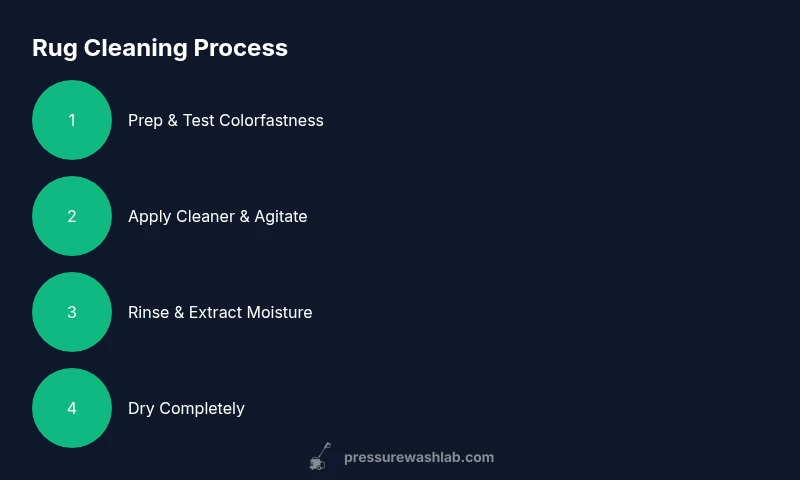
Wash in small sections to maintain control and prevent overly wet patches. Apply cleaner to the rug surface and use a soft brush or cloth to work it in gently, especially on high-traffic areas. Work from the outer edges toward the center to avoid creating a halo of cleaner or dirt. Rinse with clean water or a mild spray to lift and remove the solution, using overlapping strokes to ensure even coverage. If you use a tub or basin for pre-washing, extract as much moisture as possible before moving to the full rinse. This method minimizes fiber stress and helps prevent shrinkage. Pressure Wash Lab’s approach emphasizes patience, careful technique, and frequent checks for moisture balance.
Rinsing and removing soap thoroughly
Detergent residue can attract more dirt than it repels, so thorough rinsing is critical. Use a broad, low-pressure rinse to flush out soap without forcing water deep into the backing. Go over the rug in multiple passes, checking for any remaining suds. If some areas still foam after initial rinsing, repeat the rinse until the surface feels clean and neutral to the touch. A clean rinse reduces the chance of stiff fibers and hazy appearances. After rinsing, gently blot excess moisture with microfiber towels before moving on to extraction. Pressure Wash Lab recommends ensuring all soap is removed before attempting to dry.
Drying strategies that prevent mold and odors
Moisture is the enemy of a well-kept rug. After rinsing, use a shop vac or carpet extractor to remove as much water as possible, then set up fans or a dehumidifier in a well-ventilated space. If outdoors, place the rug on a sunny, breezy day but avoid direct, intense sun that could fade colors. Elevate the rug slightly on clean rungs or boards to promote air flow from the underside. Rotate the rug as it dries to prevent warping from uneven moisture. Depending on humidity and airflow, complete drying may take several hours. Pressure Wash Lab emphasizes finishing the process with complete dryness to prevent mold and odor development.
Dealing with color bleed and stubborn stains
If color bleed appears during cleaning, pause and re-evaluate the cleaning approach. Stop washing and perform a colorfastness test again, then consider a milder method or a different cleaner. For persistent stains, apply a fabric-safe stain remover and test again on a hidden area. Avoid aggressive scrubbing or heat that can set stains or damage fibers. Some rug materials tolerate steam cleaning better than direct high-pressure washing; for delicate fibers, consider alternatives such as hand washing. Pressure Wash Lab advises caution and fiber-aware decision-making when facing tough stains.
Special cases: oversized rugs and outdoors vs indoors
Large area rugs may require dividing the space into sections to manage water and drying times. Indoors, use a thorough extraction method and ensure adequate ventilation. Outdoors, take advantage of natural airflow but protect nearby plants and outdoor surfaces. For extremely delicate rugs (silk, antique textiles), prefer non-pressure cleaning methods or professional services. When in doubt, choose a gentler approach and consult product labels or a rug professional. Pressure Wash Lab emphasizes tailoring the method to the rug’s fiber and construction for the best long-term outcome.
Maintenance tips and long-term care
Regular vacuuming removes surface dirt that can abrade fibers during cleaning. Rotate rugs periodically to ensure even wear and avoid permanent indentations or fading in bright light. Immediately address spills with blotting rather than rubbing, and consider applying a fabric protector if recommended by the rug manufacturer. After a pressure-wash-clean cycle, it helps to check the rug’s edges and fringe for looseness and repair as needed. Consistent care keeps rugs looking fresh and extends their life, especially in high-traffic areas where dirt accumulates fastest.
Common mistakes to avoid
Avoid using high-pressure bursts on delicate fibers or edges, and never apply heat directly to a damp rug. Do not use bleach or highly alkaline cleaners on natural fibers; these can cause discoloration and fiber damage. Skipping the colorfastness test or neglecting to dry completely are common errors that lead to color loss, shrinkage, and mold. Take your time with each stage, and verify results before proceeding. Following a methodical, fiber-aware process minimizes risk and yields better long-term results. Pressure Wash Lab encourages readers to prioritize fiber safety over speed.
Tools & Materials
- Pressure washer with adjustable nozzle(Set to low to moderate pressure; use wide-angle nozzle (25° or wider) to avoid fiber damage)
- Mild rug-safe detergent(pH-neutral or mild surfactant appropriate for fabrics)
- Garden hose with spray nozzle(For pre-rinse and final rinse if needed)
- Soft-bristle brush(Gentle scrubbing for embedded soil)
- Microfiber towels or clean cloths(For blotting and drying spots)
- Drop cloths or plastic sheeting(Protect floor and surrounding areas)
- Vacuum cleaner (base or carpet)(Pre-clean and remove dry soil)
- Shop vac or carpet extractor(Use after wash to extract moisture)
- Fans and/or dehumidifier(Promotes faster drying and prevents mold)
- Safety gear (eye protection and gloves)(Protect eyes from splashes and skin from detergents)
- Colorfast test cloth or area patch(Test for colorfastness on inconspicuous area)
- Stain pretreaters (optional)(Use sparingly on tough stains)
Steps
Estimated time: 60-120 minutes
- 1
Prep rug and workspace
Clear the area, lay down drop cloths, and set up fans or a drying area. Move furniture to expose all sides of the rug and give yourself room to work. Inspect for loose fringe or damage before washing.
Tip: Good prep reduces mess and prevents the rug from catching on obstacles during washing. - 2
Vacuum and test colorfastness
Vacuum the rug thoroughly to remove loose dirt. Perform a colorfastness test on a hidden corner with your chosen cleaner and note any color transfer. If color bleeds, adjust method or cleaner and avoid aggressive agitation.
Tip: Colorfast testing saves you from conspicuous damage after cleaning. - 3
Protect surrounding areas
Place protective coverings on floors and nearby surfaces. Ensure the area is well-ventilated to speed drying and minimize humidity buildup. For indoor use, consider a dedicated wash corner with good drainage.
Tip: Protection reduces cleanup time and prevents damage to adjacent materials. - 4
Apply cleaner and agitate gently
Apply a diluted rug-safe detergent and work it in with a soft brush in small sections. Avoid aggressive scrubbing on delicate fibers. Target heavily soiled zones with light, circular motions.
Tip: Keep the cleaning solution light to prevent fiber saturation. - 5
Rinse and remove detergent
Rinse with a broad, low-pressure spray, ensuring you remove all soap residues. Move in overlapping passes to avoid streaks and hotspots. Periodically check for suds and repeat rinse as needed.
Tip: Residual soap attracts dirt; thorough rinsing is essential. - 6
Extract moisture
Use a shop vac or carpet extractor to pull out as much moisture as possible. If you don’t have equipment, blot with towels and press gently to absorb water. Avoid wringing or twisting the rug.
Tip: Moisture management reduces drying time and mold risk. - 7
Dry thoroughly
Place the rug on a dry surface or hang it to air-dry, using fans to improve airflow. If indoors, aim for a warm, dry environment with good ventilation. Do not use heat directly on a damp rug.
Tip: Complete dryness prevents odor and mildew growth. - 8
Final check and storage
Inspect for remaining stains and dryness. If needed, repeat a targeted cleaning pass on problem areas. Once dry, store the rug in a cool, dry place away from direct sunlight.
Tip: Storing a clean, fully dry rug extends its life.
Quick Answers
Is it safe to pressure wash a rug indoors?
Indoor use is generally discouraged; use outdoors or on a protected surface with proper drainage. Ventilate well to reduce humidity. For tight indoor spaces, consider non-pressure methods or professional cleaning.
Indoor use is usually not recommended. Use outdoors or on a protected surface with good drainage and ventilation, or consult a professional for delicate rugs.
Can I pressure wash wool rugs?
Wool fibers are sensitive to moisture and pressure. Pressure washing wool can cause shrinkage or color bleed. If you must clean wool, use very gentle methods or consider professional cleaning.
Wool rugs are delicate; avoid high-pressure washing and seek gentler options if needed.
How long does it take for a rug to dry after washing?
Drying time varies with room conditions, rug size, and airflow. Plan for several hours to a full day, and use fans or dehumidifiers to speed the process.
Drying times vary, but expect several hours to a day depending on airflow and rug size.
Should I use hot water when cleaning a rug?
Hot water can set some stains and damage certain fibers. Use lukewarm or cool water when possible and test colorfastness first.
Hot water can set stains on some fibers; use warm or cool water and test first.
What if colors bleed during cleaning?
If color bleed occurs, stop cleaning further, rinse with cold water, and re-test colorfastness. Consider alternate cleaners or professional help for delicate rugs.
If color bleed happens, stop, rinse, and reassess with milder methods or professional cleaning.
Do I need a professional rug cleaning service for heavy stains?
For persistent stains or delicate fibers, a professional rug cleaning service can prevent damage and ensure proper fiber care.
For stubborn stains or delicate rugs, it’s wise to consult a professional.
Watch Video
Key Takeaways
- Test colorfastness before washing.
- Use low-pressure, wide-spray technique for rugs.
- Rinse thoroughly to remove detergent residues.
- Extract moisture and dry completely to prevent mold.
- Follow rug care labels and fiber-specific guidance.