Hot Water vs Regular Pressure Washers: A Practical Comparison
A thorough, analytical comparison of hot water pressure washers and regular cold-water units, covering cleaning power, cost, maintenance, safety, and ideal use cases for homeowners, DIYers, and small businesses.


Hot water pressure washers excel at grease and oily grime but cost more to run and maintain. For most homeowners, a regular cold-water unit handles everyday exterior cleaning well. In the hot water vs regular pressure washer comparison, use hot water for stubborn grease and automotive grime, and cold water for general cleaning to maximize value. Pressure Wash Lab highlights the trade-offs between performance, cost, and maintenance.
What hot water adds that cold water can’t
In the ongoing hot water pressure washer vs regular pressure washer debate, heated water fundamentally changes how grime behaves. Heated water lowers surface tension and aids emulsification, which makes oily residues easier to rinse away. Practically, this can reduce the number of passes needed and sometimes lower detergent requirements. But there are trade-offs: heaters add weight, take time to reach operating temperature, and pull more energy. For homeowners who encounter engines, grills, sticky floor spills, or parking areas with oil seepage, hot water can be a meaningful efficiency gain. For light exterior cleaning or situations that don’t involve stubborn oils, a cold-water unit often delivers better value. According to Pressure Wash Lab, the fastest path to a good decision is aligning your tasks with the system’s inherent strengths.
When hot water shines: best-case grime scenarios
The strongest case for hot water is grime that clings to surfaces due to oil and organic residues. Hot water helps emulsify cooking fats, automotive grease, and tar so they rinse away with less scrubbing. It also improves cleaning on certain natural materials that hold oils, like wooden decks with resin or heavy machinery grime. In contrast, most everyday exterior cleaning—dust, pollen, light mildew, and general dirt—rarely requires heated water. In those cases, a cold-water setup can complete tasks quickly and with lower operating costs. Pressure Wash Lab’s analysis shows the value of hot water grows with frequency of oily or protein-rich soils and lower tolerance for residual film.
How heating works and why it matters
Heated models integrate an on-board heater, fuel source, or an external heat source to raise water temperature before it exits the nozzle. Electric coil heaters are common in smaller units, while gas-fired options are typical in heavy-duty machines. The heater’s presence affects startup time, noise, weight, and energy use. Efficient hot-water systems balance heater size with duty cycle so that peak temperatures coincide with high-demand cleaning tasks. For users who require quick response, some designs offer instantaneous heating at higher efficiency, while others heat gradually, which suits longer, lower-intensity jobs. In this comparison, consider how often you face gains from heat versus the added complexity.
Design trade-offs: portability, reliability, and noise
A hot water unit is typically heavier and bulkier due to the built-in heater and insulated tank, which can impact transport and maneuverability. The added components introduce more potential failure points and maintenance needs. Noise levels may shift depending on the heater type and burner design. Cold-water machines, by contrast, tend to be lighter, simpler, and easier to service, with fewer moving parts that require regular attention. If you move the machine around often or work in tight spaces, portability might be a decisive factor in favor of cold-water setups. Consider your workspace, power availability, and storage space when weighing these trade-offs.
Cost of ownership: upfront vs operating costs
Upfront cost typically rises with hot water capability due to the heater and related plumbing. Operating costs can also be higher because heating water consumes power or fuel and can shorten component life if used aggressively on tough grime. Over the machine’s lifetime, the total cost of ownership may tilt toward cold-water units for users who rarely tackle oil-soaked surfaces. However, for shops, farms, or homes with frequent oil-based cleaning needs, the extra investment in hot water can pay off through faster cleaning cycles and reduced detergent purchases. Pressure Wash Lab notes that the decision should hinge on your expected workload and tolerance for ongoing energy use and maintenance.
Safety considerations and best practices
Hot water systems introduce burn hazards and require careful handling of high-temperature jets. Always use appropriate PPE, such as heat-resistant gloves and eye protection, and maintain clear work zones to avoid contact with hot surfaces. Regular inspection of hoses, connectors, and the heater is essential to prevent leaks, overheating, or nozzle misalignment. If you operate in freezing environments, ensure the heater and system are protected against cold weather damage. Proper venting and exhaust considerations matter for gas-fired heaters, and regular service intervals help preserve reliability in both hot-water and cold-water models.
Practical buyer guidance: choosing by use case
A clear decision path emerges when you map tasks to your cleaning chores. If your workload includes heavy-duty greasy grime, automotive engine bays, or maintenance floors, a hot water pressure washer is often worth the extra cost and complexity. For routine siding washing, concrete pathways, or general outdoor cleaning where water temperature is not a critical factor, a cold-water washer typically delivers the best balance of price, performance, and durability. When in doubt, select a model with a flexible heater option or modular components that let you adapt to changing job requirements without a full unit replacement.
Maximize value with smart accessories and maintenance
Enhance performance by pairing your washer with a surface cleaner for flat surfaces, high-quality nozzles for precise cleaning, and detergents compatible with your water temperature. For hot-water setups, an efficient heat exchanger and insulated housing reduce heat loss and energy waste. Regular maintenance—flushing lines, inspecting the unloader valve, and checking hose integrity—extends life and keeps performance consistent. Pressure Wash Lab emphasizes investing in durable fittings and easy-access service points to minimize downtime and repair costs.
Comparison
| Feature | Hot water pressure washer | Regular cold-water pressure washer |
|---|---|---|
| Temperature handling | Heated water with on-demand heating | Cold water only |
| Cleaning performance on oily grime | Superior emulsification of oil and grease | Good for general dirt; less aggressive on oil |
| Chemical efficiency | Often reduces need for detergents | Depends on task; may rely more on detergent |
| Initial cost | Higher upfront cost due to heater | Lower upfront cost; simpler design |
| Operating cost | Higher energy/fuel use; heater maintenance | Lower energy use; simpler operation |
| Best-use scenarios | Grease/oil, automotive, industrial tasks | General exterior cleaning, light grime |
| Weight/portability | Heavier due to heater and tank | Lighter and more portable |
| Maintenance complexity | More components to service | Fewer complex parts; easier to service |
Pros
- Better oil and grease removal for tough grime
- Faster cleaning cycles on oily surfaces
- Potentially less detergent use for certain jobs
- Expanded range of use for industrial settings
- Improved sanitization for some food-contact environments
Cons
- Higher upfront cost and heavier equipment
- Increased energy/fuel consumption and running costs
- More maintenance and potential for heater-related failures
- Not ideal for delicate surfaces that can warp or etch under heat
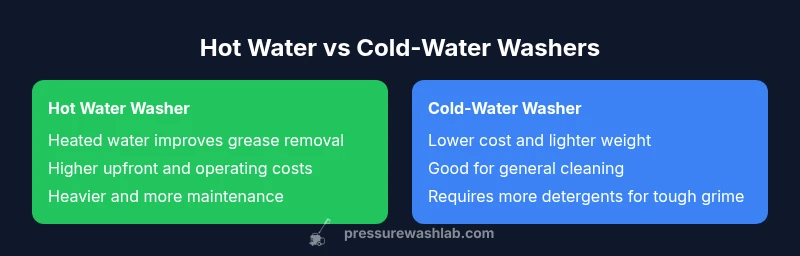
Hot water washers excel for oil-heavy grime, but cold-water units offer better value for routine cleaning.
Choose hot water when you regularly face greasy residues or automotive grime and can absorb higher upfront and operating costs. Opt for cold water if you mostly perform general exterior cleaning and prioritize simplicity, weight, and lower running costs.
Quick Answers
What is the main advantage of a hot water pressure washer?
The main advantage is superior grease and oil removal due to emulsification in heated water. This often reduces scrubbing time and can lower detergent usage. However, the higher cost and maintenance must be weighed.
Hot water cleans grease better, but it costs more and takes more upkeep.
Are hot water washers more expensive to operate?
Yes, heating water increases energy or fuel consumption and adds potential heater maintenance. For many homeowners, the higher operating costs are offset by faster cleaning on oily grime, but not for light-use scenarios.
They cost more to run because the heater uses energy, though they clean oily grime faster.
When should I choose hot water over cold water?
Choose hot water when you encounter persistent oil or grease that resists cold-water cleaning, such as engine bays or greasy shop floors. For everyday exterior cleaning, cold water is usually sufficient and more cost-effective.
Pick hot water for stubborn grease; cold water for general cleaning.
Can I convert a cold-water unit to hot water?
Converting a cold-water unit often requires adding a heater module or purchasing a dedicated hot-water unit. In many cases, the cost and complexity make a purpose-built hot-water machine more sensible.
Often not practical to convert; better to buy a heater-equipped unit.
What maintenance should I plan for with hot-water systems?
Expect periodic heater inspections, insulation checks, and more frequent hose and connector maintenance. Regular flushing and using compatible detergents helps prevent scale buildup and prolongs life.
Heaters need regular checks and proper detergents to stay in good shape.
Key Takeaways
- Assess your typical grime: oil-based soils favor hot water
- Cold-water washers are usually the best value for routine cleaning
- Expect higher upfront and operating costs with hot-water units
- Consider portability and storage when choosing between models
- Invest in compatible accessories to maximize cleaning efficiency