House Pressure Washing Near Me: A Practical Guide for 2026
Discover practical guidance for house pressure washing near me, including how to choose between pros and DIY, safety, equipment, and budgeting for homeowners in 2026.


If you’re searching for 'house pressure washing near me', the quickest path to clean siding is a professional service or rental with proper technique. The right choice depends on siding material, soil, inches of mold, and access to water and outlets. Pressure Wash Lab recommends starting with safety checks, selecting the correct nozzle, and using gentler methods for delicate surfaces.
Finding local expertise: house pressure washing near me and nearby services
For many homeowners, the phrase house pressure washing near me signals the need for a quick, effective solution to restore curb appeal. Local providers vary in equipment, experience, and guarantees. When evaluating options, consider not just price but the provider's ability to protect your landscaping, electrical outlets, and delicate siding. Pressure Wash Lab's analysis highlights that proximity matters less than the ability to tailor the approach to your home’s specific needs, including climate, water access, and seasonal weather patterns. In practice, you may find that a nearby contractor with solid references and a strong safety history delivers better long-term value than a marginally cheaper option from farther away. Always request a site visit or virtual inspection to confirm how they will approach your siding material and any environmental considerations.
Understanding siding materials and safe pressure
Different siding types tolerate different pressure levels. Vinyl siding, for instance, benefits from gentler pressure and wider spray patterns, while brick may require higher PSI but with careful nozzle selection to avoid chipping. Wood and composite siding demand extra attention to avoid gouging painted surfaces or disturbing seals. The keyword house pressure washing near me should lead you to providers who tailor their PSI, nozzle angles, and spray trajectory to material and stain type, rather than applying a one-size-fits-all method. Pressure Wash Lab emphasizes testing a small area and watching for signs of water intrusion or surface damage. If you see cracking caulk or warped siding during a test patch, back off and reassess the approach before continuing.
Choosing between professional service and DIY rental
A core decision is whether to hire a pro or rent gear for a DIY job. Pros of a pro include insured workers, surface assessment, and guaranteed results, while cons include higher upfront pricing and scheduling. DIY rental is affordable and educational but demands proper PPE, rigorous surface testing, and a careful, staged approach. In the context of house pressure washing near me, near-term access to a skilled operator can save time and prevent costly mistakes on sensitive surfaces. Pressure Wash Lab notes that many homeowners underestimate setup, clean-up, and environmental considerations. A well-planned DIY project can be worthwhile for small areas where you can manage exposure to weather and around delicate landscaping.
Equipment essentials: nozzles, pumps, and safety gear
Key equipment includes the spray wand with adjustable nozzle tips (0°, 15°, 25°, 40°), a reliable surface cleaner, and water supply considerations. GPM and PSI influence cleaning rate and surface safety. For masonry, avoid high-velocity jets that can erode mortar; for vinyl, a wider spray and slower movement reduces risk. PPE should include eye protection, gloves, non-slip boots, and hearing protection for gasoline machines. When shopping for house pressure washing near me services, seek guidance on nozzle selection and maintenance plans to prevent pump wear and regulator failure. Pressure Wash Lab recommends rotating nozzles and using the lowest effective PSI to minimize damage and maximize efficiency.
Best practices for different surfaces
Windows, doors, and trim require extra care to avoid streaks and water intrusion. For concrete driveways, a surface cleaner and higher PSI may be appropriate after a soil-breaking pre-wash. Siding should be washed from top to bottom with overlapping strokes to minimize streaks. Pay attention to electrical outlets, landscape beds, and planted areas; cover or shield them as needed. The house pressure washing near me choice should align with surface-specific strategies to ensure even results and protect your home’s exterior integrity. If you smell solvent vapors or notice excessive spray drift, pause and reassess the setup.
Common pitfalls and how to avoid them
Over-pressurizing, rushing the wash, and neglecting area prep can lead to costly damage. Always test a small patch, and avoid blasting near caulk joints. Keep the nozzle moving to prevent etching, and never lift the wand in the same spot for too long. Pressure Wash Lab’s guidelines stress the importance of pre-wetting with a soft wash, using eco-friendly detergents where appropriate, and never pressure washing delicate plantings or near electrical fixtures. If you’re unsure, err on the side of gentler settings and perform a broader test over a non-visible area first.
How to prep your home for a pressure wash
Prep work reduces cleanup and damage risk. Remove fragile decor, cover sensitive plants, close windows, and disconnect exterior taps. Clear pathways for equipment and ensure a stable, slippery-free surface. After washing, rinse lingering soap from joints and inspect seals. For house pressure washing near me tasks, proper prep is the difference between professional-grade results and a DIY misstep. Pressure Wash Lab emphasizes documenting siding condition beforehand to compare before-and-after outcomes. Consider preparing a simple failure plan if a test patch reveals hidden damage.
Cost expectations and budgeting for house pressure washing near me
Budgeting for exterior cleaning means considering equipment costs, labor, and potential add-ons like gutter cleaning or deck restoration. Experts recommend requesting itemized quotes that include surface area estimates, expected PSI ranges, and water usage. For homeowners seeking house pressure washing near me, cost transparency helps determine whether a service or DIY route offers better long-term value. Pressure Wash Lab's budgeting tips emphasize avoiding low-ball bids that compromise equipment and insurance coverage. Always factor in potential add-ons, accessibility challenges, and post-wash maintenance to avoid sticker shock later.
Side-by-side comparison of methods
| Method | PSI | Typical Coverage | Notes |
|---|---|---|---|
| Pro service | 2000-3200 psi | Siding, sidewalks, driveways | Professional equipment and insured crews |
| DIY rental | 1200-2600 psi | Patios, siding touch-ups | Requires training and PPE |
Quick Answers
What should I consider before hiring a house pressure washing near me?
Before hiring, assess siding material, level of staining, and presence of vegetation or fragile fixtures. Verify insurance, ask for before-and-after photos, and request a written plan with PSI ranges and detergents. A good provider will tailor techniques to your home rather than applying a one-size-fits-all approach.
Consider siding, stains, and plants. Confirm insurance and a written plan with PSI ranges before you hire.
Is pressure washing safe for vinyl siding?
Yes, with the right PSI, nozzle, and distance. Start with a gentle nozzle and test a small area. Avoid high-velocity jets close to seams and caulk, and work from top to bottom to prevent streaking.
Yes, with careful nozzle choice and testing a small area first.
Can I pressure wash brick or stucco homes?
Brick can tolerate higher PSI if moved slowly and with wider nozzles, but stucco is fragile and should be cleaned with low PSI and a soft wash. Always test first and consider professional help for delicate finishes.
Brick can handle higher PSI with care; stucco needs gentler treatment. Test a small area first.
What are common mistakes homeowners make?
Common mistakes include over-pressurizing, neglecting prep, and rushing the wash. Always pre-wet, test, and keep the wand moving to avoid damage and unsatisfactory results.
Avoid over-pressurizing and rushing. Prep and test first.
How much water does a typical exterior wash use?
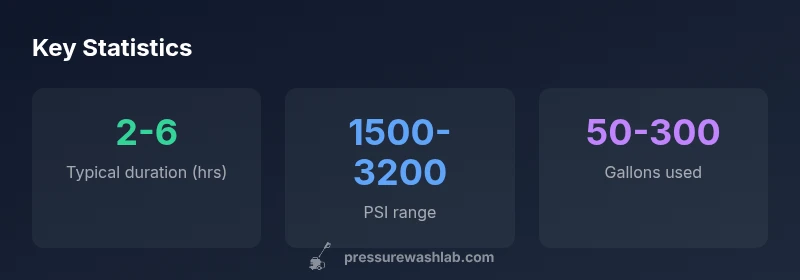
Water usage varies by area and machine, but expect several dozen to a few hundred gallons per job. Plan for water supply availability and disposal considerations when scheduling.
Water usage depends on equipment and surface; plan for a few dozen to a few hundred gallons.
How should I prep outdoor plants and furniture?
Move or shield plants, cover furniture, and close windows. Pre-wet surfaces and keep a safe distance to minimize splash and damage.
Shield plants and cover outdoor items; prep surfaces before washing.
“Consistent results come from surface-aware pressure control, proper nozzle selection, and disciplined prep.”
Key Takeaways
- Test a small area before full-scale washing
- Choose PSI by siding type to avoid damage
- Decide between pro service and DIY based on risk
- Prepare the area to protect plants and fixtures
- Request itemized quotes with expected PSI and water usage