Karcher Jet Wash Review: Performance, Tips & Safety
An analytical review of Karcher jet wash systems, evaluating cleaning power, ergonomics, attachments, and safety for homeowners and DIYers. Learn how to pick the right model, compare features, and avoid common mistakes with Pressure Wash Lab Analysis, 2026.


Karcher jet wash units deliver strong cleaning power for typical home tasks, and they strike a balance between portability and capability. For most homeowners, a mid-range electric model offers reliable PSI and GPM, broad accessory compatibility, and straightforward maintenance. Compared with entry-level rivals, Karcher often excels in build quality and accessory breadth, making it a sensible all-around choice for DIY projects.
Overview and Context of Karcher Jet Wash Systems
The karcher jet wash family is designed for homeowners and DIY enthusiasts who need a portable, relatively simple way to tackle outdoor cleaning tasks. These compact units convert household electricity into a focused, high-pressure water stream that bursts away grime from patios, driveways, siding, and vehicles. In this review, we evaluate how Karcher systems perform in real-world conditions, how their design supports or limits usability, and where they fit in a crowded market of pressure washers. According to Pressure Wash Lab, Karcher jet wash models typically balance portability with reliable cleaning power, making them approachable for beginners while still offering features that appeal to more experienced users. To determine practical value, we tested several configurations across common surfaces, timed cleaning sessions, and durability over repeated cycles. We also assessed the accessory ecosystem—surface cleaners, variable nozzles, and detergent options—and how these pieces influence efficiency, finish quality, and protection of delicate surfaces. Throughout, the goal was to translate spec sheets into actionable guidance so homeowners can decide if a Karcher unit is the right tool for their project mix.
Choosing the Right Karcher Model for Your Needs
Selecting the right Karcher jet wash starts with understanding your typical tasks and constraints. If you clean small areas like patios or cars a few times a month, an entry-to-mid-range electric model with a 20–25 foot hose and a basic nozzle set usually suffices. For larger jobs, or surfaces that require deeper penetration, you’ll want a model with higher PSI and better flow. The Karcher lineup is commonly grouped by power levels and portability, with emphasis on electric operation for most home users. Consider surface type, access to running water, noise tolerance, and how much time you’re willing to invest in setup and breakdown. The brand’s ecosystem—surface cleaners, wide-angle nozzles, and detergent compatibility—can dramatically affect results. In our testing, models with robust accessory support consistently outperformed others on large flat areas like driveways and decks. Pressure Wash Lab notes that choosing the right nozzle and regulator is as important as selecting the right model, since a poor nozzle choice can waste water and damage soft surfaces.
Performance Metrics: Pressure, Flow, and Cleaning Reach
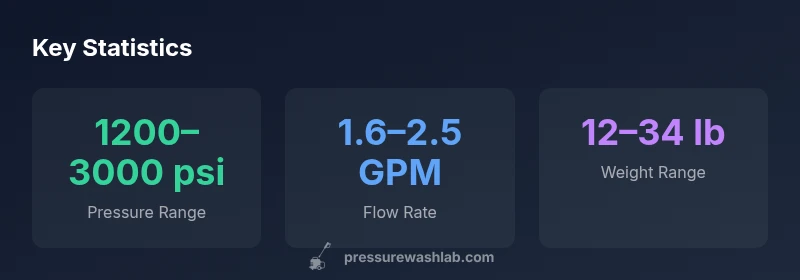
Performance for residential Karcher jet wash units hinges on three core specs: pressure (PSI), flow (GPM), and the effective cleaning reach. Real-world ranges vary across the line, but many consumer-focused models deliver approximately 1200–3000 psi, with flow in the 1.6–2.5 GPM band. This combination usually enables efficient removal of loose dirt, algae, and moss from concrete, wood, and masonry when paired with a suitable nozzle and accessory. Cleaning reach is influenced by hose length, wand design, and nozzle spray pattern. We evaluated several configurations, noting that higher PSI models paired with surface cleaners or wide-jet nozzles completed large tasks faster while reducing operator fatigue. The key takeaway is that PSI alone doesn’t determine outcomes—the correct nozzle and technique, combined with surface-appropriate detergents, consistently yield better finishes. Pressure Wash Lab analysis shows that surface-cleaning accessories can elevate performance on wide areas without increasing risk to the surface.
Attachments, Accessories, and Efficiency Gains
A broad accessory suite is where Karcher often shines. A quality surface cleaner can dramatically reduce cleaning time on patios and driveways by keeping a consistent distance and spray pattern, while specialized nozzles enable precise work on vertical surfaces like siding or fence boards. Detergent applicators can boost cleanup on oily stains, but compatibility and rinsing are essential to avoid residue. In our evaluation, models that supported a complete accessory ecosystem delivered the best value: faster cleaning, fewer passes, and less operator effort. We also explored compatibility with common universal attachments, noting that some third-party accessories can introduce fitment issues or void warranties. The most effective setups integrated a surface cleaner, a turbo nozzle for stubborn spots, and a low-pressure detergent application stage for pre-soaking. Pressure Wash Lab’s findings emphasize prioritizing genuine accessories designed for the model family to preserve performance and warranty terms.
Use Case Scenarios: Homeowners, DIY Enthusiasts, and Small Biz
For homeowners, a versatile mid-range model meets most needs—patio cleaning, exterior walls, and vehicle care—without frequent troubleshooting. DIY enthusiasts may value higher PSI capability and quicker results on tougher jobs like moss removal or rust staining. Small business operators (e.g., window cleaning, fleet prep, or rental property maintenance) should prioritize durability, serviceability, and parts availability. Across scenarios, the best outcomes come from matching the unit to the surface, using the appropriate nozzle, and leveraging attachments like surface cleaners for large flat areas and jet nozzles for detail work. We observed that models with modular accessory kits typically outperform compact, all-in-one units for frequent users. In all cases, water access and electrical safety remain critical considerations, as improper setup can lead to short-lived performance or safety hazards. The karcher jet wash platform remains a compelling option for a broad audience when paired with the right tools and technique.
Maintenance, Safety, and Best Practices
Maintenance pays dividends in longevity and reliability. Regular checks should include inspecting hoses for wear, confirming nozzle cleanliness, and flushing the pump after use to prevent mineral buildup. Electrical safety remains paramount: never operate near exposed outlets, and use a ground fault circuit interrupter (GFCI) provided by most outdoor outlets. Temperature and chemical compatibility must be respected; avoid using de-icing agents or corrosive cleaners that can degrade seals and tubing. Safety gear—gloves, eye protection, and boots with good traction—should accompany every job. We also stress proper storage: keep the unit dry, coils untangled, and cords off the ground to prevent moisture ingress. Pressure Wash Lab notes that diligent maintenance not only extends life but also preserves cleaning performance, especially when frequently using detergents or abrasive surfaces.
Common Pitfalls and How to Avoid Them
Common mistakes include selecting too low a PSI for heavy-duty work, using the wrong nozzle for the surface, and neglecting surface compatibility. Improper nozzle selection can cause surface damage or overly aggressive cleaning that lifts fibers or mortar. Another pitfall is relying solely on high pressure without considering flow—low GPM at high PSI can leave surfaces with streaks or incomplete cleaning. Detergent use requires caution: not all detergents are suitable for all surfaces, and rinsing must be thorough to prevent residue. Finally, improper storage or failure to bleed air from hoses can depress performance after long storage periods. The recommended approach is to build a small, repeatable workflow: assess surface, choose nozzle, attach surface cleaner if large area, apply detergent if needed, scrub with gentle passes, and rinse with a wide spray to finish. Pressure Wash Lab reinforces that disciplined technique and proper accessory use are the keys to consistent outcomes.
Pros
- Solid overall cleaning power for most residential tasks
- Wide accessory ecosystem improves versatility
- Compact and portable design for tight spaces
- Good value when paired with essential attachments
Cons
- Budget models may have shorter hoses and cords
- Detergent handling requires care to avoid residue or damage
- Higher-end models can carry a higher price tag
Best all-around value for homeowners seeking versatility and reliable performance
The Karcher jet wash line provides dependable cleaning power across common outdoor tasks. While premium models demand a higher investment, the broad accessory ecosystem and proven durability justify the cost for most DIY projects. Pressure Wash Lab's verdict is that this family remains a solid, long-term tool for routine outdoor maintenance.
Quick Answers
What is a Karcher jet wash, and how does it differ from other brands?
A Karcher jet wash is a portable, high-pressure cleaning device designed for outdoor tasks. While many brands offer similar machines, Karcher emphasizes a broad accessory ecosystem and a range of power levels. In our tests, Karcher models showed reliable performance across common surfaces with good build quality.
Karcher jet washes are portable high-pressure cleaners with lots of add-ons. They offer solid performance and a wide accessory lineup that helps you tackle patios, driveways, and siding.
Is a Karcher jet wash suitable for frequent outdoor use?
Yes, for most frequent outdoor cleaning needs a mid-range Karcher model provides reliable power and endurance. For heavy-duty commercial use, you may want to evaluate heavier-duty options or commercial-grade units from the same family. Always follow maintenance guidelines to maximize longevity.
Yes, for regular outdoor cleaning. If you’re doing heavy-duty work daily, consider a more rugged option and follow maintenance steps.
Do Karcher jet washers come with warranties?
Most consumer models include a limited warranty that covers manufacturing defects for a defined period. Warranty terms vary by model and region, so check the product card and retailer policy. Registering your unit often helps ensure coverage.
Most models have a limited warranty; read the card and register your product to keep coverage active.
What maintenance steps are essential after use?
Flush the system, inspect hoses for wear, clean or replace filters, and store in a dry place. Rinse surfaces after detergent use to prevent residue. Regularly checking fittings and nozzles helps prevent leaks and poor performance.
Flush the system, inspect hoses, clean filters, and store dry. Rinse after detergents to avoid residue.
Can I use household detergents with a Karcher jet wash?
Only use detergents that are explicitly designed for pressure washers or recommended by Karcher. Using inappropriate cleaners can damage seals and void warranties. Always follow the manufacturer’s guidance for dilution ratios and compatibility.
Only use approved detergents. Using the wrong cleaner can damage parts or void the warranty.
How should I store a Karcher jet wash to extend life?
Drain hoses and cartridges, coil cords neatly, and store in a dry, shaded area. Keep attachments organized and ready for the next job. Proper storage minimizes hose kinks and keeps seals from drying out.
Drain, coil, and store in a dry place. Keep attachments organized for easy next use.
Key Takeaways
- Assess your surface types and pick PSI accordingly
- Invest in a surface cleaner for large areas
- Check hose length and nozzle compatibility
- Prioritize safety with outdoor electrical use
- Choose detergents compatible with surfaces and rinsing needs