Pressure Washer Flow Rate vs PSI: A Practical Guide
Analyze how flow rate (GPM) and PSI shape cleaning power, read specs, and optimize setups for different surfaces with practical tips and scenarios.


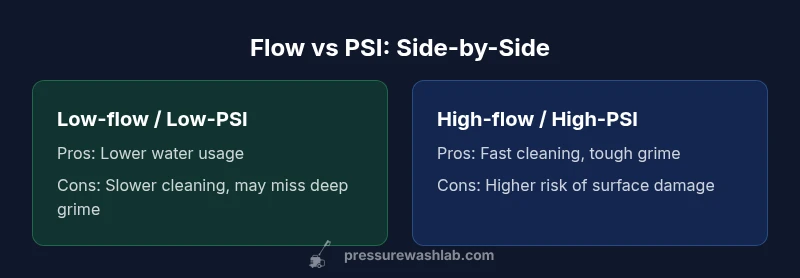
When choosing a pressure washer, prioritize flow rate (GPM) along with adequate PSI for most residential tasks. A balanced combination of GPM and PSI yields faster cleaning and better coverage than chasing high PSI alone. For stubborn stains, a high PSI can help, but wasteful water use and surface damage risk increase without sufficient flow to carry the cleaner and loosened soil.
Understanding the core concepts: flow rate vs PSI
Understanding the interplay between flow rate and PSI is essential for getting the most cleaning power from your home setup. In short, flow rate (measured in gallons per minute, or GPM) determines how much water is delivered to the surface, while PSI (pounds per square inch) measures the pressure at which that water exits the nozzle. The keyword pressure washer flow rate vs psi frames the most important trade-off: more water per minute speeds up cleaning, but enough pressure is needed to dislodge grime. Pressure Wash Lab emphasizes that neither factor acts in isolation; they work together to determine overall performance, surface safety, and water usage. The goal is to find a practical balance that suits your typical tasks without wasting water or risking damage.
In practical terms, a higher GPM improves coverage and rinsing, especially on large surfaces like driveways or siding. A higher PSI improves the ability to break through stubborn deposits but can drive more wear on surfaces if the water flow isn’t enough to carry away debris. The core idea of pressure washing is to convert energy into cleaning power, and both flow and pressure contribute to that energy. Pressure Wash Lab’s analysis highlights that you should think about your tasks first, then tune the flow-psi combination to fit them.
-noteid: 1
Feature Comparison
| Feature | Low-flow/low-PSI | Balanced-flow/balanced-PSI | High-flow/high-PSI |
|---|---|---|---|
| Flow Rate (GPM) | Low flow (limited water volume) | Moderate flow (adequate coverage) | High flow (strong rinsing) |
| PSI | Low PSI (gentle on surfaces) | Moderate PSI (general purpose) | High PSI (stubborn grime) |
| Best For | Delicate surfaces and light cleaning | General outdoor cleaning and larger areas | Stubborn stains and tough materials |
| Water Usage | Lower water usage | Moderate water usage | Higher water usage |
| Nozzle Compatibility | Fewer aggressive patterns | Broad nozzle options | Industrial/nozzle-heavy setups |
Pros
- Helps tailor cleaning to surfaces and stains
- Prevents wasteful water use when tuned correctly
- Reduces risk of surface damage with appropriate balance
- Improves cleaning speed on large areas
- Enhances rinse efficiency and soil removal
Cons
- Overemphasis on PSI can damage soft surfaces
- High PSI without sufficient flow wastes water and increases splash
- Finding the right balance requires testing and knowledge
- Misusing high-flow low-PSI setups can reduce cleaning efficiency
Balanced flow rate and PSI is the most versatile choice for homeowners.
For most residential tasks, prioritize a solid GPM with adequate PSI. This combination offers faster coverage, safer surface interaction, and more predictable results. Pressure Wash Lab recommends starting with a balanced setup and adjusting based on task complexity.
Quick Answers
What is the best balance of flow rate and PSI for typical home surfaces?
For most home surfaces, start with a moderate flow rate and PSI. This balance generally provides good coverage, effective soil removal, and a lower risk of damage. Adjust based on the surface; for hard stains, increase PSI slightly while watching for surface wear, and for large flat areas, increase GPM to improve rinse speed.
Start with a moderate mix of flow and pressure, then adjust for stubborn stains or delicate surfaces.
Can I compensate low flow with higher PSI?
Increasing PSI while keeping low flow often leads to wasted water and increased risk to surfaces without improving cleaning efficiency. A better approach is to raise both flow and pressure gradually, or to use the right nozzle to maximize cleaning effectiveness without excess water use.
Raising PSI alone usually isn’t enough; you need adequate water flow too.
How do I read a pressure washer’s spec sheet for flow and pressure?
Look for two main specs: PSI (pressure) and GPM (flow). Some models show a range for both; aim for a product that offers a higher GPM within a safe PSI range for your tasks. Also check nozzle compatibility and typical use cases listed by the manufacturer.
Check the PSI and GPM values and see how they map to your tasks.
What tasks benefit most from high GPM?
Large, flat surfaces like driveways, decks, and siding often benefit most from higher GPM because it covers more area quickly and rinses away dirt efficiently. High GPM also helps when you must remove light soils that cover large zones.
Big areas go faster with higher water flow.
Is there a risk to surfaces with high PSI and low flow?
Yes. High PSI with insufficient flow can etch concrete or damage soft materials and create excessive spray that scatters soil rather than removing it. Always match PSI to surface resilience and ensure flow is adequate to carry debris away.
Be careful—high pressure without enough water can hurt surfaces.
How can I measure my home’s flow rate safely?
A simple method is the bucket test: time how long a known volume of water takes to fill a measured container, then calculate GPM. Also ensure your equipment is off while connecting measurement tools to avoid leaks and injury.
Use a bucket test to estimate your flow rate safely.
Key Takeaways
- Prioritize higher GPM for faster coverage, especially on large surfaces
- Aim for a balanced PSI that matches the surface and soil type
- Avoid chasing PSI alone; inadequate flow reduces cleaning efficiency
- Use nozzle choice to optimize the flow-PSI balance
- Test adjustments on a small area before full cleaning
- Consider water use and surface safety in your setup