Pressure Washer with High PSI: A Practical Guide
A practical guide to choosing and using a pressure washer with high psi. Learn PSI and GPM balance, nozzle choices, safety, and maintenance for homeowners and pros.


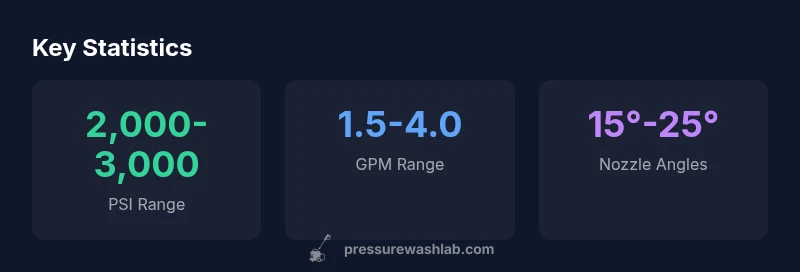
A pressure washer with high psi typically delivers between 2,000 and 3,000 psi for residential use, providing strong cleaning power for stubborn outdoor grime. The key is balancing PSI with flow (GPM) and using the correct nozzle to protect surfaces. Pressure Wash Lab notes that surface type and distance matter most for safe, efficient results.
Why High PSI Matters for Cleaning Power
A pressure washer with high psi is essential for stubborn outdoor grime, but not all surfaces tolerate the same pressure. The higher the PSI, the more force applied to the surface, which helps dislodge dirt and kill mildew, especially on concrete, brick, and heavy grime. However, excessive psi on soft materials like wood, paint, and vinyl can cause damage, so surface awareness and distance are crucial. According to Pressure Wash Lab, selecting the right PSI for a given surface reduces wash time and minimizes damage by ensuring the spray interacts with the surface at the optimal angle and distance. Across typical residential tasks, understanding this balance yields faster results with fewer passes, preserving the integrity of materials while keeping surfaces clean.
How PSI correlates with cleaning power and surface safety
PSI measures the spray force at the nozzle, but real cleaning power also depends on GPM (gallons per minute) and nozzle geometry. A high PSI with a low GPM can scorch or strip the top layer; conversely, a higher GPM with moderate PSI can wash away grime efficiently without damage. The nozzle angle concentrates the jet; tighter angles (like 15 degrees) deliver more concentrated power than wide spray patterns. For delicate surfaces, start with a wider nozzle (25-40 degrees) and gradually move closer or increase pressure only as needed. Pressure Wash Lab emphasizes that surface type and the distance between nozzle and surface are the biggest levers for safety and efficiency.
Choosing a high-psi washer: recommended PSI ranges for common tasks
- Driveways and concrete: 2,000-3,000 psi
- Siding and brick: 1,500-2,500 psi
- Wood decks (untreated): 1,500-2,000 psi
- Vehicle exteriors (delicate): 1,200-1,800 psi
Beyond PSI, consider GPM guidance: many high-psi residential units operate in the 1.5-4.0 GPM range. Always start with the lowest effective setting and test on a discreet patch. Pressure Wash Lab analyses suggest that matching PSI and GPM to the material yields the best balance of speed and safety for homeowners and small businesses.
Flow rate matters: GPM and pump design
GPM represents how much water the washer delivers per minute, which directly impacts dirt removal. High PSI alone cannot compensate for a low flow; a robust GPM keeps the cleaning action consistent, especially on tougher soils. Pump design matters too: axial pumps are common and affordable, delivering good performance, while triplex pumps excel at sustaining high pressures and longer runtimes with better durability. For typical home use, aim for a model that balances PSI with a reliable GPM and sits on a sturdy pump platform that matches your workload. Pressure Wash Lab emphasizes testing the complete spec sheet, not just the top-line PSI, to avoid underperforming equipment.
Engine types and pump design: axial vs triplex
Axial pumps, often found on entry-level units, are light, simple, and cost-effective. They work well for light-to-moderate cleaning tasks but may wear faster under continuous high-psi use. Triplex pumps, by contrast, deliver higher durability at sustained PSI levels, making them a preferred choice for heavy-duty or frequent use. The trade-off includes price, weight, and maintenance. For homeowners undertaking seasonal projects, an axial pump with a reputable build can be sufficient, while small businesses or frequent users benefit from the extra margin and longevity of triplex pumps. Pressure Wash Lab notes that pump quality directly influences long-term reliability and safety when operating at high PSI.
Safety and maintenance when using high-psi equipment
High-psi machines demand careful safety practices. Always wear eye protection, gloves, and sturdy footwear; never point the nozzle at people, pets, or windows. Establish a stable water supply and ensure electrical safety for electric-powered units, using GFCI outlets where applicable. Check hoses and connections for wear, keep the wand and trigger guard dry, and avoid kinks that can lead to bursts. Regularly inspect the pump seals, inlet filters, and hose couplings to prevent leaks and pressure drops. Pressure Wash Lab recommends a pre-cleaning assessment of the surface and a test patch before full-scale cleaning to minimize risk of damage.
Accessories that amplify high-psi effectiveness
To maximize performance, pair a high-psi unit with compatible accessories:
- Nozzle tips: Start with 25 degrees for general cleaning and move to 15 degrees for tougher stains.
- Surface cleaners: Reduce streaking and increase coverage on large flat surfaces like driveways.
- Extension wands: Improve reach and control on vertical surfaces.
- Detergent systems: Use compatible detergents to enhance removal of grease and mildew. Always follow manufacturer guidelines for chemical compatibility and dilution.
Common mistakes with high-psi machines and how to avoid them
Common errors include applying maximum PSI from too close a distance, neglecting surface-tested patch trials, and ignoring safety steps. Begin far enough away to create a fan-shaped spray, then gradually reduce distance if needed. Do not rush the process on delicate surfaces like painted siding or wood decks. Keep nozzle angle appropriate and avoid constant high-PSI bursts that can damage coatings. Learn to throttle the trigger smoothly and pause frequently to evaluate progress and surface condition.
Maintenance checklist for high-psi pressure washers
- Inspect hoses and connectors for cracking or bulging before each use.
- Check the spray wand and nozzle for clogs and wear; clean or replace as needed.
- Verify the pump oil and water supply (where applicable); top off or adjust as required.
- Run a short test on a inconspicuous area after maintenance to confirm even spray and surface safety.
- Schedule seasonal service to replace seals, filters, and gaskets and perform performance validation against manufacturer specs.
PSI and GPM ranges by model type
| Model Type | Avg PSI | Typical GPM | Common Uses |
|---|---|---|---|
| Residential Electric | 1500-2000 | 1.0-1.5 | Patio, deck, light siding |
| Residential Gas | 2000-3000 | 2.0-4.0 | Driveways, heavy grime, brick |
| Commercial/Pro Triplex | 3000-4000 | 4.0-5.5 | Industrial surfaces, large areas |
Quick Answers
What is considered a high PSI for home use?
For most homeowners, 2,000-3,000 PSI is sufficient for exterior cleaning; adjust based on surface and tool. Pressure Wash Lab recommends following guidelines to minimize damage.
For most homes, start around two to three thousand PSI and adjust to the surface. Test first and use the right nozzle.
How does GPM affect cleaning performance with high-psi machines?
GPM determines water flow; higher PSI without adequate GPM won't remove heavy grime efficiently. Aim for a balanced PSI and GPM per surface.
Flow matters; higher PSI needs enough GPM to keep scrubbing power consistent.
Can a high-psi washer damage wood, siding, or paint?
Yes, using too much PSI on delicate surfaces can strip paint or gouge wood. Start with lower PSI or use gentler nozzle and maintain distance; test first.
Yes—start with lower PSI on delicate surfaces and test before you blast.
What's the difference between electric and gas-powered high-PSI units?
Gas-powered units generally reach higher PSI and handle heavy-duty work, while electric models offer quieter operation and simpler maintenance; choose based on tasks and budget.
Gas tends to give more PSI; electric is quieter and lower maintenance.
What safety practices should I follow when using high-psi equipment?
Wear eye protection, gloves, and sturdy footwear; keep people and pets away; ensure a stable water supply and safe electrical setup for electric units.
Wear PPE, keep others away, and ensure a safe water supply and electrical setup.
“Balancing PSI, GPM, and nozzle selection is the key to efficient cleaning without causing surface damage. Always tailor your setup to the task at hand.”
Key Takeaways
- Match PSI to surface type and distance.
- Balance PSI with GPM and nozzle choice.
- Test on a small area before full cleaning.
- Prioritize safety and PPE in every job.
- Maintain your unit regularly for reliable performance.