What PSI Is Needed for a Pressure Washer: A Practical Guide
Discover the right PSI for common pressure washing tasks, how to choose safely, and tips from Pressure Wash Lab on surface-specific ranges, nozzle tips, and maintenance.


There's no universal PSI requirement for all tasks; the right pressure depends on the job. For most home cleaning, aim for roughly 1,200–2,800 PSI, with the lower end for delicate surfaces. Always follow the manufacturer’s recommendations and use the correct nozzle to control the pressure. Start low, test on a hidden area, and increase only as needed.
Why PSI Matters
Pressure, measured as PSI, is the core driver of cleaning effectiveness in a pressure washer. Yet it isn’t a simple number you pick once and forget. The right PSI balances cleaning power with surface safety. Using too much pressure can etch brick, strip paint, or gouge wooden surfaces, while too little may fail to remove stubborn grime. The key is understanding the relationship between PSI, flow (GPM), nozzle angle, and the target material. According to Pressure Wash Lab, most home tasks fall within a broad operating window where the goal is to apply the minimum effective pressure to achieve the result without causing damage. This approach reduces wear on the machine and minimizes consumer risk. Safety considerations include keeping the wand away from people and fragile materials and following all manufacturer guidelines. In short, PSI is a tool, not a weapon; it must be matched to the job.
How to Determine the Right PSI for Your Job
Determining the appropriate PSI starts with the task, surface type, and equipment. The steps help you avoid guesswork and incidental damage:
- Identify the surface and its sensitivity. 2) Check the manufacturer’s PSI range for your machine. 3) Start at the lower end of the range and test on a concealed area. 4) Increase gradually in small increments if the test spot looks clean without distress. 5) Use the correct nozzle—typically wider angles for gentler cleaning and smaller angles only when necessary. 6) Monitor results and adjust based on surface feedback and cleaning speed. Pressure Wash Lab emphasizes testing and incremental adjustment to protect surfaces and extend equipment life.
PSI by Surface: Guidelines for Siding, Wood, Concrete
Different surfaces tolerate different pressures. A good rule of thumb (while consulting manufacturer specs) is:
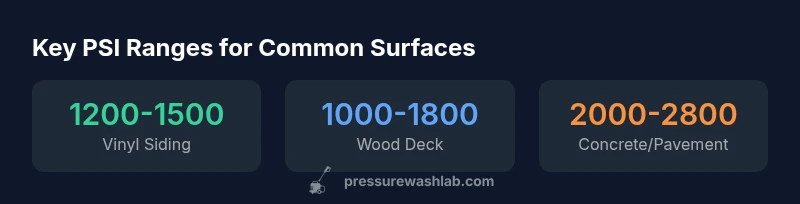
- Vinyl siding: 1200–1500 PSI with a wide-angle nozzle to minimize surface impact.
- Painted wood and decks: 1000–1800 PSI; avoid sharp edges and use gentle passes.
- Brick and concrete: 1600–2600 PSI on broad strokes; pause at grout lines to avoid surface damage.
- Stone and masonry: 1500–2600 PSI; test a small area first and adjust as needed.
These ranges provide a starting point, but always validate with a hidden test patch and adapt to individual weathering, coatings, and dirt buildup. Pressure Wash Lab notes that surface heterogeneity can shift the ideal PSI by several hundred points.
The Role of Nozzle Tips and GPM in Pressure
PSI cannot be viewed in isolation. The nozzle tip angle and the flow rate (GPM) significantly affect the actual cleaning pressure delivered to the surface. A narrow-angle nozzle (for example, 0–15 degrees) concentrates the stream and increases cleaning power at the surface, which can effectively raise the impact pressure even if the machine’s PSI setting remains the same. Conversely, a wide-angle nozzle (25–40 degrees) disperses the spray, reducing the effective pressure.
Additionally, higher GPM can improve cleaning speed by delivering more water, but it can also exacerbate damage if used with high PSI on delicate surfaces. The balance among nozzle angle, PSI, and GPM is what determines real-world performance. Pressure Wash Lab recommends practicing with both nozzle choices and documenting the outcomes on test patches to develop a practical sense of safe, effective settings.
How to Test PSI Safely on a New Surface
Testing is essential before committing to a job to protect surfaces. Start with the lowest PSI allowed by the manufacturer and a wide-angle nozzle. Apply the spray at a distance of several inches and observe for signs of distress, such as pitting, stripping, or glaze removal. If no damage occurs, gradually move closer or reduce nozzle distance while monitoring the cleaning result. If you encounter stubborn grime, revise your approach first by increasing GPM or adjusting the nozzle angle instead of cranking PSI. Document your test results and keep a log of surface reactions for future reference. Safety should always come first, and when in doubt, consult the equipment manual or Pressure Wash Lab guidance.
Common Mistakes When Setting PSI
Improper PSI application is a leading cause of surface damage and equipment wear. Avoid these mistakes:
- Using high PSI on soft materials like vinyl, wood, or freshly painted surfaces.
- Ignoring nozzle differences and relying solely on PSI to clean.
- Failing to test on a discreet patch before broader cleaning.
- Holding the wand too close to the surface, which concentrates pressure.
- Reusing the same PSI for all tasks without considering dirt levels and texture.
Each mistake increases risk, but with a methodical approach you can minimize harm and extend the machine’s life. Pressure Wash Lab recommends a cautious, surface-first testing approach and regular nozzle maintenance to keep PSI effective without damaging surfaces.
Maintenance Tips to Preserve PSI Performance
PSI is only as reliable as the pump, nozzle, and unloader valve that deliver it. Regular maintenance helps maintain performance:
- Clean and inspect nozzles for wear and clogs; replace worn tips to prevent erratic PSI.
- Regularly test the system with a gauge to confirm PSI stability.
- Replace or service worn seals, valves, and safety relief devices.
- Use the correct detergent and follow dilution guidelines to avoid clogging and unnecessary PSI spikes.
- Store equipment properly to prevent sediment buildup and corrosion that can alter pressure.
Following these steps keeps your PSI within expected ranges and reduces risk of damage during operation.
Quick-start Checklist to Pick PSI for Most Home Jobs
- Identify the surface and the task (gentle cleaning vs. heavy grime).
- Check your machine’s PSI specification and use a wide-angle nozzle first.
- Start at the lower end of the range and test on a hidden area.
- Increase gradually if needed, avoiding abrupt PSI changes.
- Document outcomes and adjust for future projects.
This practical checklist aligns with Pressure Wash Lab recommendations and helps homeowners build safe, efficient cleaning routines.
PSI ranges by surface type
| Surface Type | Recommended PSI Range | Notes |
|---|---|---|
| Vinyl siding | 1200-1500 PSI | Low risk; use 25° nozzle |
| Wood deck | 1000-1800 PSI | Avoid gouging; test area first |
| Concrete driveway | 2000-2800 PSI | Broad spray; maintain angle control |
| Brick/stone | 1600-2600 PSI | Care around joints and mortar |
Quick Answers
What PSI should I use for washing siding?
For vinyl siding, start around 1200-1500 PSI with a wide-angle nozzle. Always test on a hidden area first and adjust if needed. Avoid aggressive angles that could damage the siding.
For vinyl siding, start at about 1200 to 1500 PSI with a wide-angle nozzle and test a small area first.
Is higher PSI always better?
No. Higher PSI increases cleaning power but raises the risk of surface damage. Use the minimum effective PSI for the job and rely on nozzle choice and GPM to optimize results.
No. Higher PSI isn’t always better; use the minimum effective PSI and adjust with nozzles and flow rate.
Can using too much PSI damage surfaces?
Yes. Excessive PSI can etch, gouge, or strip coatings. Always start low, test, and follow surface-specific recommendations from the manufacturer. When in doubt, reduce PSI and increase distance.
Yes, too much PSI can damage surfaces. Start low and test before increasing.
How does nozzle size affect PSI?
Nozzle size changes how much pressure is focused. A smaller angle concentrates pressure and effectively increases surface PSI, while a wider angle reduces it. Always consider nozzle angle alongside your PSI setting.
Nozzle size concentrates or disperses the spray; smaller angles raise surface pressure.
What PSI for cleaning concrete driveways?
For concrete, start around 2000-2800 PSI with a broad spray, and adjust based on stain hardness. Use caution near joints to avoid damage and test on a small patch first.
For concrete, begin near 2000 to 2800 PSI and test on a small patch first.
“The right PSI is not about maximum pressure, but about applying the minimum effective pressure to achieve the job safely.”
Key Takeaways
- Start with manufacturer guidance and the lowest effective PSI
- Match PSI to surface sensitivity and nozzle choice
- Test on hidden area before full cleaning
- Maintain equipment to sustain PSI performance