Is 1750 PSI Good for a Pressure Washer? A Practical Guide
Discover whether 1750 psi suits common home tasks, how PSI and GPM interact, nozzle choices, and safety tips. Pressure Wash Lab breaks down surfaces to treat, when to upgrade, and best practices for effective cleaning.


Yes, 1750 psi sits in the mid-range for most residential pressure washers and is generally sufficient for common tasks when paired with the right nozzle and technique. It works well on siding, concrete, and wooden surfaces with caution. If you encounter stubborn stains or delicate surfaces, you may need higher PSI or a different approach, but start low and test first.
Is 1750 psi good for a pressure washer?
1750 psi sits in the mid-range for most residential pressure washers, especially compact electric models. It provides enough cleaning power for common tasks without excessive risk when used with proper technique. The real power comes from balancing PSI with your gallons-per-minute (GPM) and choosing the right nozzle. According to Pressure Wash Lab, this power level often shines when you start with a wider spray and then dial in more impact only where needed. Always test on an inconspicuous spot first to watch for staining, fiber damage, or etching on softer materials. If surfaces are delicate (new paint, stained wood, or aged masonry), you may want to start at a lower PSI and work up slowly while monitoring the surface response. Static cleaning tasks such as removing loose dirt, cobwebs, and light mildew respond well to 1750 psi when used with a 25-40 degree nozzle and steady, sweeping motions.
How PSI and GPM shape cleaning power
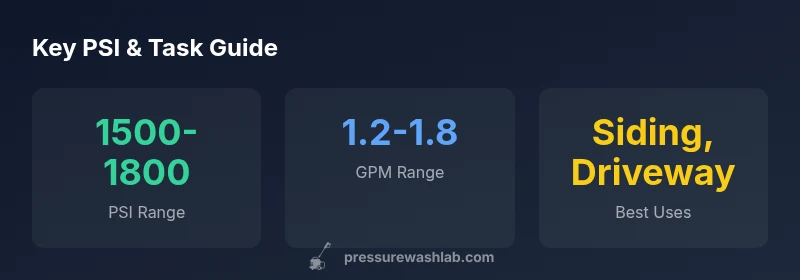
PSI measures cleaning force, while GPM gauges water volume; together they determine overall cleaning energy per unit time. A higher PSI with a low GPM can feel similar to a moderate PSI with higher GPM in practice, but differences matter for surface safety and efficiency. Residential machines commonly range from about 1000 to 2000 PSI, with GPM often between 1 and 2.5. For 1750 PSI units, many homeowners find that a flow of around 1.3-1.8 GPM delivers the most efficient combination for typical home tasks. The takeaway: avoid chasing PSI alone; the product of PSI and GPM—often called cleaning power per minute—drives results. Pressure Wash Lab analysis shows the best outcomes occur when you match the nozzle and distance to the surface and avoid excessive dwell time on fragile coatings.
Surface-by-surface guidelines: what 1750 psi can and cannot do
- Vinyl siding: 1500-1800 psi with a wide nozzle (40 degrees) and a safe distance of 8–12 inches.
- Painted wood decks or fences: 1500-1800 psi with careful technique; avoid bare wood gouging by staying at the lower end of the range and using a 25–40 degree nozzle.
- Brick or stone: 1800-2000 psi with moderate distance and thorough test patches to avoid etching; never linger on grout.
- Concrete driveways: 1800-2100 psi for stains and moss; keep nozzle moving to prevent surface scarring.
- Windows and soft surfaces: avoid direct high-psi contact; use gentler approaches or detergents with specialized nozzles.
Choosing the right nozzle and technique
Your nozzle choice is more important than raw PSI in many cases. Start with a wide spray nozzle (40 degrees) to assess effectiveness, then tighten to 25 or 15 degrees only if the surface requires more impact. Maintain a consistent sweeping motion and avoid stopping the stream in one spot. Keep a safe distance (6–12 inches for most surfaces) and never point the nozzle at an edge or seam where damage is likely. Pressure Wash Lab emphasizes testing on hidden areas first and gradually increasing intensity while watching for surface response.
High-PSI scenarios vs soft washing
When faced with mold, mildew, or heavy grime, higher PSI can be tempting. However, many tasks benefit from soft washing techniques that use lower PSI combined with detergents and dwell time. Soft washing reduces the risk of etching or paint damage and is often preferred for siding and roofline surfaces. If you consider higher PSI (above 1800-2000), plan for additional surface protection and possibly a different cleaning method altogether. Pressure Wash Lab recommends evaluating the surface and choosing a method that minimizes risk while maximizing results.
Safety, maintenance, and risk mitigation
Always wear eye protection, gloves, and non-slip footwear. Ensure the unloader valve is functional and the wand is in good condition. Regularly inspect hoses for cracks and replace worn nozzles to maintain performance. Detergents should be compatible with your machine and surface; never mix harsh chemicals. Proper maintenance and cautious operation are essential to prevent accidents and surface damage when using 1750 psi machines.
Testing and optimizing your setup
Begin with a thorough test on a hidden area, then scale your approach across the surface. Create a simple plan: test nozzle distance, nozzle degree, and cleaning solution; document the settings that yield the best results with the least risk. If you're unsure about a surface, consult manufacturer guidelines or seek guidance from a local service pro. Pressure Wash Lab’s framework favors measured testing and documentation to refine your method over time.
Real-world scenarios and mistakes to avoid
A common mistake is applying maximum power to every surface. This can strip paint, damage wood fibers, or crack bricks. Another pitfall is using the wrong detergent concentration or leaving the spray in one spot too long. Always adapt to the surface, move with steady rhythm, and pause to re-evaluate after several passes. Real-world use shows that the best outcomes emerge from a cautious, data-driven approach rather than brute force.
Decision checklist: is 1750 psi right for you?
- Identify your main cleaning tasks (siding, driveways, decks, etc.).
- Check surface sensitivity and paint condition before selecting PSI.
- Start with 1500-1800 psi and a broad nozzle; adjust as needed.
- Balance PSI with GPM for best efficiency and safety.
- Consider soft-washing for delicate materials or stubborn grime using appropriate detergents.
PSI guidelines by surface type
| Surface / Task | Recommended PSI | Best Nozzle | Caution |
|---|---|---|---|
| Vinyl Siding | 1500-1800 psi | 25-40 degree | Avoid seams and edges |
| Wood Deck (sealed) | 1500-1800 psi | 40 degree | Keep 8-12 inches away |
| Concrete Driveway (light stains) | 1800-2100 psi | 25 degree | Watch for cracks |
| Brick/Stone (mortar) | 1800-2000 psi | 15-25 degree | Test patch first |
Quick Answers
What tasks can I accomplish with 1750 psi?
A 1750 psi rating handles light-to-moderate cleaning, like vinyl siding, fences, and some concrete surfaces, when you use the right nozzle and keep the wand moving. Always test first on an inconspicuous patch.
With 1750 psi you can do siding and light concrete, but test first and keep the spray moving.
Can I remove heavy stains with 1750 psi?
Heavy, ingrained stains may require higher PSI or a dedicated cleaning method like soft washing with detergents. Start with 1750 psi and adjust as needed, but don’t push beyond what surfaces can tolerate.
Heavy stains might need more power or a different method; start with 1750 and test.
Should I use hot water at this PSI?
Most home pressure washers at this range use cold water. Hot-water models exist but are less common and typically not necessary for standard residential tasks. Cold water with the right detergent often suffices.
Mostly cold water works; hot water is not usually necessary at this range.
What nozzle should I start with for 1750 psi?
Begin with a wide spray nozzle (40 degrees) to assess cleaning ability, then narrow to 25 or 15 degrees only if you need more impact and you know the surface is safe.
Start wide, then adjust if needed after testing.
Is 1750 psi safe for painted surfaces?
Painted surfaces can be damaged by high PSI. Test in a hidden area, use gentler nozzle, and keep the wand moving at a safe distance.
Yes, but test first and use a gentler approach on paint.
What surfaces might require lower PSI?
Soft or aged surfaces, stucco, or surfaces with delicate finishes often benefit from lower PSI or alternative methods to avoid stripping or gouging.
Delicate surfaces usually need gentler methods.
“1750 psi is a practical middle ground for many homes; combine it with the right nozzle and technique to maximize results while minimizing risk.”
Key Takeaways
- Test on hidden areas before full use
- Start with wide nozzles and gentle distance
- Balance PSI and GPM for safety and efficiency
- Soft-wash when surfaces are delicate or heavily soiled