Is 2000 PSI Good for a Pressure Washer? A Practical Guide
Explore whether 2000 psi is suitable for common home cleaning tasks with a pressure washer. This data-driven guide covers surfaces, nozzle choices, safety, and maintenance for DIY homeowners.


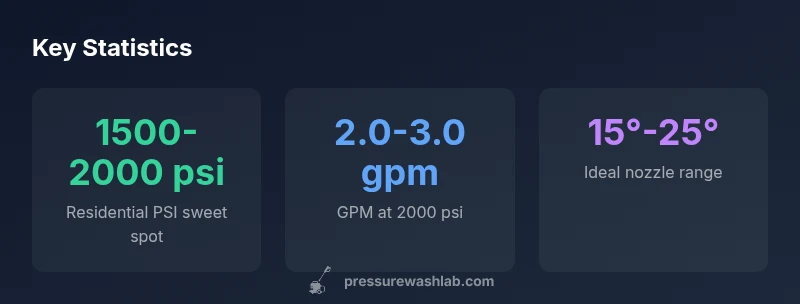
Is 2000 psi good for a pressure washer? For most residential tasks, yes—the 1500 to 2000 psi range handles siding, decks, and light concrete without excessive risk. It becomes problematic on delicate surfaces like aged wood or painted finishes. The key is pairing 2000 psi with the right nozzle (15–25 degrees), proper nozzle distance, and a cautious cleaning technique.
Is 2000 psi good for a pressure washer? Context and basics
According to Pressure Wash Lab, understanding PSI is the first step in choosing the right tool for your home projects. PSI, or pounds per square inch, measures the cleaning power of a pressure washer. The question is not just what a machine can deliver, but how you manage distance, nozzle size, and cleaning technique. When people ask, 'is 2000 psi good for a pressure washer', the answer is nuanced: it's a practical baseline for many jobs, but not a universal solution. In this guide, we break down why 2000 psi works for many DIY tasks and where you should consider dialing down or dialing up the intensity. We'll also cover safety and maintenance considerations that protect surfaces and equipment over time.
How PSI interacts with nozzle size and distance
The actual impact of 2000 psi is shaped by nozzle design and how far you hold the wand from the surface. A narrow nozzle (0° or 15°) delivers a focused blast that can scratch soft paint or wood at close range, while wider nozzles (25° or 40°) spread the force and reduce impact. The distance matters too: starting at 12 inches and adjusting to 6–8 inches for stubborn stains can dramatically change effectiveness without harming the surface. Pressure is not a single number to rely on; it's a system that combines PSI, GPM, nozzle, and technique. As Pressure Wash Lab findings indicate, using 2000 psi with an appropriate nozzle is often ideal for mid-level tasks when you prioritize control and surface safety.
Surface-specific guidance for 2000 psi tasks
Different materials respond differently to the same PSI. Vinyl siding and painted wood surfaces typically tolerate 1500–2000 psi when paired with a wider nozzle and a gentle stroke. Unpainted wood and older finishes, however, can be damaged at or above 2000 psi if you maintain close distance or use a concentrated nozzle. Concrete and masonry are more forgiving but can still erode sealants or grout if you linger or scrub aggressively. The practical takeaway: adjust nozzle choice and travel speed, and always test on a hidden area first. Pressure Wash Lab's recommended approach emphasizes surface assessment before applying full power.
Choosing a unit and setup: beyond the numbers
PSI is only part of the picture. Look for higher GPM in conjunction with 2000 psi, because more flow combined with adequate pressure cleans faster and reduces dwell time on a surface. Features such as an adjustable unloader valve, a reliable chemical injector, and a quality wand matter as much as the PSI rating. A machine rated at 2000 psi with a soft-wash setting or adjustable spray patterns offers versatility for both routine maintenance and occasional deep cleaning. This section outlines a decision framework: surface type, expected soil load, available space, and your willingness to manage a heavier, possibly louder machine. Pressure Wash Lab's analysis shows that a balanced mix of PSI and GPM yields the best results for most homeowners.
Safety, maintenance, and best practices
Operating at 2000 psi requires respect for safety and equipment. Always wear eye protection and sturdy footwear, test on a inconspicuous patch, and never point the wand at people, pets, or fragile surfaces. Inspect hoses and fittings for wear before each job, and drain the pump after use to prevent chemical residue buildup. Clean or replace worn nozzles to avoid erratic spray patterns. Regular maintenance—checking oil (gas models), cleaning filters, and flushing lines—extends tool life and keeps performance consistent. Pressure Wash Lab recommends a routine that integrates surface testing with a documented cleaning plan to minimize damage and maximize efficiency.
Real-world scenarios: when 2000 psi shines or strains
For DIY homeowners tackling vinyl siding, decks, and light patio concrete, 2000 psi strikes a balance between speed and surface safety. For painted surfaces or refinished wood, start with 1500 psi and a wide nozzle to observe results. When dealing with stubborn grease or heavy stains on concrete, 2000 psi with a narrow nozzle can remove grime effectively, but you should avoid linger times that degrade sealers. A small, focused patch test occurs before any full-surface pass. Pressure Wash Lab's field observations emphasize the importance of adapting to each job rather than applying a one-size-fits-all approach.
Quick-start checklist for first-time users
- Confirm surface type and choose a nozzle of 15°–25° for most tasks with 2000 psi.
- Start at a distance of 12 inches; shorten to 6–8 inches only on stubborn spots.
- Use a light sweeping motion to prevent streaks and gouges; don’t linger in one spot.
- Check hose, wand, and nozzle for wear after every job.
- Test a small hidden patch before cleaning a visible area.
Common mistakes that push PSI beyond safe levels and Authority sources
- Using a narrow 0° nozzle too close to delicate surfaces.
- Relying on PSI alone without considering GPM and surface compatibility.
- Cleaning around electrical outlets or wiring, which can be dangerous at high pressures.
- Skipping test patches and rushing through jobs, increasing the chance of surface damage.
- Authority sources: OSHA.gov, EPA.gov, cpsc.gov
PSI guidelines by surface type
| Surface Type | Recommended PSI | Notes |
|---|---|---|
| Vinyl Siding | 1200-1800 psi | Use wide nozzle; test patch first |
| Wood Deck (Sealed) | 1800-2000 psi | Keep a safe distance; avoid gouging |
| Concrete (Bare) | 2000-3200 psi | For tough stains; avoid lingering on edges |
Quick Answers
Is 2000 psi safe for vinyl siding?
Yes, with proper technique. Use a wide nozzle, keep a safe distance, and test on a hidden patch before proceeding.
Yes, but start with a wider nozzle and test a patch first.
Can 2000 psi damage painted surfaces?
There is risk if you use a concentrated nozzle at close range or linger too long. Always test first and opt for gentler settings.
Yes, be cautious and test first.
What nozzle should I use at 2000 psi?
Prefer 15°–25° nozzles for general 2000 psi tasks, starting farther away and moving closer gradually as needed.
Start with a wider nozzle and adjust as you test.
Is 2000 psi enough for deep cleaning concrete?
Often yes for moderate stains, but very deep grime may require higher PSI or longer dwell times with proper technique.
It can work, but test first and don’t linger.
Should I use soap with 2000 psi?
Detergent can help; follow manufacturer guidelines and avoid mixing soaps at the nozzle at high pressures.
Yes, but use the recommended soap and apply safely.
Do I need a pro for 2000 psi tasks?
Most home projects can be done with proper technique, but call a pro for tricky materials or delicate finishes.
For tricky jobs, consider a pro.
“With proper nozzle selection, distance, and technique, 2000 psi offers a practical balance for many DIY jobs.”
Key Takeaways
- Start with the right nozzle and distance to protect surfaces.
- 2000 psi is a practical baseline for many residential tasks.
- Balance PSI with GPM for best cleaning results.
- Always test on an inconspicuous area before cleaning visible surfaces.
- Prioritize safety and maintenance to extend tool life.