Best PSI for Pressure Washers: A Practical Guide 2026
Learn the recommended PSI ranges for common surfaces, how nozzle choice and GPM impact cleaning, and a practical setup guide from Pressure Wash Lab.


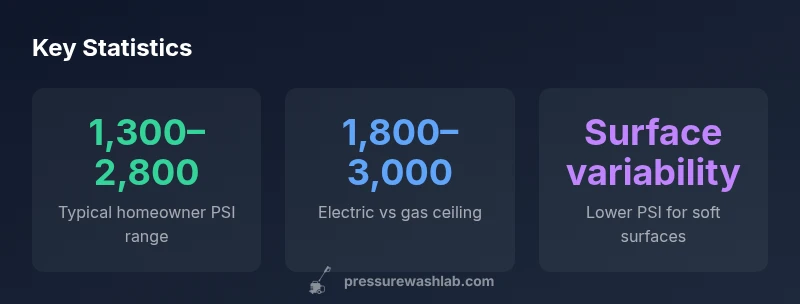
Fact: There is no single 'recommended PSI' for every job. For most homeowners, a practical range is 1,300–2,800 PSI, depending on surface, nozzle, and cleaning goals. Start at the lower end for delicate surfaces (wood, vinyl, painted areas) and increase only as needed. Gas-powered machines often reach higher PSI than most electric models, but control via nozzle selection and GPM is key.
Why PSI ranges differ by surface
PSI, or pounds per square inch, is not a one-size-fits-all setting. The right pressure depends on the target material, its condition, and the cleaning task. According to Pressure Wash Lab, the most reliable approach is to tailor PSI to the surface rather than chasing a single number. For most homeowners, the practical range starts around 1,300 PSI and extends to about 2,800 PSI depending on the surface. Soft surfaces like wood decks or vinyl siding require lower PSI, while hard surfaces such as concrete can tolerate higher PSI, especially when paired with a surface cleaner. Always pair PSI with nozzle selection and GPM to govern the actual cleaning power and the risk of damage.
The goal is effective cleaning without etching, gouging, or forcing water into seams. Start with the lowest effective PSI, observe the material’s response, and adjust gradually. A cautious approach reduces the likelihood of gouges on wood, peeling paint on delicate surfaces, or water intrusion into electronic joints. Over time, homeowners develop a feel for the right balance by inspecting the surface after each pass and adjusting the nozzle width and distance accordingly.
How to estimate PSI for common tasks
Estimating the right PSI relies on surface hardness, staining, and the load you want to remove. Here are practical starting points you can use as rules of thumb:
- Concrete patios and driveways: 2500–3000 PSI for stubborn grime, using a surface cleaner when possible to keep a consistent distance and width.
- Wood decks: 1000–1600 PSI to avoid gouging or splintering; use a wide-angle nozzle and test on a hidden board first.
- Vinyl siding: 1200–1600 PSI; keep the wand moving and maintain a safe distance to prevent moisture intrusion or paint damage.
- Brick or stone facades: 1800–2800 PSI; test close to joints first and consider lowering pressure near mortar.
- Cars and painted surfaces: 1200–1900 PSI; stay off chrome and seals to prevent pitting or streaking.
Remember: PSI is not the only variable. GPM, nozzle angle, and wand distance dramatically influence cleaning power and surface safety. Always begin with a gentler setting and work up as needed.
The role of nozzle size and GPM in PSI
Nozzle size determines how the pressurized water is spread and concentrated. A 0-degree nozzle concentrates force into a smaller area, raising the effective PSI at the surface but increasing the risk of damage. A 15-, 25-, or 40-degree nozzle spreads the spray, lowering the impact on a given spot while increasing coverage. GPM (gallons per minute) affects cleaning speed and total water volume; higher GPM can compensate for lower PSI in some tasks, but it also increases the potential for surface saturation and splash.
In practice, most homeowners should pair a mid-range nozzle (25°–40°) with a PSI in the lower to mid range of the surface’s tolerance. This combination minimizes risk while delivering steady cleaning power. Always verify the manufacturer’s recommendations for your unit and perform a small test patch before proceeding with larger sections.
Safety and surface considerations when dialing PSI
Safety should guide every adjustment. Wear eye protection and gloves, and keep electrical outlets and hoses away from pooling water. Test a small, inconspicuous area first to confirm the surface’s tolerance. If you notice feathering, color change, or gouges, back off to a gentler setting and re-evaluate. For delicate materials like painted wood or vinyl, use the lowest effective PSI and avoid lingering in one spot. If you’re unsure, consult your equipment manual or a professional.
The principle is simple: more PSI does not automatically mean better cleaning. It means more potential risk. Balancing PSI with nozzle selection and GPM yields safer, more predictable results.
Step-by-step setup: dialing in your system
- Determine the surface and stain level to establish a goal.
- Choose a nozzle appropriate for the task (start with 25° or 40° for general cleaning).
- Set baseline PSI at the wand or pump gauge, then perform a test patch on an inconspicuous area.
- Increase PSI gradually in small increments, watching for surface response and pigment lift.
- Use a surface cleaner for wide flat surfaces to maintain uniform distance.
- Document settings for future projects and adjust based on material changes.
With practice, dialing in your system becomes intuitive. Always err on the side of caution and work from a conservative starting point.
Gas-powered vs electric: PSI implications and budgeting
Gas-powered pressure washers typically deliver higher PSI and greater cleaning capacity than electric models, enabling faster results on tough jobs. However, they come with higher maintenance needs, larger upfront costs, and heavier operation. Electric washers are quieter, easier to store, and often sufficient for routine home tasks, but they may cap out at lower PSI ranges. When choosing a unit, match your expected tasks to a realistic PSI range and consider gas’s higher flow (GPM) potential, alongside the budget and daily use requirements.
Maintenance tips to protect surfaces while cleaning
Regular maintenance helps ensure consistent performance and reduces the risk of damage. Clean the nozzle and wand after each use to prevent clogs, inspect hoses for cracks, and replace damaged fittings promptly. Use fresh, clean water and avoid freezing temperatures that could crack components. Apply detergent carefully; some cleaners can foam excessively or leave residues. Finally, store equipment in a heated, dry space to prolong life and reliability.
Common mistakes and quick fixes
- Jumping PSI too quickly: Always test on a small patch first. If you see streaking or gouging, back off.
- Using the wrong nozzle: A too-narrow spray can etch surfaces; switch to a broader nozzle for safe cleaning.
- Over-cleaning a single spot: Move the wand continuously rather than lingering; this prevents water intrusion and surface damage.
- Ignoring GPM: Higher GPM can help with deeper cleaning at lower PSI; balance both for best results.
- Skipping surface tests: Always check for color bleed, fading, or edge damage before tackling the full area.
PSI guide by surface and purpose
| Surface Type | Recommended PSI | Notes |
|---|---|---|
| Concrete (poured) | 2500-3000 | Stubborn stains; use surface cleaner if available |
| Wood deck | 1000-1600 | Avoid gouging; test on hidden board first |
| Vinyl siding | 1200-1600 | Maintain distance; gentle passes |
| Brick facades | 1800-2800 | Test near mortar; avoid high-pressure joints |
Quick Answers
What is the typical PSI range for most home tasks?
For most homes, a practical range is about 1,300–2,800 PSI. Start on the lower end for delicate surfaces and adjust upward as needed after testing a small patch.
Typically, homeowners use about 1,300 to 2,800 PSI. Start low and test a small area first.
Can using too high PSI damage surfaces?
Yes. Excessive PSI can gouge wood, strip paint, or force water into seams. Always test a small patch and prefer lower PSI with wider nozzles on fragile materials.
Yes. High PSI can damage surfaces; test first and err on the safe side.
How do I determine the correct PSI for a surface?
Refer to surface type guidelines, start with the lowest effective PSI, and adjust while observing surface response. Use a compatible nozzle and monitor GPM to maintain control.
Start with recommended PSI for the surface and adjust slowly, watching the surface.
What role does nozzle size play in PSI?
Nozzle size concentrates or widens the spray. Smaller angles increase surface PSI risk. Use wider nozzles for safe, broader coverage and reduce risk of damage.
Smaller nozzle means more pressure per area; wider nozzle equals gentler spread.
Is PSI more important than GPM?
PSI and GPM both matter. PSI controls intensity; GPM controls cleaning speed and flow. Optimal results come from a balanced combination suited to the task.
Both matter; aim for a good balance of pressure and water flow.
“The right PSI is task-specific; balance surface type, nozzle angle, and water flow to avoid damage while achieving clean results.”
Key Takeaways
- Start with the lowest effective PSI for the surface
- Use the right nozzle to control pressure and coverage
- Gas washers offer higher PSI but require more care and maintenance
- Always test a small area before full cleaning
- Balance PSI with GPM for best results