Pressure Washer for a Garden Hose: Safe Setup and Practical Tips
Learn how to connect a garden hose to a pressure washer, choose adapters, and safely clean outdoor surfaces with practical guidance from Pressure Wash Lab.


Using a pressure washer with a garden hose isn't about powering a washer directly from your hose; it's about connecting a controlled water supply to a compact, garden-hose-compatible setup. This approach suits light outdoor cleaning tasks, saving time on patios, driveways, and siding while ensuring safe pressure, proper adapters, and appropriate nozzle choices.
What is a pressure washer for a garden hose?
A pressure washer for a garden hose is not a different machine; it’s a regular pressure washer used with a hose, or a specialized adapter kit designed to feed the washer from a standard garden hose supply. Homeowners often ask whether they can hook a garden hose directly to a pressure washer to tackle light cleaning tasks. The answer depends on the model and the water supply. In practice, you are aligning two important constraints: the water source and the washer's intended operating range.
The concept is straightforward: water from your hose lands in the washer's inlet, travels through internal components, is pressurized by the pump, and exits through a nozzle. Because a garden hose can vary in pressure based on municipal supply, elevation, and hose length, your real nozzle pressure may differ from the machine's nameplate. The key is to respect the tool's safety features, avoid forcing water into unintended parts, and use adapters that provide a secure seal without leaks.
Pressure Wash Lab notes that many homeowners benefit from a garden-hose-fed setup for light cleaning chores, especially when a full-time, high-flow water source is unavailable. With the right adapters and caution, you can refresh wooden decks, clean brick or siding, and blast away dirt and mildew from smaller surfaces without renting heavy equipment. Always start with the lowest safe setting and increase gradually only as needed.
Safety is a priority: never bypass built-in protections, ensure backflow can’t contaminate your water supply, and inspect hoses for cracks before use. This approach is not for heavy-duty stripping or patio repainting; use it for regular maintenance and lighter tasks.
noteTypeTextBlockNameSectionString":"intro"},{
Tools & Materials
- Garden hose(Any standard 5/8 inch diameter hose with compatible connectors)
- Adapter kit for pressure washer inlet(Choose adapter that fits your washer inlet and garden-hose thread; ensure a secure seal)
- Inline backflow preventer(Prevents contaminated water from flowing back into the home supply)
- Teflon plumber’s tape(Seal threaded connections to minimize leaks)
- Protective gloves(Grip and hand protection for handling equipment)
- Safety goggles(Eye protection during testing and operation)
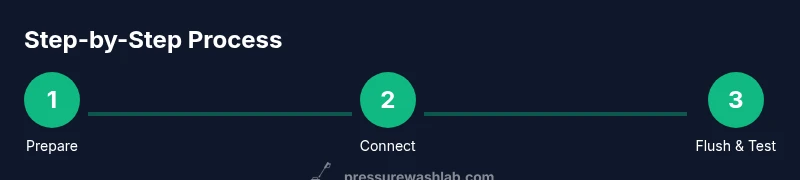
Steps
Estimated time: 25-40 minutes
- 1
Inspect equipment and gather materials
Before you start, lay out all components and inspect hoses for cracks or bulges. Gather adapters, the inline backflow preventer, plumber’s tape, and the pressure washer. This initial check helps prevent leaks and unexpected shutdowns mid-cleaning.
Tip: Double-check the threads and ensure you have the correct adapters for your washer model. - 2
Attach adapter to garden hose
Screw the adapter onto the garden hose hand-tight, then snug with a wrench if needed. Avoid over-tightening to prevent stripping threads. The goal is a firm seal without twisting the hose.
Tip: Use a small amount of plumber’s tape on male threads for a tighter seal. - 3
Connect adapter to the pressure washer inlet
Attach the other end of the adapter to the washer inlet, ensuring the connection is straight and secure. Check for any wobble or gaps and adjust as necessary.
Tip: Make sure the washer is off and cool before connecting to prevent injury. - 4
Bleed air and test water flow
Turn on the outdoor water supply slowly and let water run through the line to eliminate air pockets. Observe for leaks at the connections and tighten as needed. Confirm that water is flowing smoothly before engaging the pump.
Tip: Bleeding air prevents cavitation and protects the pump from damage. - 5
Test on a safe surface and select nozzle
Start with the widest spray pattern on a discreet patch of material to assess impact. Gradually move to more focused nozzles if gentle cleaning is not sufficient. Stop immediately if you see damage or splintering.
Tip: Always calibrate on an inconspicuous area first. - 6
Begin cleaning and monitor performance
Proceed with cleaning gradually, maintaining a safe distance from surfaces. Move consistently to avoid concentrating water in one spot. Stop if the machine overheats or if you notice reduced flow.
Tip: Keep the nozzle moving to avoid gouging surfaces.
Quick Answers
Can I connect any garden hose to any pressure washer?
Most garden hoses can connect to pressure washer inlets with the right adapters, but compatibility depends on thread type and hose construction. Always verify that the adapter matches both the hose and the washer inlet and test for leaks before full use.
Most hoses work with the right adapter, but check the threads and test for leaks before cleaning.
Is it safe to use hot water with this setup?
Using hot water with a garden-hose-fed setup is generally discouraged unless the washer is rated for hot-water use. Hot water can increase pressure and cause component damage if not designed for it.
Only use cold water unless your washer specifically supports hot water.
Do I need a backflow preventer?
Yes. A backflow preventer helps protect your home’s water supply from contamination by preventing water from flowing backward through the hose.
A backflow preventer helps keep your home water clean.
What surfaces should I avoid with this setup?
Avoid delicate finishes, soft wood, or recently painted surfaces. Prolonged spraying can cause damage; always test first and keep a safe distance.
Test first on a hidden spot and avoid delicate surfaces.
What maintenance is required after use?
Rinse the system, drain residual water, and store components in a dry place. Inspect hoses for wear and clean nozzles to prevent clogs.
Rinse, drain, and store everything dry after cleaning.
Watch Video
Key Takeaways
- Connect to a secure garden hose supply with proper adapters
- Start on low pressure and test on a safe area
- Use backflow prevention to protect potable water
- Keep nozzle movement steady to avoid surface damage
- Regularly inspect hoses and fittings for wear and leaks