Garden Hose to Pressure Washer: Safe Connection Guide
A practical, step-by-step guide to safely connect a garden hose to a pressure washer, choose adapters, prevent backflow, test for leaks, and protect surfaces.


Goal: Learn how to safely connect a garden hose to a pressure washer, choose the right adapters, prevent backflow, and test for leaks before you start cleaning. This guide covers compatibility, safety gear, and practical steps to maintain a steady water supply without wasting water or risking injury.
Understanding the garden hose to pressure washer connection
For homeowners and DIYers, a garden hose to pressure washer connection is often the most convenient water supply for a portable unit. However, using a garden hose to feed a pressure washer isn't just about plugging two hoses together; it requires attention to compatibility, backflow prevention, and safe operation. According to Pressure Wash Lab, proper hose selection and secure connections are critical to avoid leaks, water waste, and contamination. In this guide, we’ll break down how to choose the right hose, attach adapters correctly, and test the setup before you start cleaning. We'll also cover safety considerations, such as PPE and avoiding high-pressure misuses that can damage surfaces or injure you. By the end, you'll know how to connect confidently and maintain a steady water supply throughout a job.
Tools & Materials
- Garden hose(Outdoor-rated, kink-resistant, 5/8 inch diameter; length determined by distance to water supply)
- Pressure washer inlet adapter(Adapter that matches your washer’s inlet type (threaded or quick-connect))
- Backflow preventer (anti-siphon)(Required in many jurisdictions to prevent contaminated water from flowing back into the supply)
- Teflon tape(用于 threaded fittings to seal threads and prevent leaks)
- PPE: safety glasses and gloves(Eye and hand protection; footwear with good grip)
- Adjustable wrench or pliers(For tightening fittings if needed)
Steps
Estimated time: 45-60 minutes
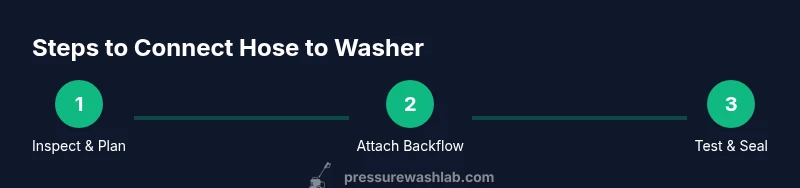
- 1
Plan and inspect
Before you connect anything, review your washer manual and confirm the inlet type. Inspect the hose for cracks, bulges, or signs of wear, and gather the adapters you’ll need. This upfront check helps prevent mid-task leaks or sudden disconnections.
Tip: Have spare washers on hand in case a gasket fails during setup. - 2
Install backflow prevention
Attach the anti-siphon device to the water supply line or directly to the washer inlet as recommended by your hardware and local codes. This reduces the risk of dirty water contaminating your fresh supply and protects your family and environment.
Tip: Verify the device is oriented correctly and seated snugly to avoid leaks. - 3
Attach the hose to the washer
Connect the garden hose to the pressure washer inlet using the appropriate adapter. If you’re using threaded fittings, apply a small amount of PTFE tape and tighten securely. For quick-connects, ensure a firm click and test for any wobble.
Tip: Avoid cross-threading by aligning the threads properly before tightening. - 4
Secure the connection to the water source
Connect the other end of the garden hose to a reliable outdoor faucet or water source. Turn the water on slowly to pressurize the system and check for leaks at every joint before powering the washer.
Tip: Open the faucet gradually to prevent a surge that could blow fittings loose. - 5
Do a low-pressure test run
With the unit off, run a brief test to confirm water is flowing through the system and that there are no leaks. If you see any drips, stop immediately and reseat or replace the troublesome fitting.
Tip: Testing with the unit off avoids sudden spray and potential injury. - 6
Power up and start with a low nozzle
Power the washer and use a wide, low-pressure nozzle to begin cleaning a safe, inconspicuous area. Observe the spray pattern and ensure the water supply remains steady throughout the job.
Tip: Avoid blasting fragile surfaces with high pressure right away. - 7
Shut down and store properly
After use, turn off the water first, then the washer. Drain and coil hoses neatly, and store adapters dry to prevent mold and mildew.
Tip: Dry out connections to prolong seal life and prevent rust.
Quick Answers
Can I use any garden hose with a pressure washer?
Most garden hoses will work with a pressure washer supply, but you must ensure the fittings match and that any required adapters or backflow devices are properly installed. Refer to your washer’s manual and local codes.
Most hoses will work if you match fittings and install the proper adapters and backflow device.
Do I really need a backflow preventer?
Yes. A backflow preventer minimizes contamination risk by preventing dirty water from flowing back into the fresh supply. This is often required by code and is a best safety practice.
Yes—it's an important safety device that protects your water supply.
What PPE should I wear when connecting a garden hose to a pressure washer?
Wear safety glasses, gloves, and closed-toe shoes. PPE helps protect you from splashes, pressure spray, and sharp fittings.
Wear protective eyewear and gloves to stay safe while setting up and operating.
What should I do if a connection leaks after setup?
Turn off the water, unplug or power down the unit, re-seat fittings, and replace worn washers or threads as needed. If leaks persist, do not operate the washer.
Shut everything down, fix the seal, and test again before use.
Is it safe to use high pressure on delicate surfaces?
No. Start with a low-pressure setting and test on a hidden area before proceeding to delicate surfaces to avoid etching or damage.
Avoid high pressure on delicate surfaces; test first.
Watch Video
Key Takeaways
- Verify inlet compatibility before connecting
- Use a backflow preventer for safety
- Test for leaks before powering on
- Protect yourself with PPE and proper handling
- Store tools after use to extend life