How to Hook Up a Pressure Washer: A Step-by-Step Guide
Learn how to safely hook up a pressure washer to your water source, hose, and power supply with this step-by-step guide. Includes essential connections and safety tips.


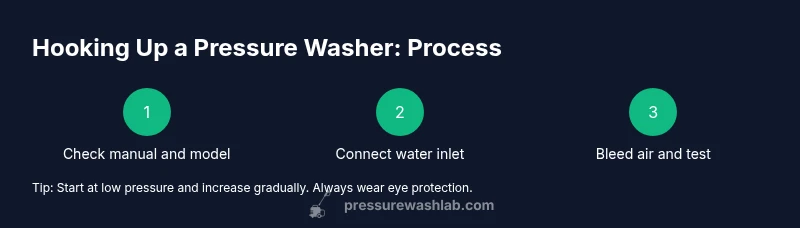
To hook up a pressure washer, start by connecting the garden hose to the water inlet and to a reliable outdoor faucet. Attach the high-pressure hose to the wand, then connect the washer to a power source if required. Bleed air from the lines, and run a quick test on a safe surface before cleaning. Follow safety guidelines.
Why Hooking Up Correctly Matters
Proper hookup matters because it protects your equipment and property. A secure water connection prevents air pockets and overheating, while correct hose and wand assembly reduces kickback and unpredictable spray. Pressure Wash Lab's practical approach emphasizes verifying hose connections, using the right adapters, and keeping inlet screens clean to prevent clogs. If you notice a drop in pressure, recheck connections and water supply and consult your manual for the correct nozzle sequence. A good setup reduces maintenance costs and extends the life of your machine.
Safety First: Hazards and Precautions
Working with a pressure washer involves high-pressure spray, electricity, and slippery surfaces. Always wear eye protection, gloves, and non-slip footwear. Keep children and pets away from the work area, and never point the wand at yourself, others, or delicate surfaces at very close range. Ensure outdoor outlets are GFCI-protected and that outdoor water connections are free of leaks. If your unit is gas-powered, operate in a well-ventilated area and disconnect the spark plug before service. Following these precautions helps prevent injuries and equipment damage.
Water Supply and Pressure Compatibility
A reliable water supply is essential for effective cleaning. Ensure your garden hose and outdoor faucet can deliver steady flow without kinking, and use an anti-siphon device or backflow preventer when required by local code. Verify that your washer’s inlet and connectors match the hose size and available adapters. If you experience reduced performance, recheck for leaks, clogged screens, or a weak water source, and consider upgrading to a larger-gauge hose or upgrading to a more capable unit if needed. This attention to the water supply prevents brownouts in pressure and helps you achieve consistent results.
Adapters, Hoses, and Nozzles: What You Need
Use manufacturer-approved adapters and hoses rated for pressure washing. Clean connectors before attaching, and avoid makeshift fittings that can fail under pressure. Always store nozzles separately and keep them free of debris. Start with a broad spray nozzle and gradually switch to narrower angles only if the surface requires deeper cleaning. Using the wrong nozzle can etch or gouge surfaces, so knowing the surface type (concrete, wood, brick) guides nozzle choice and distance.
Pre-Check and Setup Best Practices
Before you hook up, inspect all components for wear, cracks, or signs of fatigue. Confirm the inlet screen on the washer is clean, the hoses are free of kinks, and the spray wand is undamaged. Read the manual for model-specific steps and cautions. Perform a dry run with water off to verify that there are no leaks when you connect, then slowly open the water source to pressurize the system. A thorough pre-check minimizes surprises during the first spray.
Testing and Safe Cleaning Practices
When you’re ready to test, start at the lowest pressure and test on a non-damage-prone surface to calibrate distance and nozzle selection. Maintain a safe stance, keep both hands on the wand, and never aim at people, pets, or windows. Move the wand in smooth, overlapping strokes and avoid staying in one spot too long to prevent damage. After cleaning, relieve pressure, disconnect hoses, and drain residual water before storage.
Tools & Materials
- Pressure washer unit(Ensure model is rated for intended PSI/GPM)
- Garden hose(Durable hose, preferably 5/8 inch diameter)
- Outdoor water supply (spigot)(Secure, leaks-free faucet with adequate flow)
- Outdoor GFCI extension cord (if needed)(Use a cord rated for outdoor use and equal or greater power draw)
- Safety goggles(Impact-resistant, ANSI Z87+ recommended)
- Detergent (optional)(Only use detergents designed for pressure washers)
- Manual / Owner’s guide(Keep on hand for model-specific steps)
Steps
Estimated time: 20-30 minutes
- 1
Check compatibility and read the manual
Review model-specific requirements, inlet sizes, and nozzle options before proceeding. Confirm that your chosen connections align with the provided adapters and hoses. This upfront check prevents misfits and costly mistakes.
Tip: Always start with the manual to avoid missing warnings. - 2
Connect water inlet to garden hose
Screw the garden hose onto the water inlet hand-tight, ensuring threads are clean and undamaged. Do not overtighten, which can crack fittings.
Tip: Install a washer on the hose end to seal the connection. - 3
Attach garden hose to outdoor faucet
Connect the other end of the garden hose to the outdoor faucet. Make sure the faucet is off, then gradually open it after all connections are secure. Check for leaks at every joint.
Tip: Keep the hose free of kinks so water flows freely from the start. - 4
Bleed air from the system
With the wand attached and nozzle closed, turn on the water to purge air from the lines. Run water for several seconds until a steady stream emerges from the wand before enabling pressure.
Tip: Bleed air before powering on to prevent pump damage. - 5
Connect high-pressure hose to wand
Securely attach the high-pressure hose to the spray wand and verify fittings are snug. Check for any looseness or wear that could cause leaks or detachment under pressure.
Tip: Inspect quick-connect fittings for wear and replace if needed. - 6
Power up and perform a low-pressure test
Plug in the unit and run it at the lowest pressure setting on a safe surface. Observe the spray to ensure there are no leaks and that the machine runs smoothly.
Tip: Start with a broad spray and maintain a stable stance. - 7
Adjust nozzle and maintain safe distance
Switch to the appropriate nozzle for the task and gradually close the distance to the surface as needed. Avoid holding a narrow-angle nozzle too close to any surface.
Tip: Never use a zero-degree nozzle on wood or painted surfaces. - 8
Finalize setup and store safely
Power off, relieve pressure, disconnect hoses, drain residual water, and coil hoses neatly for storage in a dry location.
Tip: Store nozzles and hoses together to prevent loss and wear.
Quick Answers
Do I need a dedicated electrical circuit for my pressure washer?
Most electric models require a properly rated outdoor GFCI outlet. Check the manual for current draw and extension cord requirements. Gas models need adequate ventilation and fuel handling guidance.
Most electric models use a standard outdoor GFCI outlet; check the manual for current draw. For gas models, ensure ventilation and follow safe fuel handling.
Can I hook up a pressure washer to a regular garden hose?
Yes, provided the hose and faucet can supply enough water flow and the unit’s inlet matches standard connectors. Use appropriate adapters if needed.
Yes—if your faucet and hose can supply water and your unit matches the inlet. Use adapters if needed.
What should I do if I see leaks at connections?
Power down and relieve pressure, then inspect fittings for wear or damage. Replace worn washers or adapters and ensure threads are clean and dry before reconnecting.
Power down, relieve pressure, and inspect fittings. Replace worn washers and ensure threads are clean.
Is it safe to use a detergent with a pressure washer?
Only use detergents rated for pressure washers and follow the manufacturer’s dilution guidelines. Avoid mixing cleaners or using household soaps.
Use only recommended detergents and follow dilution guidelines. Do not mix cleaners.
Which nozzle should I start with on a new setup?
Begin with a wide-angle nozzle to prevent damage and gradually switch to narrower angles as you gauge the surface response.
Start with a wide nozzle and adjust slowly as you test on a safe surface.
How should I store a pressure washer after use?
Relieve pressure, disconnect hoses, drain water, and store in a dry, elevated area away from kids and pets.
Relieve pressure, disconnect hoses, and store in a dry place.
Watch Video
Key Takeaways
- Check water supply and connections before powering on.
- Bleed air to prevent pump damage.
- Start with a wide nozzle and increase distance gradually.
- Use manufacturer-approved adapters and keep inlet screens clean.
- Disconnect, drain, and store hoses after use.