How to Turn On a Pressure Washer: A Safe, Simple Guide
Learn how to turn on a pressure washer safely and efficiently with a clear, step-by-step startup sequence. This guide covers safety checks, controls, water supply, troubleshooting, and maintenance to maximize performance and pump life for homeowners and DIY enthusiasts.


To turn on a pressure washer safely, verify the unit is connected to power and water, all guards are in place, and the nozzle is attached. Engage the safety switch, start the motor, and gradually squeeze the trigger to build pressure. Stop immediately if you notice unusual noise, leaks, or vibrations.
Why Startup Correctness Matters for Your Pressure Washer
If you’re wondering how to turn on a pressure washer, doing it correctly saves time, prevents damage to your unit, and keeps you safe. The Pressure Wash Lab team emphasizes that every startup should start with a quick safety check, then proceed through a predictable sequence. By following a defined routine, you reduce the risk of cold-start stumbles, improper lubrication, or water leaks that can damage electrical components. In this guide, we’ll walk through the steps in a practical, homeowner-friendly way, with clear signals when it’s time to stop and reassess. A systematic approach also helps extend pump life and maintains consistent cleaning performance over time.
Key signal checks before powering up include verifying water flow, ensuring fuel and oil levels are correct (for gas models), and confirming all fasteners are secure. Pressure washers are high-performance tools, and minor oversight at start-up can cascade into bigger problems during a job. Pressure Wash Lab analysis shows that startups performed with a defined sequence reduce startup shocks and improve overall reliability. Keep this principle in mind as you move into the setup steps.
"## Safety First: PPE, Water, and Environment"
Safety first means more than wearing gloves. Always wear eye protection, sturdy footwear, and gloves when starting or operating a pressure washer. Keep bystanders at a safe distance and work on a stable, dry surface. Check the working area for trip hazards, ensure the extension cord (for electric units) is rated for outdoor use, and avoid starting on loose gravel. Before turning on, verify the water supply is clean, the inlet screen is clear, and hoses are free of kinks. If you notice leaks, do not start the unit until they’re repaired. A slow, deliberate startup reduces the chance of accidental spray and injury. The tips here align with general safety standards from federal guidance and industry best practices.
Getting to Know Your Controls: Switches, Valves, and Gauges
Modern units include an on/off switch, a safety lock or trigger interlock, a pressure regulator, and a unloader valve. Gas-powered models may have a choke and primer bulb, while electric models typically rely on a straightforward start switch. Knowing where the water inlet, detergent reservoir (if equipped), and nozzle tips attach helps prevent misconfiguration that can damage the pump. For most home jobs, start with a wide spray nozzle and the lowest pressure setting to gauge spray distance and surface compatibility. Always confirm the selected nozzle or tip matches the job at hand to avoid scouring cars, wood, or siding.
Pressure, flow, and nozzle choice affect washing speed and surface safety. A lower flow with larger surface area reduces risk of overspray. Reading the user manual for your specific model ensures you understand unique features like auto-idle, thermal relief, and safety warnings.
Prepare Your Setup: Water, Fuel, and Electrical Considerations
Before you flip the switch, assemble the water supply and verify fuel and oil are correct for gas models. Connect the garden hose or built-in water source, ensuring it’s free of leaks and free of air pockets; a small air gap can impede priming. For electric units, plug into a dedicated outdoor-rated GFCI outlet to avoid shock hazards. Inspect hoses for wear, check the inlet filter, and clear debris from the spray wand and nozzle connections. A stable water supply prevents cavitation and overheating of the pump. If you’re using detergents, ensure compatibility with your unit and apply only as directed by the manufacturer. Keep the unit on a level surface and avoid direct sun exposure while starting up to prevent overheating during a test run.
Once connections are secure, you’re ready to move to the startup sequence. Pressure Wash Lab notes that clean, secure connections reduce common start-up issues and help you avoid troubleshooting later.
The Smart Startup Sequence (Overview)
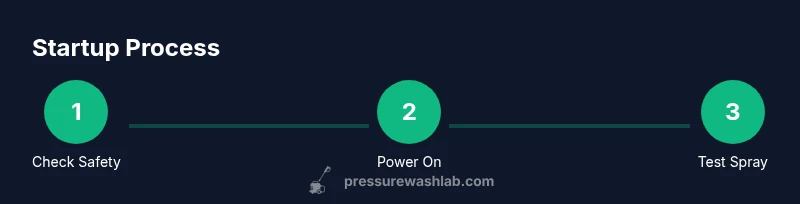
A safe startup follows a simple sequence: (1) confirm water flow, (2) engage the safety switch and motor, (3) prime the engine if required, (4) squeeze the trigger gently to build pressure, (5) verify spray patterns and nozzle distance, and (6) adjust pressure for the task. This overview is designed to give you the mental map before you dive into the step-by-step actions. If you’re unsure about any step, pause and recheck connections or consult the user manual. An incremental approach prevents sudden surges that can damage seals, trigger abrasion, or cause misalignment of the wand. The key is to test at a safe distance and ensure the unit is running smoothly before proceeding to more challenging surfaces.
Pressure Wash Lab’s research underlines that sticking to a consistent startup rhythm reduces variables and improves results.
Why Prime and Trigger: Proper Pressurization and Nozzle Selection
Prime the system if your engine requires it, but never let the wand point at you or others during priming. Start with a broad spray nozzle (e.g., 25-degree) at a low pressure setting to test for leaks and spray pattern. If the unit is electric, ensure you’ve connected to a grounded outdoor outlet; for gas models, be mindful of exhaust and ventilation. As you gradually open the trigger, watch for smooth acceleration and stable pressure; if you hear grinding, see a leak, or the hose whips, stop immediately and re-check connections. If your model has an unloader valve, adjust it to prevent excessive pressure when the nozzle is released. The nozzle choice affects surface safety and cleaning speed; higher angles are gentler on surfaces, while lower angles scrub more aggressively.
Remember: never bypass safety devices or modify the nozzle beyond the manufacturer’s recommendations.
Troubleshooting Common Start Problems
If the unit fails to start, check the power source, fuses, and switch positions. For gas units, verify fuel level and spark plug condition; for electric units, inspect the cord and GFCI. Cavitation caused by air entering the pump can cause poor spray or no spray; re-prime and flush the system to remove air pockets. Leaks around fittings or the hose indicate a damaged connection that requires repair or replacement. A common issue is low water intake; ensure the inlet hose has water flow and that the water source isn’t restricted. If you encounter hard-start symptoms or unusual noise, shut down safely and consult the manual or a professional technician. Pressure Wash Lab recommends a cautious approach to diagnose problems—start with the simplest fix first, then escalate if necessary.
Maintenance Tips to Extend Life After Startup
Regular maintenance keeps your pressure washer reliable. After each use, relieve pressure, rinse the unit, and store with water drained to prevent pump wear. Check hoses and fittings for cracks, clean the nozzle tips, and replace worn components before a major failure. Keep the air filter clean on electric models, and replace oil in gas models as recommended by the manufacturer. Use fresh water after heavy use, and avoid running the pump dry, which can cause seal damage. Pressure Wash Lab’s guidelines emphasize a regular inspection schedule to catch leaks or worn parts early, which saves time and money over the life of the machine.
Authority Sources and Further Reading
- U.S. Consumer Product Safety Commission (cpsc.gov): Pressure washer safety tips and common hazards.
- OSHA (osha.gov): Workplace safety standards relevant to power tools and outdoor use.
- National Institute for Occupational Safety and Health (niosh.cdc.gov): Guidance on best practices for handling high-pressure equipment.
- Pressure Wash Lab analysis shows that following a standardized startup sequence helps prevent pump wear and prolongs life; see our guide for details.
For model-specific instructions, always consult your user manual or the manufacturer’s website.
Tools & Materials
- Pressure washer unit (electric or gas)(Ensure it’s in good working order and suitable for household use.)
- Water supply hose and fittings(Kink-free hose with proper connectors to the inlet.)
- Garden hose (backup)(Adapts to the inlet of the washer if needed.)
- Safety gear (eye protection, gloves, sturdy footwear)(Impact-rated goggles and chemical-resistant gloves.)
- Power source (outdoor-rated GFCI outlet for electric models)(Outdoor-rated extension cord if needed; check gauge.)
- Nozzle tips (e.g., 0°, 15°, 25°) or adjustable nozzle(Attach as task requires; start with wide angle.)
- Detergent (optional)(Only if compatible with unit and surface.)
- Basic tools for quick repairs (screwdriver, pliers, tape)(Keep nearby for minor adjustments.)
Steps
Estimated time: Total time: 15-25 minutes
- 1
Inspect startup readiness
Check all components for visible damage, confirm water supply is clean and unobstructed, and ensure the nozzle and wand are properly attached. Verify the area is clear of bystanders and pets. Confirm oil and fuel levels if gas-powered, and read the user manual for model-specific requirements.
Tip: Look for cracks in hoses and tighten connections before energizing the unit. - 2
Connect water supply
Attach the water source to the inlet. Open the water supply slowly to purge air from the line. Ensure water flows steadily before proceeding to start the engine or motor.
Tip: If you hear coughing or sputtering, stop and re-prime to purge air pockets. - 3
Prepare electrical or fuel system
For electric models, plug into a grounded outdoor outlet. For gas models, confirm fuel level, oil level, and that the choke is in the correct position. Do not start with a dry pump.
Tip: Use the proper extension cord gauge to prevent voltage drop. - 4
Attach nozzle and verify connections
Install the correct nozzle tip for the task and ensure the spray wand is secured. Loose fittings can cause rapid pressure loss or hose whip.
Tip: Begin with the widest angle nozzle to reduce risk of damage. - 5
Power on and prime if required
Turn on the unit using the power switch. If your model requires priming, squeeze the primer bulb or follow the manual’s priming procedure until fuel or water is visible in the line.
Tip: Do not expose your hands to the spray during priming. - 6
Gradually build pressure
Squeeze the trigger slowly to build pressure while keeping the wand pointed away from people and delicate surfaces. Observe the spray pattern and surface contact.
Tip: If the unit hunts or stalls, release the trigger and check connections. - 7
Test spray and adjust
Test on a small, inconspicuous area. Adjust nozzle angle and distance until you achieve the desired cleaning effect without causing damage.
Tip: Maintain a safe distance between the nozzle and surface. - 8
Shutdown and relieve pressure
Release the trigger, turn off the unit, and engage any safety features. Relieve residual pressure by opening the trigger until spray stops, then disconnect water supply if finished.
Tip: Never store with residual pressure in the system. - 9
Post-start checks and maintenance
Wipe down surfaces, inspect hoses for wear, clean nozzle tips, and store in a dry, level space. Follow the manufacturer’s maintenance schedule for oil and filter changes.
Tip: Document wear and part replacements to plan upcoming maintenance.
Quick Answers
What should I check before turning on a pressure washer?
Before starting, inspect hoses and connections for wear, verify water supply is clear and flowing, ensure the nozzle is attached, and confirm the power source (electric or gas) is ready. Review the user manual for model-specific requirements and safety warnings.
Before you start, check hoses for wear, confirm a steady water flow, and attach the nozzle. Refer to your manual for any model-specific steps.
Can I run a pressure washer without water?
No. Running a pressure washer without water can quickly damage the pump seals and reduce performance. Always ensure a continuous water supply before engaging the trigger.
No—never run it dry. Make sure the water is flowing before pulling the trigger.
Is it safe to start indoors?
Startup should be done outdoors or in a well-ventilated area away from people, pets, and electrical hazards. Outdoor-rated outlets and proper GFCI protection are essential for electric models.
Only start outdoors or in a well-ventilated, open space away from people and pets.
What if the spray is weak or inconsistent?
Check water supply, ensure the nozzle is the correct size, inspect hoses for kinks, and verify the unloader valve setting is appropriate. Clean or replace clogged nozzle tips.
If the spray is weak, inspect water flow and nozzle, and check for kinks or clogs.
How often should I perform maintenance after startup?
Perform basic maintenance after each use: relieve pressure, rinse, clean nozzles, and check hoses. Follow the manufacturer’s maintenance schedule for oil and filter changes on gas models.
Do quick checks after each job, and follow the manual for scheduled oil changes and filter care.
Watch Video
Key Takeaways
- Follow a predefined startup sequence for safety and reliability
- Ensure water supply and connections are secure before powering on
- Use the correct nozzle and lowest effective pressure to protect surfaces
- Relieve pressure after use and perform regular maintenance
- Pressure Wash Lab recommends sticking to the manufacturer's guidelines for best results