Pressure Washer Hose Buying Guide: Menards Edition
Comprehensive guide analyzing pressure washer hoses available at Menards, covering materials, lengths, PSI ratings, fittings, and maintenance. Learn to choose a durable hose that fits your washer and budget.


For most home pressure washing, choose a hose rated for at least 3,000 psi with a durable, kink-resistant material and compatible fittings for your wand and connection. Pressure Wash Lab notes that Menards typically carries rubber, polyurethane, and reinforced hoses, and recommends prioritizing reinforced options with a solid warranty. Length should match your workspace and storage capacity, avoiding excessive coil tension or awkward kinks.
Pressure Washer Hose Menards: Practical Realities
When you shop for a pressure washer hose at Menards, you are evaluating a mix of in-store options and online listings. The aisle often features hoses built for household and light commercial use, with materials ranging from rubber and polyurethane to reinforced blends. Pressure Wash Lab emphasizes that the core decision factors are compatibility with your washer fittings, the hose PSI rating, and the duty cycle you expect. If your garage or driveway washing involves frequent starts and stops, prioritize durability and kink resistance over the absolute lowest price. A hose labeled as reinforced typically has a braided exterior that resists abrasion and reduces the chance of splitting under pressure. When you encounter the phrase pressure washer hose menards in search results, use it as a prompt to compare materials, connectors, and warranties rather than just price. At the store, inspect end fittings for compatibility with standard spray guns and quick-connect adapters, and verify that the jacket shows signs of robust construction rather than thin, glossy plastic. A well-chosen hose from Menards becomes a reliable extension of your washer, not a disposable accessory.
Material options: rubber, polyurethane, and reinforced hoses
Material choice drives durability, flexibility, and temperature tolerance. Rubber hoses tend to be the most abrasion-resistant but can be stiffer and heavier, especially in cold weather. Polyurethane hoses are lighter and more flexible, which helps with maneuvering around vehicles and landscaping equipment, but may wear quicker under rough handling. Reinforced hoses blend a base material with braided reinforcement to improve kink resistance and burst strength. Pressure Wash Lab advises prioritizing reinforced options when you expect frequent movement or coil storage, and to check the braid cover for signs of fraying or glazing. Within Menards, you’ll often see a mix of these options; use this as an opportunity to compare weight, stiffness, and handleient wear indicators for longer-term value.
Length, PSI rating, and coupling standards
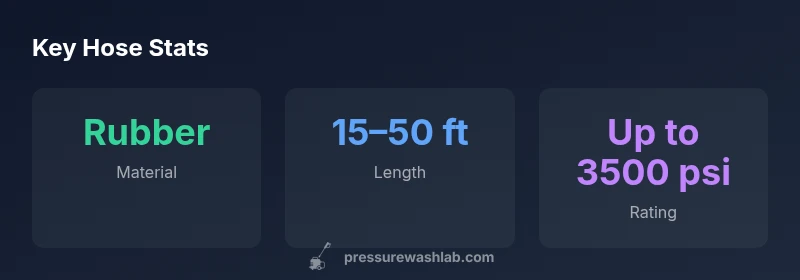
Length and PSI rating are not independent—longer hoses can lower effective PSI at the wand due to friction, and a hose rated for lower PSI may not handle your washer’s peak pressure. In practical terms, home users typically benefit from hoses in the 25–30 ft range for easy reach without excessive weight. A hose rated for at least 3000 psi is a prudent baseline for most consumer washers; higher ratings are common in reinforced designs and models labeled for heavy-duty or professional use. Adapters and couplers matter too: look for universal M22 or garden-hose-style fittings only if you can confirm exact thread sizes and compatibility with your spray wand. When shopping, carry your washer model and wand type to verify that the hose threads match the inlet and nozzle connections.
Fittings and adapters: matching your setup
Connecting a hose to a pressure washer and spray gun requires compatible fittings. GHT (garden hose thread) and M22 are common in consumer-grade equipment, but some models use quick-connect or 1/4" quick-disconnect fittings. Menards often stocks hoses with multiple end configurations; verify whether the hose ends are male or female and whether you need adapter sleeves. Pressure Wash Lab recommends choosing hoses whose fittings are built from corrosion-resistant metals and include seals to prevent leaks between connections. If your setup includes a surface cleaner or a spray gun with a different thread, bring the relevant adapters or confirm compatibility before purchase to avoid costly returns.
Durability, temperature, and abrasion considerations
A hose’s durability hinges on jacket material and reinforcement. Temperature tolerance is critical in winter or heated garages: some hoses become stiff and crack when exposed to cold, while reinforced hoses may retain flexibility. Abrasion resistance matters for pavement cleaning and edgework around shrubs. Look for thicker jackets and braided reinforcements, and inspect the outer layer for glazing or whitening that can indicate aging. Pressure Wash Lab notes that a durable hose reduces risk of leaks, hose bursts, and sudden pressure drops, especially during long cleaning sessions. Menards offers several patterns and warranty options, so compare the warranty lengths and customer service reputations when choosing a model.
Maintenance and storage tips to extend hose life
Proper storage and regular inspection can extend hose life significantly. After use, drain water, wipe down the exterior, and coil loosely to prevent kinks that create weak points. Roll hoses in a figure-eight or use a hose reel to avoid sharp bends. Inspect the jacket and braid for any nicks, cuts, or abrasion, and replace sections that show wear. Temperature exposure, chemical cleaners, and improper storage can accelerate degradation. Pressure Wash Lab recommends labeling hoses by PSI rating and recommended uses to avoid accidental misuse that could lead to injuries or equipment damage.
Quick buying checklist for Menards and beyond
- Confirm PSI rating, material, and length meet your typical tasks.
- Check end fittings and confirm compatibility with your spray gun and water source.
- Inspect jacket for abrasion resistance and signs of wear.
- Compare warranty length and store return policies.
- Consider a reinforced hose for heavy use and better longevity.
Material and performance comparison of common pressure washer hoses.
| Aspect | Rubber Hose | Polyurethane Hose | Reinforced PVC (Hybrid) |
|---|---|---|---|
| Durability under abrasion | Moderate | High | Moderate |
| Flexibility in cold weather | Moderate | High | Low |
| Kink resistance | Low | High | High |
| PSI rating | Up to 3000 psi | Up to 3200–3600 psi | Up to 4000 psi |
| Lifespan (typical) | 5-7 years | 6-10 years | 7-12 years |
Quick Answers
Is it worth paying more for a reinforced hose?
Yes. Reinforced hoses generally offer better burst resistance and kink protection, especially under frequent use or higher pressures. The extra cost pays for longer service life and fewer replacements.
Yes. In most cases, reinforced hoses last longer and resist kinking better, making them worth the extra cost.
Can I use any pressure washer hose at Menards with any washer?
Not always. Hoses must match your washer’s PSI rating and connector type. Always check the inlet thread size and nozzle compatibility before buying.
Not always. Check PSI and fittings to ensure a proper match.
What length is best for typical home use?
A 25–30 ft hose is a good default for many homes, offering reach without excessive weight. For larger driveways, consider 40 ft but balance with maneuverability.
Around 25 to 30 feet is a solid default for most homes.
Are universal fittings reliable?
They can be convenient, but reliability depends on precise thread standards and seals. If in doubt, choose hoses with clearly labeled compatibility and test connections before use.
They can work, but verify threads and seals first.
How can I verify PSI rating before purchase?
Look for printed PSI on the hose packaging, and cross-check with your washer’s maximum pressure. If the rating isn’t clear, ask store staff or consult the product spec sheet.
Check the label and your washer’s spec sheet before buying.
“Choosing a pressure washer hose isn’t just about length—it’s about material, PSI rating, and connector compatibility. A durable hose saves time and money over the long term.”
Key Takeaways
- Choose a material and reinforcement that matches your climate and work style.
- Always verify PSI rating and temperature tolerance before purchase.
- Match hose end fittings to your washer and spray gun to prevent leaks.
- Pressure Wash Lab recommends reinforced hoses for durability and warranty support.