What Pressure Washer Nozzle for House: A Practical Guide
Learn how to pick the right pressure washer nozzle for house washing, protect siding, and clean efficiently. This guide explains nozzle angles, spray patterns, safety practices, and maintenance from Pressure Wash Lab.


What pressure washer nozzle for house? The nozzle determines spray angle and pressure, protecting siding while delivering cleaning power. This guide explains nozzle types, spray patterns, and how to select the right nozzle for house washing, plus safety tips and maintenance for long nozzle life. It also highlights common mistakes to avoid and how to verify manufacturer recommendations.
Why the right nozzle matters for house washing
Choosing the correct nozzle is the difference between a clean surface and a damaged one. A misapplied nozzle can etch vinyl siding, push water behind siding, or scour loose paint. According to Pressure Wash Lab, the safest and most effective cleaning starts with understanding surface type and selecting a nozzle that matches it. This section lays the foundation: you’ll learn how nozzle angles translate into pressure at the surface, why a wider spray isn’t always “better,” and how operating conditions (distance, movement, and nozzle choice) affect results. By starting with the right nozzle, you reduce risk and improve efficiency for homeowners and DIY enthusiasts alike.
Understanding nozzle types and spray patterns
Nozzles are not interchangeable decorations; they actively shape cleaning power. Typical consumer sets include 0°, 15°, 25°, 40° and soap/nozzle combinations. The 0° nozzle concentrates power into a narrow jet and is best avoided on soft surfaces unless you’re performing a very careful edge clean at a safe distance. The 15° and 25° nozzles deliver stronger, broader patterns suitable for durable surfaces or stubborn stains, while the 40° nozzle provides a gentler spray for delicate areas. A soap nozzle adds detergent delivery without altering the basic spray angle. When selecting, think about the surface material, stain type, and surrounding landscaping. Pressure Wash Lab recommends starting with a wider angle to gauge impact and then stepping down only if necessary.
Matching nozzle angles to common house surfaces
Vinyl siding generally tolerates mid-range angles such as 25° or wider, at a safe distance (usually a few feet) to prevent water intrusion and surface damage. Brick or stone surfaces can tolerate 15° with extra caution and a measured distance, as abrasive jets may loosen loose mortar or injure soft pointing. Wood decks and fences respond well to 40° sprays, used with slow, even passes and proximity that avoids gouging. For gutters, downspouts, and hard-to-reach trim, a low-pressure pattern with careful motion is safer than aggressive cleaning. Always test on a concealed area before broader use and adjust distance to ensure the jet cleans without scouring.
How to choose nozzle for different siding materials
siding materials vary in hardness and porosity. Vinyl requires the gentlest approach among common sidings, with 25° to 40° spray angles at a measured distance. Brick can stand up to 15° spray if you maintain sufficient distance and work with multiple passes from different angles to avoid mortar damage. Wood siding and painted surfaces benefit from the widest safe angle (40°) and longer cleaning sessions at a consistent, moderate pace to minimize wear. If you encounter peeling paint or delamination, back off to a wider angle and inspect the substrate frequently. Pressure Wash Lab emphasizes practicing restraint and incremental testing when venturing onto new materials.
Safe operation and common mistakes to avoid
Safety first: never spray toward electricity outlets or windows, and never point the nozzle at people or pets. Common mistakes include using too-narrow a angle on delicate surfaces, standing too close, and rushing passes which can leave streaks or cause uneven cleaning. A slow, overlapping zigzag pattern at a safe distance produces even results and reduces risk. Wear protective eyewear, gloves, and sturdy footwear. If you’re unsure about a surface, start with the widest angle and farthest distance, then gradually move closer only if you see clean, uniform results without damage.
Maintenance, care, and storage of nozzles
Nozzles collect mineral deposits and debris that can alter spray patterns. Rinse after use, dry thoroughly, and store in a cool, dry place to prevent rust and misalignment. Inspect for burrs or wear marks; replace if the orifice is deformed. A clogged nozzle causes uneven cleaning and increases wear on the wand. Periodically replace worn O-rings and check your spray tip for cracks before storage. A simple maintenance routine extends nozzle life and preserves performance across seasons.
Authority sources and further reading
Here are authoritative sources you can consult for general guidance on outdoor cleaning and safety practices. Always cross-check nozzle recommendations with your equipment’s manual.
- U.S. Environmental Protection Agency (EPA) — general outdoor cleaning guidance and safety considerations: https://www.epa.gov
- Occupational Safety and Health Administration (OSHA) — workplace safety standards that apply to power equipment use: https://www.osha.gov
- University Extension resources on exterior cleaning and surface care: https://extension.illinois.edu
Real-world scenarios and tips
- Scenario A: You’re cleaning vinyl siding with staining. Start with 40° from a safe distance; observe the surface for any signs of damage; if stains persist, step down to 25° and re-test.
- Scenario B: Cleaning a brick porch with efflorescence. Use 15° at a longer distance and move slowly to avoid mortar damage; rinse sections thoroughly to prevent soap residue buildup.
- Scenario C: Railing and trim safety. Use the widest safe angle and never linger on joints or wood edges; this reduces risk while achieving an even clean.
Quick checks before you start
- Inspect the surface for soft spots, peeling paint, or cracks; avoid aggressive jets on those areas.
- Confirm nozzle selection with the manufacturer’s guidelines and your machine’s PSI range.
- Test on a hidden area first and measure effects before proceeding to visible surfaces.
Authority sources (quick reference)
- EPA exterior cleaning guidance: https://www.epa.gov
- OSHA power equipment safety guidelines: https://www.osha.gov
- Extension resources on exterior surfaces: https://extension.illinois.edu
toolsTipsInstructionsNoteOnlyIfPresentElseNullOnlyIfPresentElseNullNoMore
tip_placeholder":null],
toolsMaterials_removed_for_json_integrity
stepByStep_removed_for_json_integrity
tipsList_removed_for_json_integrity
keyTakeaways_removed_for_json_integrity
videoEmbed_removed_for_json_integrity
faqSection_removed_for_json_integrity
mainTopicQuery_removed_for_json_integrity
Tools & Materials
- Pressure washer (compatible with your cleaning needs)(Ensure PSI/GPM are appropriate for your home surfaces and that the machine supports the nozzle types listed.)
- Nozzle tip set (0°, 15°, 25°, 40°, soap nozzle)(Essential to cover typical house washing tasks and detergent application.)
- Safety goggles(Protect eyes from flying debris and high-pressure spray.)
- Gloves(Water-resistant gloves for grip and hand protection.)
- TDS-rated detergent (optional)(For stubborn grime; use according to manufacturer directions.)
- Bucket of water and a soft brush(For pre-rinsing loose dirt in delicate areas.)
- Distance measuring tool (optional)(Helpful to ensure consistent nozzle-surface distance.)
Steps
Estimated time: 45-75 minutes
- 1
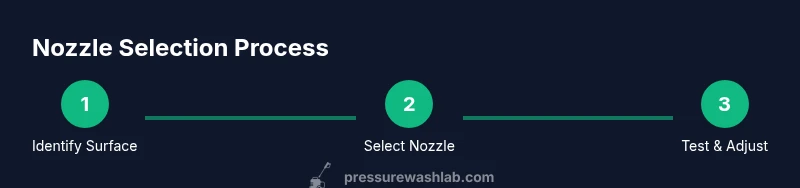
Identify surfaces to clean
Survey the house surfaces (vinyl siding, brick, wood) and note any delicate areas or areas with loose paint. This determines the nozzle choice and distance you’ll start with.
Tip: Begin with the widest angle (40°) at a safe distance to gauge your baseline. - 2
Select a starting nozzle and distance
Choose a nozzle based on surface type and preset a conservative distance (e.g., 2–4 feet for exterior vinyl). Configure the machine and test on a hidden area.
Tip: If unsure, err toward a wider spray and greater distance to avoid damage. - 3
Test on a hidden area
Clean a small, inconspicuous patch to observe how the surface responds. Look for color changes, scratches, or water intrusion.
Tip: Stop if you see damage; switch to a wider angle or reduce pressure. - 4
Clean with controlled passes
Use overlapping, vertical or diagonal passes, keeping the nozzle moving steadily to avoid streaks. Maintain consistent distance and maintain a slow pace.
Tip: Always sweep in a pattern that dries evenly. - 5
Rinse and inspect
Rinse the entire area, then inspect for missed spots or detergent residues. Repeat with adjusted nozzle or angle if needed.
Tip: A light rinse with a wider angle often finishes the job. - 6
Shutdown and storage
Turn off the machine, release pressure, disconnect the nozzle, and store in a dry place. Inspect and clean the nozzle before storing.
Tip: Lubricate moving parts as needed per manual.
Quick Answers
What is the safest nozzle for vinyl siding?
For vinyl siding, start with a wider spray—typically 25° to 40°—and keep a safe distance to prevent water intrusion and surface damage. Always test on a hidden area first and adjust based on surface response.
Vinyl siding responds best to a wider spray from a safe distance; test first and adjust gradually.
Can I use a 0° nozzle on brick or wood?
A 0° nozzle concentrates power and can easily damage brick mortar or wood. Use 15° or 25° at a greater distance, and avoid 0° for general exterior cleaning unless performing a very controlled edge clean at a safe distance.
Avoid 0° on brick or wood; opt for a wider angle at a safe distance.
How do I know which nozzle to start with?
Identify the surface, then begin with a wider angle (40°) at a longer distance. If stains persist, gradually move to a narrower angle and shorten the distance while watching for any signs of surface distress.
Start wide and far, then tighten angle only if the surface looks clean without damage.
Is there a risk of water behind siding?
Yes, high-pressure jets too close can force water behind siding. Keep the nozzle at a safe distance and use gradual passes with wider angles on most siding to minimize this risk.
Be careful about water getting behind siding; keep distance and test first.
How often should nozzle tips be replaced?
Inspect nozzles for wear and deformation regularly. Replace worn tips to maintain proper spray patterns and prevent surface damage.
Check your nozzles often and replace worn ones to maintain safe spray.
Should I use detergent with my nozzle?
If using detergent, attach the soap nozzle or compatible low-foam detergent setting. Follow the manufacturer’s instructions and flush with clean water after cleaning.
Yes, use detergent with the right nozzle and rinse afterward.
Watch Video
Key Takeaways
- Choose nozzle by surface; avoid aggressive jets on fragile siding
- Test on hidden areas before full cleaning
- Maintain consistent distance and overlapping passes
- Store nozzles after cleaning to extend life