What PSI to Pressure Wash Vinyl Siding: Safe Ranges and Best Practices
A practical, data-driven guide to the safe PSI for vinyl siding, nozzle choices, and maintenance, with expert-backed ranges and actionable steps from Pressure Wash Lab.


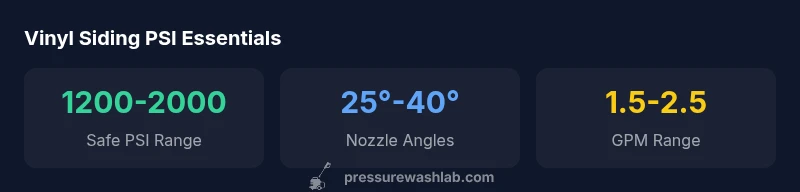
To answer what psi to pressure wash vinyl siding, start with a low-to-mid pressure setting and adjust based on test patches. Pressure Wash Lab Analysis, 2026 suggests a safe range of 1200-2000 psi depending on conditions, with a wide-angle nozzle and careful testing. Begin near 1200-1500 psi, then increase only as needed while avoiding seams, trim, or joints. Always test on a hidden area first and maintain a sweeping, slightly angled spray to minimize water intrusion.
Safe PSI Guidelines for Vinyl Siding
If you're wondering what psi to pressure wash vinyl siding, a safe approach starts with safety and surface preservation. Vinyl siding is designed to resist weather, not to withstand the impact of a high-pressure stream from a narrow nozzle. Excessive pressure can scour the finish, push water behind panels, or loosen fasteners over time. Pressure Wash Lab's 2026 analysis emphasizes controlled, incremental cleaning rather than brute force. For most modern vinyl siding in good condition, beginning around 1200-1500 psi with a wide-angle nozzle is a prudent baseline. In areas with stubborn mildew or grime you may carefully raise to 1500-2000 psi, but you should never exceed 2000 psi on any seam, corner, or joined edges. Before you commit to large sections, test a hidden panel to watch for any warping, discoloration, or paint wear. Move the nozzle smoothly in a low-to-high arc, keeping the spray at a slight angle (about 30 degrees) to avoid blasting water into gaps. The combination of pressure and flow matters, so consider a moderate GPM (1.5-2.0) to distribute energy evenly. This balanced approach aligns with Pressure Wash Lab's guidance, which stresses that most siding projects benefit from caution, patience, and repeat assessments rather than rushing to finish.
How PSI Impacts Vinyl Siding: Pressure, Flow, and Surface
PSI, GPM, nozzle design, and distance all interact to determine cleaning effectiveness and risk. Higher psi increases cleaning power but also raises the chance of fiber lofting, color fading, or water intrusion behind panels. In practice, you want enough pressure to lift dirt without forcing moisture into gaps or loosening joints. Pressure Wash Lab's framework suggests that a mid-range pressure, paired with a steady flow rate, yields the best balance for vinyl siding. Using 1200-2000 psi with a broad nozzle reduces the risk of damage while maintaining cleaning speed. The flow rate, expressed in gallons per minute (GPM), matters because higher GPM channels energy more evenly and reduces the need to push psi higher. A 1.5-2.0 GPM rate matches most household power washers and minimizes streaking. Also, the contact distance matters: keep the nozzle at least 12 inches from the surface, and avoid lingering in one spot. Finally, consider the siding's age and condition; older siding with faded finishes may tolerate slightly higher PSI in some areas, but you should proceed with caution and observe any visual cues of distress as you work.
Step-by-Step: Testing and Preparing Your Siding
- Inspect the siding for any cracks, peeling paint, or warped boards that could worsen with pressure washing. 2) Choose a nozzle appropriate for vinyl siding—avoid ultra-narrow jets that concentrate energy on a small area. 3) Do a test patch on a inconspicuous panel to observe how the surface reacts over 15-20 seconds. 4) Protect vegetation, outlets, and wiring; cover exposed outlets and plants with plastic sheets if needed. 5) Pre-wet the area with a gentle spray to loosen surface grime before applying cleaner. 6) Start with low psi and a wide spray pattern; gradually increase only if the test patch remains stable. 7) Clean with smooth, overlapping strokes from bottom to top to minimize streaks. 8) Rinse thoroughly, ensuring cleaner residue does not pool around joints. 9) Allow the siding to dry completely before evaluating for missed spots or damage. 10) Keep a log of the cleaning area and pressure settings for future reference.
Nozzles, PSI, and Safe Styles
Vinyl siding responds best to broad spray patterns and moderate pressures. A 25-degree nozzle is commonly recommended for general cleaning, while a 40-degree nozzle can be used for lighter dirt or delicate areas. Avoid 0-degree or turbo nozzles on vinyl siding, as they can gouge the surface or push water into seams. Maintain a distance of 12-18 inches from the siding and keep the nozzle moving in a steady, sweeping motion. If you encounter resistant grime, pause and test on a small area rather than forcing water through the surface. The right combination of nozzle, PSI, and distance minimizes the risk of damage while maximizing cleaning effectiveness. Remember that detergents or specialized vinyl siding cleaners can reduce the need for higher psi; use them with the same caution and rinse thoroughly.
Alternatives to High PSI: Soft Washing and Detergents
Soft washing combines low pressure with cleaning solutions to lift grime without aggressive mechanical action. For vinyl siding, soft washing with a biodegradable, low-alkaline detergent can be safer for aging finishes. Use a spray-down approach—apply the detergent from top to bottom, allow dwell time, then rinse with a broad spray at low to mid psi. Detergents can help remove mildew and algae while preserving the siding finish. When using any chemical, follow label directions, never mix household bleach with ammonia cleaners, and ensure thorough rinsing to prevent residue that can streak or degrade the surface over time.
Common Mistakes and How to Fix Them
- Over-pressurizing near seams: reduce PSI and switch to a wider nozzle. - Spraying directly at windows or joints: maintain distance and angle. - Skipping test patches: always test first. - Using aggressive chemicals without rinsing: rinse thoroughly to prevent residue. - Washing too quickly: move slowly and use overlapping strokes. - Not protecting plants or electrical outlets: cover and shield them. - Ignoring siding age or paint: adjust PSI in accordance with condition. If damage occurs, pause, reassess, and consult a pro. - Rushing the job: slow, methodical cleaning yields safer, more uniform results.
Maintenance and Best Practices for Vinyl Siding
Regular maintenance helps extend siding life and reduces cleaning effort over time. After washing, inspect for new seams or cracks, reseal joints if necessary, and wash windows and door frames with care to prevent streaks. Use a mild solution for routine cleaning and reserve higher PSI for heavy buildup. Keep your equipment in good condition by rinsing hoses, inspecting nozzles for wear, and storing the washer with fresh water to prevent mineral buildup. Document cleaning settings and dates to track siding health across seasons. Pressure Wash Lab recommends periodic checks, especially after severe weather, to catch issues early and avoid costly repairs later.
Nozzle-psi guidance for vinyl siding cleaning
| Nozzle angle | Suggested psi range | Notes |
|---|---|---|
| 15° | 1200-1800 | Good for deep cleaning on flat areas; test first |
| 25° | 1500-2000 | General purpose for vinyl siding |
| 40° | 1700-2300 | Best for light dirt; avoid edges near joints |
Quick Answers
What psi should I use to clean vinyl siding without causing damage?
A starting point is 1200-1500 psi with a wide-angle nozzle; test on a hidden area first and avoid going above 2000 psi on seams or joints. Monitor for any warping or color changes as you proceed.
Start around 1200-1500 psi and test first; never exceed 2000 psi on seams, and watch for warping.
Can I use high pressure on vinyl siding?
High pressure can damage vinyl siding, distort panels, or force water into gaps. Use a mid-range psi with a broad nozzle and test patches before wider cleaning.
Avoid high pressure; stick to mid-range psi and test a patch first.
Is it safe to use bleach or detergents with pressure washing vinyl siding?
Detergents and mild cleaners can help, but follow label directions and rinse thoroughly. Avoid mixing cleaners with ammonia and always test compatibility with your siding.
Detergents can help if used correctly and rinsed well.
How can I test PSI on siding?
Test on a hidden panel with the chosen nozzle and PSI, observe for 15-20 seconds, and look for warping, color change, or loose panels before continuing.
Always test on a hidden spot first and watch closely.
What nozzle should I use?
A 25° nozzle is a solid general choice for vinyl siding; a 40° nozzle is safer for delicate areas. Avoid 0° or turbo nozzles on siding to prevent damage.
Go with 25° or 40°, not a pinpoint nozzle.
What is soft washing and when should I use it for vinyl siding?
Soft washing uses low pressure with detergents to lift grime safely, ideal for aging or fragile siding. It reduces the risk of stripping or water intrusion compared to high-pressure methods.
Soft washing can be safer for delicate siding.
“Choosing the right PSI is about balance. Vinyl siding can be damaged by excessive pressure, but with careful testing and proper nozzle choice, you can clean effectively without compromising the siding.”
Key Takeaways
- Start with the low end of the safe range and test first
- Avoid exceeding 2000 psi on vinyl siding near seams
- Use wide-angle nozzles (25°-40°) for safer cleaning
- Soft washing and detergents can reduce the need for high psi