When to Pressure Wash Your House: Timing Guide
Discover the best time to pressure wash your house, how weather and siding affect timing, and a practical plan from Pressure Wash Lab.


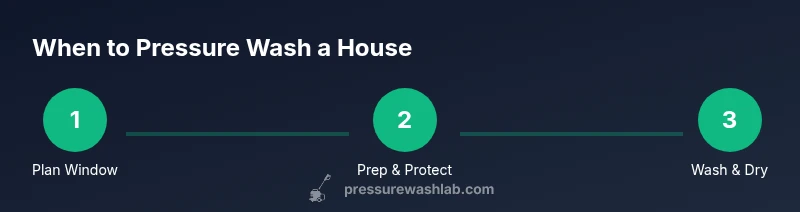
Plan exterior washing for dry, mild days when temperatures stay above freezing. Start with a small test patch at low pressure, then wash from the top down using a wide nozzle to prevent streaks. Protect plants, outlets, and windows, and rinse thoroughly to avoid moisture damage. Consider delaying if rain is in the forecast. Always test on a hidden area first.
When to Wash Exterior: Timing and Seasonality
Timing for exterior washing depends on weather, humidity, and the siding material. According to Pressure Wash Lab, the best time to pressure wash your house is when temperatures are above freezing and conditions are dry. Dry weather helps detergents work effectively and reduces the chance of water seeping into gaps. For temperate regions, late spring or early fall typically provides long dry windows with moderate temperatures that minimize rapid drying or streaking. If you wait too long after winter, mildew and algae can accumulate, making stains harder to remove. By aligning washing with these windows, you maximize cleaning velocity while minimizing potential damage. Regional differences exist—coastal areas may see salt-related grime seasonally, while inland areas may contend with pollen in spring. The key is to plan around consistent temperatures, dry days, and non-windy conditions so you get a clean, uniform result without re-wetting sensitive areas.
Siding Material and Condition: What Timing Looks Like
Different siding materials respond differently to pressure washing, and timing matters. Vinyl siding is usually forgiving but can warp if pressure is too high or if the sun has heated the surface, increasing risk of damage in the heat of the day. Wood siding needs extra care during wet seasons to avoid soaking wood fibers and causing swelling. Fiber cement is more tolerant but can still suffer from crumbling finishes if cleaners are too harsh. Brick and stucco particles may require gentler cleaning and longer dwell times for detergents. Evaluating previous paint layers, signs of rot, or loose boards can cue you to adjust pressure and timing. In short, if your siding is older or weathered, prefer cooler, dry mornings and shorter spray passes to protect the material and preserve the finish.
Weather Windows and Safety: Reading the Sky
Weather determines both the effectiveness and safety of a wash. Look for dry conditions with low wind, and temperatures above freezing for the next several hours. Humidity should be moderate; high humidity can slow-dry surfaces and invite streaks. Wind can blow spray laterally, increasing the chance of water intrusion around doors or into landscaping. If rain is forecast within 24 hours, postpone the job to avoid mud and runoff that can leave dirty streaks on siding. Always protect sensitive plants, electrical outlets, and windows, and keep children and pets away from the work zone. A simple rule: if you can see your breath or your hose water fogs, postpone to a warmer, drier day.
Pressure Level, Nozzle Choice, and Timing: A Practical Guide
The timing of a wash also depends on how you apply the water. Use a wide-angle nozzle (around 15 degrees) or a surface cleaner to minimize pressure concentration and prevent gouging. Start at the highest point of the siding and work downward, which helps gravity carry dirty water away rather than pooling behind gaps. Keep the spray at a consistent distance (typically 6–12 inches for most siding) and avoid staying in one spot too long to prevent streaking. For stubborn spots, pause to reapply cleaning solution, then gently scrub with a soft brush before re-rinsing. Timing tips: avoid heating up panels under direct sun, and wash on days when temperatures stay within a comfortable range for extended periods.
Prep and Protection: Setting Up for a Safe Wash
Before you spray, prepare the area. Close and protect windows, outlets, and vents; cover nearby plants with tarps; and move outdoor furniture away from the splash zone. Set up your hose and water supply to ensure uninterrupted flow. Mix your cleaning solution according to the label, using a non-foaming formula designed for exterior surfaces. Test a small patch to observe how the surface reacts, and adjust pressure to a level that cleans effectively without damage. A little planning here saves time and prevents costly repairs later.
Common Mistakes to Avoid
Common mistakes include using too much pressure on delicate siding, spraying directly at electrical fixtures, and washing in the hottest part of the day when the sun softens and expands materials. Another pitfall is neglecting to protect plants or failing to rinse all detergent residues, which can harm landscaping or cause streaks. Finally, skipping a test patch can lead to unexpected surface damage or water intrusion behind trim and siding. Avoid these by following the recommended PSI range, nozzle, and a top-to-bottom approach, with tests and adjustments as needed.
Maintenance, Frequency, and Seasonal Plan
How often you wash depends on climate, sun exposure, and nearby growth like mold and moss. In humid regions with tall trees, a wash every 1–2 years is common; in drier climates with minimal shading, every 2–3 years may suffice. After a wash, inspect caulking around windows and doors for moisture and signs of wear, and consider applying a protectant or sealant if needed. A regular maintenance plan, aligned with seasonal checks, keeps your home looking fresh and reduces long-term deterioration. Pressure washing is part science, part routine—plan ahead, and you’ll save time and money in the long run.
Regional Variations: North, South, and Coastal Considerations
Regional climate matters. The north may see icicle damage risk in late fall and early spring, while southern regions benefit from longer warm, dry periods but contend with higher humidity and pollen seasons. Coastal homes face salt spray, which can corrode hardware and fade finishes; timing should factor in salt deposition cycles and sea breezes. In all regions, avoid washing during freezing nights or days with forecasted rain or strong winds. Tailor your plan to the local climate, siding type, and yard layout for best results.
Advanced Tips: Quick Reference for When to Pressure Wash House
- Choose dry days with temperatures above freezing for a clean, safe job.
- Inspect siding and adjust PSI for material type.
- Protect plants and electrical fixtures; rinse detritus away with a broad pattern.
- Always start with a test patch and gradually expand coverage.
- Schedule regular maintenance in the spring or fall to stay ahead of grime buildup.
Tools & Materials
- Pressure washer (electric or gas)(Choose 1,600–2,500 PSI with at least 1.5–2.1 GPM for most siding.)
- Wide-angle nozzle (15-degree) or surface cleaner(Use to reduce streaks and protect siding.)
- Exterior-safe detergent(Biodegradable, low-foam formula compatible with your siding.)
- Goggles or safety glasses(Protect eyes from debris and spray.)
- Gloves(Nitrile or rubber for grip and chemical protection.)
- Sturdy ladder or extension pole(Needed for upper areas; ensure stability.)
- Soft-bristle brush or siding-safe scrub pad(For stubborn stains and manual scrubbing.)
- Hose with adequate length(Ensure water supply is sufficient for continuous operation.)
- Tarps or protective covers for plants(Optional to protect landscaping from overspray.)
Steps
Estimated time: 60-120 minutes
- 1
Inspect siding and plan the wash
Walk the exterior to identify damaged areas, delicate finishes, and stain hotspots. Check the weather forecast for a dry, mild window and ensure your water supply is steady. Map your wash path from top to bottom to minimize drips and rework.
Tip: Mark fragile spots and avoid spraying near compromised areas. - 2
Protect surroundings
Cover plants, shutters, outlets, and vents; close doors and windows. Move outdoor furniture away from the splash zone and lay tarps to catch overspray. This reduces cleanup and prevents damage to landscaping or electronics.
Tip: Use clear plastic sheeting to protect while keeping visibility. - 3
Set up and test patch
Connect water supply and select a wide-angle nozzle. Mix cleaner according to label and apply a small test patch on an inconspicuous area to observe surface reaction and colorfastness.
Tip: Record test results to guide pressure adjustments. - 4
Apply cleaner and dwell
Apply cleaner to one section at a time, starting at the top. Allow dwell time as directed to loosen mildew and algae; avoid letting cleaner dry in direct sun.
Tip: Monitor dwell time and rinse before residues crust. - 5
Rinse from top to bottom
Rinse in long, even strokes with a wide spray, maintaining a consistent distance. Move methodically in horizontal bands to avoid streaks and ensure dirt exits the siding.
Tip: Keep the nozzle moving; static drilling leaves marks. - 6
Tackle stubborn stains
Reapply cleaner to stubborn spots and scrub with a soft brush. Do not use aggressive scrubbing that could damage the surface.
Tip: Test additional pressure on a hidden area first. - 7
Final rinse, dry, and inspect
Complete a final rinse to remove any remaining residues. Check for missed spots and re-wash if needed. Allow surfaces to dry and inspect for any signs of moisture intrusion.
Tip: Document any areas needing future attention.
Quick Answers
What is the best time to pressure wash a house?
The best time is on dry, mild days with temperatures above freezing. Avoid windy or rainy days to prevent streaks and moisture intrusion.
The best time is on dry, mild days with above-freezing temperatures.
Can I pressure wash vinyl siding?
Yes, but use low to moderate pressure and a wide nozzle. Avoid high pressure directly on vinyl to prevent warping or damage.
Yes, with careful pressure and a wide nozzle.
Should I use detergent when washing?
Detergents help remove mildew and algae. Choose a biodegradable, siding-friendly formula and follow label directions.
Detergents help if they’re biodegradable and siding-safe.
How often should I wash my house?
Most homes benefit from washing every 1–3 years, depending on climate, shading, and growth like moss or mildew.
Typically every 1–3 years depending on conditions.
Is it safe to spray near outlets and windows?
Avoid spraying directly at outlets; shield them and maintain a safe distance to prevent water intrusion.
Don’t spray directly at outlets; cover them.
Watch Video
Key Takeaways
- Plan washes for dry, mild days above freezing.
- Protect landscaping and fixtures before washing.
- Top-to-bottom washing with a wide nozzle minimizes streaks.
- Test patches and inspect surfaces after rinsing.