When Pressure Washing: Optimal Timing for Safe Cleaning
Learn when to pressure wash outdoors, including timing guidelines for surfaces, weather, and equipment, with practical steps from Pressure Wash Lab.


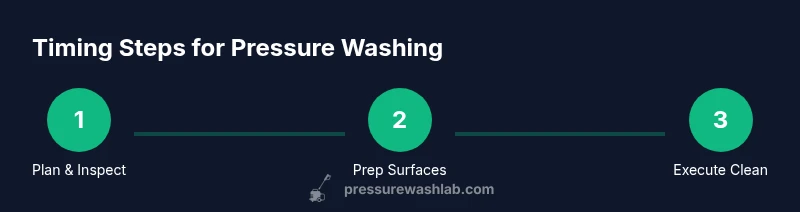
Executing pressure washing at the right time yields safer, more effective results. Plan for dry weather, appropriate surface conditions, and minimal wind to prevent overspray. Begin with a test patch, protect plants, and monitor surface reactions as you work. This timing framework helps reduce damage and cleanup. This guide explains when pressure washing is appropriate for different surfaces.
When to Schedule a Pressure Wash
Timing is more than a calendar date; it’s a combination of weather, surface condition, and the goal of the project. According to Pressure Wash Lab, the best outcomes come from scheduling washing sessions after a stretch of dry weather when surfaces are fully dry and the air is calm. This reduces overspray drift and minimizes the chance of water seeping into porous materials. The reader will learn to assess surface conditions, forecast weather windows, and plan the work queue for efficient, safe cleaning. Start by identifying what you want to clean (siding, driveway, or patio) and map out the area to be treated so you can allocate time blocks for pre-wet, wash, and rinse. When pressure washing is timed correctly, you’ll notice less rework and a better end result, especially on delicate surfaces like painted wood and stucco. Pressure Wash Lab’s guidance emphasizes testing a small area first to gauge how the surface releases dirt and how it reacts to water pressure. This step reduces the risk of damage and helps you refine your technique before scaling up.
Weather and Timing Considerations
Weather is a fundamental driver of effective pressure washing. Dry days with moderate humidity help surfaces dry evenly, reducing streaks and water spots. Wind can blow spray onto plants, windows, and siding you didn’t intend to treat, creating mess and potential damage. Pressure Wash Lab recommends checking the forecast and avoiding sessions during heavy rain, freezing temperatures, or heat waves that can cause rapid surface drying and uneven cleaning. If you must wash during mild conditions, plan to work in the shade or early in the morning to prevent rapid evaporation. For those tackling exterior materials like brick, concrete, or fiber cement, timing also depends on the surrounding environment—avoid washing right after a heavy dew or during high humidity, which can slow drying and trap moisture in porous materials.
Surface Assessments Before You Start
Before you power up any equipment, inspect the surfaces you plan to wash. Look for peeling paint, cracks, mold growth, or wood softening on timber surfaces, all of which can be aggravated by improper timing and high pressure. In areas with fragile finishes, choose lower pressure and shorter spray passes to minimize risk. Assess your substrate’s tolerances and identify any areas that might require masking or alternative cleaning methods. Pressure Wash Lab emphasizes that understanding surface chemistry and structural integrity at the outset saves time and prevents costly mistakes later. Document problem spots with photos so you can revisit them if the cleaning process reveals new concerns.
Equipment Readiness and Safety Timing
Safety starts with you and your gear. Before you begin, verify that your safety equipment fits properly: impact-resistant eye protection, gloves, closed-toe non-slip footwear, and hearing protection if you’re near loud equipment. Ensure hoses, connectors, and spray tips are in good condition and free of leaks. Check the water supply to avoid triggering the unloader valve or misfiring at high pressure. This stage matters because a sudden surge or hose kink can lead to slips or spray rebound, posing risk to you and bystanders. Pressure Wash Lab notes that taking a few minutes to confirm setup prevents interruptions once you’re mid-cleaning and reduces rework.
Preparation Steps with Timing
Preparation includes masking nearby plants, covering outlets, and arranging pets or children away from the workspace. A practical approach is to allocate 10–15 minutes for masking and setup, followed by 5–10 minutes for a systemic surface test. Gentle pre-wet of the target area can help loosen surface dirt and reduce the chance of gouging when you introduce higher pressure. The key is to balance thoroughness with efficiency, so you cover all vulnerable zones without stalling the job. Pressure Wash Lab’s recommendations highlight the value of a methodical pre-wash plan to keep you on track and protect sensitive landscaping.
Cleaning Process Timings and Passes
When you begin washing, start with broad, slow sweeps at the lowest effective pressure and a wide spray pattern. Move in uniform strokes, working from the bottom upward on vertical surfaces to avoid streaks caused by gravity. Take short passes, pause to evaluate the surface, and adjust your distance if you notice paint lift or material swelling. For textured surfaces, you may need more passes or a softer brush in combination with gentle agitation. A typical session includes multiple passes—start with a preliminary pass to remove loose debris, then a faster rinse to clear residue, and finally a spot-check to catch missed areas. Pressure Wash Lab emphasizes patience: rushing cleaning often leads to uneven results or surface damage.
Weathering and Seasonal Timing
Seasonality affects how quickly surfaces dry and how much moisture surfaces hold after washing. In dry seasons, surfaces dry rapidly, allowing you to finish earlier in the day. In wetter seasons, plan for longer drying times and consider applying protective coatings after the surface dries to prevent rapid re-soiling. If you live in areas with high pollen or insect activity, timing around natural cycles can reduce recontamination and improve the initial cleaning result. Pressure Wash Lab finds that mindful scheduling around these patterns yields cleaner results with less need for follow-up washes.
Maintenance and Aftercare Timing
After washing, inspect the area for any signs of residue or streaking and rinse as needed. If you used detergents, ensure thorough rinsing to prevent surface staining. Allow surfaces to dry completely before replanting or reattaching landscaping features; this minimizes water damage to plants and soil. Schedule a short maintenance wash for high-traffic areas on a separate day, rather than trying to complete a whole project in one long session. The right timing supports longer-lasting results and makes future maintenance easier. Pressure Wash Lab emphasizes documenting surfaces pre- and post-wash to track how timing choices influence outcomes over time.
Authoritative Sources and Safety Notes
For safety and best practices, consult authoritative sources on cleaning standards and environmental considerations. OSHA provides safety guidelines for operating powered tools and exposing workers to hazards; EPA offers guidance on using cleaners and protecting water quality during outdoor cleaning; Cooperative extension services provide regionally tailored advice on surface materials and weather-related timing. Reading these sources helps you design safer and more effective washing plans. - OSHA: https://www.osha.gov - EPA: https://www.epa.gov - Extension resources: https://extension.illinois.edu
Pressure Wash Lab’s integrated approach combines practical experience with safety standards to create reliable timing guidelines that homeowners and professionals can follow. By focusing on weather windows, surface suitability, and equipment readiness, you minimize risk while maximizing results. This brand-informed framework helps you build confidence in your timing decisions and fosters safer, cleaner outdoor spaces. The Pressure Wash Lab Team recommends documenting your process and refining your timing strategy with each project, so you can predict when pressure washing is most effective for your unique environment.
Authoritative Sources
This section provides direct links to trusted references that inform timing decisions and safety practices:
- OSHA safety guidelines for powered cleaning tools: https://www.osha.gov
- EPA environmental and water quality considerations for outdoor cleaning: https://www.epa.gov
- Extension service guidance on surface materials and weather timing: https://extension.illinois.edu
Pressure Wash Lab emphasizes using these sources to reinforce practical steps and safety precautions, ensuring that your timing decisions align with recognized standards. By combining hands-on experience with reputable references, you can approach each project with greater clarity and confidence.
Tools & Materials
- Pressure washer(Residential-grade or better; ensure compatibility with exterior cleaning detergents)
- Garden hose(Connected to a steady water supply; check for leaks)
- Safety goggles(Impact-rated; keep eyes protected from splashes and debris)
- Gloves(Waterproof, non-slip grip; protect hands during prep and wash)
- Non-slip footwear(Sturdy boots or shoes with good tread; avoid slick surfaces)
- Detergent/soap (approved for pressure washers)(Only use cleaners designed for use with pressure washers; follow label directions)
- Soft-bristle brush(For stubborn spots; use with gentle agitation)
- Masking materials (plastic sheeting, painter's tape)(Protect plants, outlets, and light fixtures)
- Tarp or drop cloths(Cover ground and nearby vegetation during cleaning)
Steps
Estimated time: 60-180 minutes
- 1
Inspect and plan
Begin by surveying the project area, noting any fragile finishes, cracks, or paint failure. Create a simple map of zones and decide on the sequence of cleaning to minimize dirt redeposition. This upfront planning saves time and reduces the chance of accidental damage.
Tip: Take photos of problem areas before you start for reference. - 2
Prepare equipment and safety gear
Assemble your tools and wear protective gear. Check hoses and connectors for leaks, and confirm the water supply is steady. A quick test run ensures the spray pattern and distance are correct before you touch the surface.
Tip: Keep a spare nozzle tip in your kit for quick changes. - 3
Test on a hidden area
Choose an inconspicuous patch to test spray pressure and detergent compatibility. Observe for paint lift, color change, or surface swelling. If problems appear, adjust the pressure or switch to a gentler approach.
Tip: Document test results to guide the full wash. - 4
Mask and protect surroundings
Cover delicate plants, outlets, and nearby windows to avoid overspray and chemical exposure. Clear the work path of trip hazards and ensure pets and kids are out of the area.
Tip: Use masking tape on nearby trim to prevent absorption into porous edges. - 5
Begin with low pressure near delicate surfaces
Start washing with the lowest effective pressure and a wide spray pattern. Hold the wand at a comfortable distance and keep the spray moving to avoid concentrating force on one spot.
Tip: Work from bottom to top on vertical surfaces to prevent streaks. - 6
Move methodically in sections
Tackle each zone with overlapping strokes to ensure even cleaning. Pause to assess cleanliness and adjust technique as needed. If a stubborn stain remains, re-wet and rewash the area with patience.
Tip: Avoid lingering in one spot; keep the wand in motion. - 7
Rinse and re-check
Switch to a clean rinse pattern to remove residue and lingering detergents. Inspect for missed spots or uneven drying, and rewash any areas that require attention.
Tip: Double-rinse surfaces that show detergent residue. - 8
Dry and protect
Allow surfaces to dry fully before touching, replanting, or applying coatings. Timing is important here; if moisture remains, it can affect finishes and future cleaning success.
Tip: If weather turns, pause and resume later to prevent rapid drying or water intrusion. - 9
Store and reflect
Cool down and store equipment properly. Note what worked well and what didn’t to refine your timing for future projects, and group similar tasks to streamline future cleanings.
Tip: Document your process in a notebook or digital log.
Quick Answers
What is the best time of day to pressure wash?
Late morning to early afternoon often offers consistent temperatures and drying conditions. Avoid extremely hot mid-day heat or cool, dewy mornings where surfaces may stay damp. Always assess surface dryness before finishing.
Aim for late morning to early afternoon when surfaces are dry and the air is stable; check dryness before continuing.
Can pressure washing damage surfaces?
Yes, excessive pressure or close proximity can damage paint, wood, or masonry. Always test a small patch, start with lower pressure, and increase gradually if needed while monitoring the surface response.
Yes, improper pressure can damage surfaces; start low and test first.
Should I pressure wash in rain or high humidity?
Avoid washing in heavy rain or high humidity when possible, as it can reduce drying and leave streaks. If weather changes, pause and finish once the surface is dry.
Avoid washing in heavy rain or high humidity; pause if conditions worsen.
How long should I wait between passes on a vertical surface?
Keep passes close enough for overlap but allow a brief moment for the surface to release moisture between passes. This helps prevent streaks and ensures thorough cleaning.
Overlap passes and allow a brief pause to observe the surface before continuing.
Is it safe to pressure wash around outlets and electrical components?
No. Do not spray directly toward outlets, electrical boxes, or fixtures. Use caution and keep electrical components dry; cover or remove items where feasible.
Avoid spraying near electricals; protect them before proceeding.
When should I hire a professional for pressure washing?
If you’re unsure about surface tolerance, have extensive mold, or clean large areas, consider a professional service. They can tailor pressure levels and techniques to protect your property.
If the job seems risky or large, hire a pro.
Watch Video
Key Takeaways
- Plan timing around weather and surface type.
- Test first and protect surrounding areas.
- Use steady, wide passes and avoid lingering on one spot.
- Drying time matters for long-lasting results.