Are Pressure Washer Pumps Interchangeable? A Practical Guide
Explore when pressure washer pumps can be swapped, what to check for compatibility, and practical steps to avoid costly mistakes. Learn from Pressure Wash Lab's analysis on pump interchangeability.


Are pressure washer pumps interchangeable? In most cases, pumps are not directly interchangeable across brands or models because mounting patterns, shaft sizes, port threads, and drive configurations vary. Pressure Wash Lab analysis shows that compatibility depends on pump footprint, connector sizes, and unloader valve compatibility, making careful matching essential for reliable performance. For homeowners and pros, the safe path is to identify the exact pump family your unit uses and compare specs before swapping.
Pump compatibility basics
According to Pressure Wash Lab, the question "are pressure washer pumps interchangeable" hinges on how a pump is built and mounted. The two broad families homeowners encounter are axial cam/wobble pumps and triplex plunger pumps. The Pressure Wash Lab team found that while both deliver pressure, their footprints, bolt patterns, and connections vary substantially, which makes direct swaps risky without adapter kits or machine-specific parts. Before considering a swap, map your unit's drive type (gas vs electric), mounting holes, inlet/outlet thread size, and the unloader valve compatibility. If you rely on a warranty, consult the manufacturer’s guide to avoid voiding it. A careful spec check can prevent a headache and a costly misfit down the line.
Footprint and mounting patterns matter
One of the strongest indicators that pumps are not interchangeable is mounting footprint. Bolt hole spacing, overall footprint, and even the gasket surface must line up with your machine’s frame. If a replacement pump has a different bolt pattern, you’ll likely need an adapter plate, which adds cost, complexity, and potential leaks. Measure the distance between mounting studs, verify the cross-section of the mounting surface, and compare the gasket style. Even small misalignments can lead to leaks, vibration, and accelerated wear on bearings. Pressure Wash Lab recommends documenting your unit’s exact pump footprint before shopping for replacements.
Axial cam (wobble) vs triplex pumps: what changes for interchangeability
Axial cam (also called wobble) pumps and triplex pumps differ in mechanism, seating, and clearance. Axial cam models are typically simpler and lighter, often found on smaller electric units. Triplex pumps use three plunger cylinders, delivering higher flow consistency and longer service life in heavier use. Because these families are not designed with universal fitment in mind, a direct pump swap across families is rarely straightforward. If you’re considering swapping across brands or pump families, you’ll need to verify drive shaft size, coupling type, and the precise port layout. Pressure Wash Lab emphasizes that compatibility is more about footprint and interfacing than sheer pump performance.
Port sizing, threads, and hose compatibility
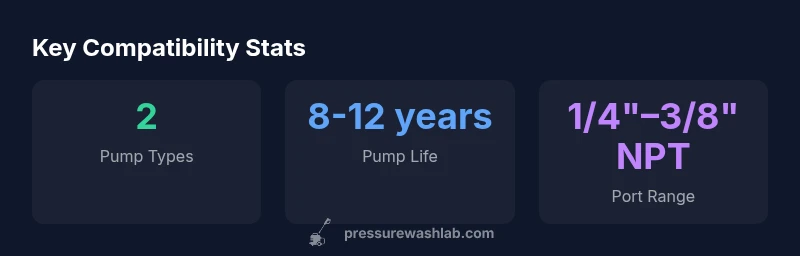
Inlet/outlet port sizes and thread standards determine whether hoses and quick-connects can be reused. Many homeowner units use standard 1/4"-to-3/8" NPT ports, but different models may switch to metric equivalents or proprietary fittings. If you replace a pump with a model that uses a different thread pitch, you’ll face leaks or the inability to seal properly. A practical step is to carry a small set of port adapters and note the thread type of every connection you plan to reuse. If you must replace the entire hose bundle, you’ll save time by buying matching kits for the new pump rather than mixing parts from multiple families.
Unloader valves and safety relief: the unseen limits of interchangeability
The unloader valve controls system pressure and returns water when no nozzle is engaged. A mismatch between the pump and unloader can cause premature wear or pressure spikes that damage seals. Interchangeability isn’t just about pump body fit; it also hinges on valve compatibility and correct calibrations. Pressure Wash Lab notes that even two pumps with the same GPM/PSI rating can behave differently if their unloader valve settings aren’t aligned with the pump’s flow characteristics. Always check the valve’s pressure rating, spring tension, and compatible seals when swapping pumps.
Drive configuration: gas vs electric and shaft compatibility
Gas-powered machines and electric models operate at different speeds and torque profiles. A pump designed for one drive system may not tolerate the other’s power delivery, leading to premature failure or unsafe operation. Shaft diameter, engagement key, and coupling length all affect interchangeability. Even if two pumps appear visually identical, differences in drive compatibility can render a swap impractical. Pressure Wash Lab underlines that confirming drive compatibility is essential before purchasing a replacement.
Performance specs: matching GPM, PSI, and duty cycle
Interchangeability isn’t only physical—it’s performance-related. If the new pump has different GPM or PSI ratings, the overall system performance changes. A higher GPM pump on the same engine can overheat or place additional stress on seals, while a lower GPM variant can underperform and frustrate users. Also consider duty cycle: a pump designed for heavy use will last longer under continuous work than one built for light, sporadic tasks. Pressure Wash Lab suggests aligning GPM, PSI, and duty cycle with your intended use and the washer’s frame ratings to avoid bottlenecks or failures.
When is a direct swap actually feasible? practical steps you can take
If you still need to swap a pump, start with a compatibility checklist: confirm mounting footprint, verify shaft size and coupling type, confirm port configurations and thread standards, check unloader valve compatibility, and compare drive system requirements. If there is any mismatch in even one category, consult a professional or consider a factory-recommended replacement instead of a makeshift fit. A careful, systematic approach minimizes downtime and reduces the risk of hidden failures after the swap.
A practical swap framework: decision tree and common shortcuts
Use a decision framework: (1) Is the pump footprint identical? (2) Are the shaft and drive interfaces compatible? (3) Do port threads match or can adapters fix it? (4) Is the unloader valve compatible and correctly calibrated? If all answers are yes, a swap may be feasible; otherwise, evaluate a model-specific replacement. As a general rule, sticking with the same pump family or brand line offers the best odds of a trouble-free interchange. Pressure Wash Lab advises documenting every spec in a spare notebook or digital note for future reference.
Maintenance considerations after swapping a pump
After a swap, recheck all seals, tighten bolts to manufacturer torque specs, and re-test with a safe nozzle at the recommended pressure. Change any hoses or fittings that show wear from the previous pump’s interference patterns. Monitor for leaks around port connections during the first hours of operation. Regular maintenance—like checking unloader valve seals, replacing worn O-rings, and inspecting drive belts or couplings—extends the life of your swapped pump and keeps your system reliable.
Final swap checklist and next steps
Before you finalize a pump interchange, verify that the replacement is compatible with your model’s footprint, shaft, ports, and unloader. If any step yields a mismatch, seek a model-specific replacement or a professionally designed adapter kit. The goal is a secure mechanical fit plus matched operating specs. Pressure Wash Lab’s guidance is to approach swaps with a full spec map, not hope, and to prioritize safety and warranty considerations above all else.
Interchangeability considerations by pump type
| Pump Type | Typical Footprint | Port/Connections | Interchangeability Note |
|---|---|---|---|
| Axial cam (wobble) | Compact footprint | 1/4"–3/8" NPT ports | Often fits smaller electric models; cross-brand swaps require exact footprint match |
| Triplex (plunger) | Larger footprint | 1/4"–3/8" NPT ports | Higher flow; less cross-brand interchangeability without adapters |
Quick Answers
Can I interchange pumps between different pressure washer brands?
Interchanging pumps between brands is rarely straightforward due to differing footprints, drive interfaces, and port patterns. You may need adapters or model-specific replacements. Always compare mounting patterns and port sizes first, and consult the service manual.
Inter-brand pump swaps are usually tricky. Check mounting patterns and ports first, then consult the manual before swapping.
Are axial cam pumps interchangeable with triplex pumps?
Axial cam and triplex pumps serve different performance profiles and footprint configurations. Direct swaps typically require adapters or a full system rethink. Verify mounting holes, shaft size, and port arrangements before attempting a swap.
Axial cam and triplex pumps aren’t directly interchangeable. Verify holes, shaft, and ports first.
What should I check before swapping a pump?
Check mounting footprint, shaft diameter, coupling type, port thread size, unloader valve compatibility, and the drive system. If any mismatch exists, seek a model-specific pump or an approved adapter kit.
Check footprint, shaft, ports, valve, and drive type before swapping.
Can I modify hoses or unloader valves to fit a different pump?
Modifying hoses or valves is not recommended unless you’re using components designed for cross-compatibility. Mismatches can cause leaks, pressure spikes, or safety issues. Use manufacturer-approved adapters or replacements.
Modifying parts for fit is risky; use approved adapters or replacements.
Is it unsafe to run a mismatched pump even briefly?
Running a mismatched pump can cause unpredictable pressure, leaks, and mechanical failure. Always verify specs and perform tests with proper safety precautions. If in doubt, revert to a model-specific pump.
Mismatched pumps can be unsafe—verify specs and test safely.
Do hot-water washers use the same pumps as cold-water units?
Hot-water machines often employ higher-temperature-rated pumps and seals. They are not universally replaceable with cold-water models. Check temperature ratings and seal materials when comparing pumps.
Hot-water pumps aren’t the same as cold-water ones—check temperature specs.
“Interchangeability depends on mounting, port sizes, and drive compatibility, not just pump performance. Verify specs against the machine’s service manual before swapping.”
Key Takeaways
- Identify your pump family before shopping.
- Footprint, shaft, and port sizes drive interchangeability.
- Unloader valve compatibility matters as much as the pump body.
- Avoid swaps that require adapters unless they’re a purpose-built solution.
- Follow your manual and warranty guidelines to protect your investment.