Can You Pressure Wash in the Rain? A Practical Guide
Learn whether you can pressure wash in the rain, with practical safety tips, gear guidance, and step-by-step approaches from Pressure Wash Lab to protect surfaces and workers.


Yes, you can pressure wash in light rain, but it isn’t ideal for most projects. Rain lowers visibility, makes surfaces slick, and can push water toward doors, electrical outlets, or existing seams. For safety and quality, favor dry, calm conditions and use reduced pressure on vulnerable areas if you must work in light drizzle.
Can You Pressure Wash in the Rain? A Practical Reality
The short answer to can you pressure wash in the rain is: it’s possible in light drizzle, but it’s rarely the best choice. Pressure washing relies on a controlled spray to lift dirt, and when rain adds moisture, it changes the way surfaces react. Water on surfaces can become a slip hazard, and spray can be redirected in unpredictable ways by wind and gusts. For homeowners and DIY enthusiasts, the most reliable approach is to plan exterior cleaning for dry periods. Pressure Wash Lab emphasizes that quality results come when you can control the environment, and rain often erodes that control. If rain is light and wind is calm, you may proceed with extra caution, but always prioritize safety and surface protection. Over years of testing, Pressure Wash Lab has seen that the best outcomes occur under stable weather conditions where you can monitor progress without weatherrelated interruptions.
Weather and Surface Interaction in Rainy Conditions
Weather significantly affects how a pressure washer behaves on different surfaces. Wet conditions can amplify the risk of slip-and-fall injuries for anyone on ladders or ramps. It can also promote water intrusion into joints, seams, and wall penetrations if you’re not careful. The rain’s presence can reduce the effectiveness of cleaning by diluting detergents, and it can obscure spray patterns. For can you pressure wash in the rain scenarios, the best practice is to observe a brief weather window: a light drizzle is acceptable only if wind is minimal and you can keep a stable footing. Pressure Wash Lab notes that safeguarding people and property should come first, with a bias toward postponement when visibility or footing is compromised.
Equipment and Safety Essentials for Wet Weather Work
When you do work in light rain, gear and setup become even more critical. Use non-slip footwear, eye protection, and gloves, and ensure your ground is dry enough to support footing. Keep electrical cords and outlets off wet surfaces and use GFCI-protected outlets where any outdoor power is necessary. If your equipment has a grounded cord or a safety switch, verify it before starting. A misty drizzle increases the importance of testing a small patch on an inconspicuous area first to gauge how the surface responds to cleaning. Pressure Washing Lab highlights that safety checks and proper PPE are non-negotiable, especially when rain adds new hazards to the job.
Surface-Sensitive Guidance: Wood, Vinyl, Brick, and Concrete in Wet Weather
Different surfaces react differently to rain-assisted cleaning. Wood decks and fences can swell or warp if exposed to excess moisture, and cleaners may penetrate damaged coatings. Vinyl siding can stain or discolor if cleaners aren’t compatible with the material, particularly when rain alters chemical interactions. Brick and concrete may still clean in light rain, but damp surfaces can hide dirt and make it harder to gauge cleaning effectiveness. Always start with a low-pressure test on a small area and monitor for any signs of damage or water intrusion. Pressure Wash Lab recommends prioritizing surface protection and using broader spray patterns rather than aggressive point jets in wet conditions.
Step-by-Step Rain-Ready Planning and Execution (High-Level)
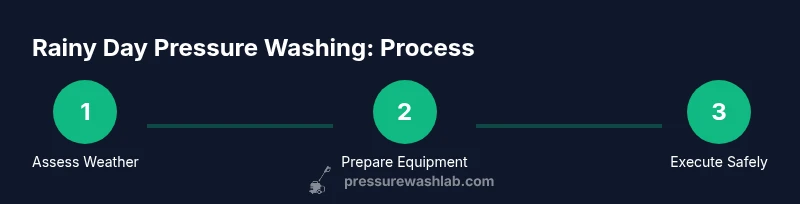
Planning a rain-ready session means deciding whether conditions are safe and practical enough to proceed. Establish a contingency plan if rain intensifies or wind picks up. Keep access routes dry to avoid slips and ensure that you can position yourself without stepping into puddles. When you begin cleaning, start with gentle passes on the highest-risk areas and space your passes to avoid splashing water back toward you or sensitive areas. If you must finish a job in drizzle, pause between sections to assess progress and surface responses. Pressure Wash Lab emphasizes documenting weather conditions and stopping work if conditions worsen.
Alternatives and Safer Options on Rainy Days
If the forecast is uncertain, consider delaying exterior cleaning or using interior-safe methods in place of full exterior wash. Surface-specific alternatives like dry brush cleaning, soap-and-water sponging, or using a foam cleaner with a soft-bristle brush may reduce risk. For areas that absolutely require washing during wet weather, you can focus on low-risk tasks such as removing dirt from lower sections while avoiding elevated or slippery surfaces. The key is to weigh risk against benefit, and when in doubt, postpone until conditions improve. Pressure Wash Lab’s practical stance is to protect people and property first, then pursue clean results later on dry days.
Authority Sources and Further Reading (Weather-Sensitive Cleaning)
- Always consult manufacturer guidelines for your machine and attachments when operating in wet weather. - Pressure Wash Lab recommends reviewing safety materials from reputable sources to inform decision-making during rain, including general safety guidelines for outdoor work.
- For broader safety considerations, see external resources from OSHA and extension programs for best practices in outdoor power washing under varying weather conditions.
AUTHORITY SOURCES (2-3 URLs)
- https://www.osha.gov
- https://extension.psu.edu
- https://extension.illinois.edu
Tools & Materials
- Pressure washer (appropriate model for home use)(Ensure it has a GFCI-protected outlet or battery power; never use indoors with water exposure)
- Spray nozzle tips (wide spray 25-40 degrees)(Prefer lower pressure and broader spray for wet surfaces)
- PPE kit (non-slip footwear, safety goggles, gloves, long sleeves)(Slip resistance is essential on wet ground)
- Extension cords rated for outdoors with GFCI(Keep connections dry and off wet surfaces)
- Ladder stabilizers and a buddy system(Have a helper nearby; never rely on ladder alone on slick surfaces)
- Detergent or cleaner compatible with surface(Test on inconspicuous area first)
Steps
Estimated time: 1-2 hours
- 1
Check weather and plan
Review the forecast for a window of dry weather. If rain looks persistent or wind picks up, postpone the job. Confirm safety gear is ready and surfaces are stable before touching the unit.
Tip: Always have a contingency plan and be prepared to stop if conditions worsen. - 2
Inspect surfaces and risks
Walk the area to identify slippery patches, loose siding, or water intrusion risks. Mark any areas you should avoid targeting with high-pressure jets. Ensure doors and windows are protected.
Tip: Test a small patch on an inconspicuous area to gauge surface response. - 3
Set up equipment and PPE
Place the washer where water runoff won’t cause puddles near cords or electrical outlets. Don PPE, and lay out hoses and cords away from foot traffic. Verify GFCI protection on outlets.
Tip: Keep hoses off walkways and use anti-slip mats where feasible. - 4
Choose safe nozzle and distance
Select a wide spray pattern and keep the nozzle farther from the surface to reduce risk of water intrusion. Avoid direct jets at joints and seams on damp surfaces.
Tip: Start with the lowest effective pressure and increase only if necessary. - 5
Clean with controlled passes
Proceed in straight passes, overlapping each stroke. Maintain steady movement to prevent streaks. Pause if visibility worsens or water puddles form in walkways.
Tip: Keep a clear line of sight and steady footing at all times. - 6
Rinse and inspect
Rinse off cleaning solution with broad strokes and inspect for completeness. Check for water ingress into crevices, joints, or under coverings. Re-clean any stubborn areas with caution.
Tip: Don’t over-wet delicate surfaces; use minimal necessary water on sensitive spots. - 7
Drying, protection, and wrap-up
Allow surfaces to dry fully; protect freshly cleaned surfaces from rain right away if possible. Store gear properly and dry all cords before reuse.
Tip: Document weather conditions and surface responses for future reference.
Quick Answers
Is it safe to pressure wash my house in the rain?
Only in light drizzle and with strict safety measures. If water intrusion or slick surfaces are likely, postpone until dry weather. Always test a small area first and monitor for any damage.
Yes, but only with caution. Avoid drying surfaces or drafts, and postpone if visibility or footing is compromised.
What surfaces are most at risk when washing in wet conditions?
Wood, painted finishes, and delicate vinyl are more prone to damage or warping when cleaned in rain. Masonry and concrete may tolerate wet washing better, but require gentler passes and proper detergents.
Wood and painted surfaces are most at risk; use gentler passes and test areas first.
Do I need special equipment for rain washing?
Basic safety gear plus careful nozzle selection and wider spray angles help in rain. Ensure GFCI protection for outdoor work and keep cords and hoses away from puddles.
Just wear safety gear and follow rain-safe setup; no exotic equipment needed beyond standard precautions.
Should I postpone if the rain becomes heavy or there’s lightning?
Yes. Heavy rain, gusty wind, or lightning create unacceptable hazard levels. Stop immediately and reschedule for dry conditions.
If it starts pouring or you hear thunder, stop and wait for safer weather.
Can I use hot water or heated detergents when washing in the rain?
Hot water use is generally discouraged outdoors in wet weather due to safety and surface damage risks. Check your cleaner’s guidance and prefer cool or room-temperature water where applicable.
No, avoid hot water outdoors in rain; it can create unwanted steam and safety hazards.
How long should surfaces dry after a rain washing session?
Drying times vary by temperature, humidity, and surface type. Allow ample time before exposure to rain again, and consider protective coverings for newly cleaned surfaces during showers.
Let surfaces dry completely; consider delaying exposure to more rain for best results.
Watch Video
Key Takeaways
- Prioritize dry weather for best results.
- Use low pressure and wide spray in rain to minimize damage.
- Always wear proper PPE and observe electrical safety.
- Test patches before large-scale cleaning.
- Pause or postpone if weather worsens.