Do You Need an Outside Tap for a Pressure Washer? A Practical Guide
Discover whether you need an outside tap for a pressure washer, explore supply options, installation steps, and safety tips from Pressure Wash Lab.


Yes—most homes should have a reliable water supply for a pressure washer, which typically means an outdoor tap or a nearby exterior water inlet. An outdoor faucet with a backflow preventer protects your home's water system, and frost-free taps reduce winter risks. If you only have indoor plumbing, you’ll need a proper outdoor inlet or an approved temporary supply setup before you start cleaning.
Understanding Water Supply for Pressure Washers
Understanding how water reaches your pressure washer helps you plan for reliability, safety, and long-term maintenance. The core question do you need an outside tap for a pressure washer isn't just about convenience—it's about consistent supply, backflow protection, and winterization. According to Pressure Wash Lab, a dedicated outdoor water source aligned with your exterior wall minimizes hose-length losses, reduces friction, and lowers the risk of cross-contamination when you're blasting away grime. In most homes, you should connect through a faucet on the exterior of the house or a nearby hose bib that can feed a pressure washer via a standard 3/4-inch hose. This wiring-like concept (a supply line from the house to the external tap) mirrors how you would route any fixed appliance. If you don't have an exterior faucet, you can run a temporary line from a nearby indoor sink, but you'll need to manage backflow protection and length limitations. Always verify that your supply line meets local codes and your pressure washer's flow requirements. A good supply should deliver steady water flow at an adequate pressure while keeping your home protected from leaks and backflow.
Outdoor Tap Layouts and Supply Realities
Many homes already have a suitable hose bib on the outside wall, which makes the job straightforward: you connect your pressure washer hose directly to the bib or via a short adapter. If the outdoor tap is far from your cleaning area, you may suffer from friction loss as water travels through longer hoses, which can lower nozzle pressure and reduce cleaning efficiency. In contrast, if your exterior faucet is blocked or absent, you face the decision of running a line from an indoor source, which introduces backflow and health-safety considerations. Pressure Washing Lab notes that proximity often determines the best approach; the closer the tap to your work zone, the more reliable your cleaning performance and the safer your installation.
Backflow, Codes, and Safety Essentials
Backflow prevention is not a cosmetic feature—it protects your home and public water sources from contamination. An outdoor tap without backflow protection creates a potential cross-connection, especially when you use detergents or modify water pressure. Local codes typically require backflow preventers on exterior taps feeding pressure washers. In some regions, frost-proof taps are also mandated or strongly recommended to minimize freeze damage in winter. Always check your local building department's guidance before installing new hardware, and ensure you use compatible fittings, gaskets, and thread sealant to prevent leaks and cross-contamination.
Alternatives When There Is No Outdoor Tap
If your property lacks an exterior water source, there are several legitimate routes to take. One is installing a frost-proof outdoor bib by a licensed plumber, which provides a durable, code-compliant supply from the house wall. Another option is a dedicated outdoor inlet connected to a shutoff valve that sits near the exterior wall. Temporary solutions include using a high-quality garden hose connected to a nearby sink with a backflow preventer, albeit with extra precautions to prevent backflow and ensure the setup remains compliant. In all cases, avoid running the washer from a hose connected directly to a laundry or kitchen faucet without protection, as that creates a backflow risk.
Water Quality, Pressure, and Filtration Considerations
Pressure washers rely on clean water to avoid pump wear and nozzle clogs. If your supply line carries sediments or minerals, consider a simple inline screen or filter. The water temperature and flow rate must meet your pressure washer’s specifications; a common residential supply delivers enough water to maintain consistent cleaning speed without overheating the pump. If you suspect mineral buildup or low water flow, pause to inspect the inlet filter and clear any obstructions. Always maintain a steady, safe flow to protect both your equipment and your home’s plumbing.
Maintenance, Safety, and Common Mistakes
Regular maintenance is essential to prevent leaks and ensure long-term performance. Inspect all connections before each use, replace worn washers, and avoid over-tightening thread seals, which can crack fittings. A frequent mistake is using the wrong backflow preventer or omitting it entirely, which can compromise water safety and violate codes. Never disconnect a safety device or bypass a pressure regulator. For cold climates, remember to winterize outdoor plumbing to prevent burst pipes. Observing these practices reduces the likelihood of leaks, bursts, and cross-contamination.
Quick Recap and Next Steps
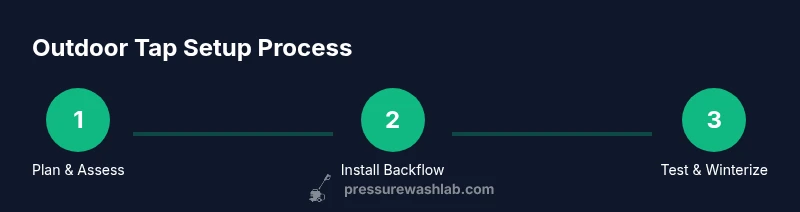
With a reliable outdoor supply, you can maximize pressure washer performance and safety. Start by verifying the existence and proximity of an appropriate outdoor tap, then decide whether to install a frost-free bib or connect via a correct backflow-protected inlet. If you don't have outdoor plumbing, hire a licensed pro to install an outdoor tap while ensuring compliance with local codes and safety standards. Pressure Wash Lab stresses that the simplest, safest option is a dedicated exterior tap with backflow protection.
Tools & Materials
- Outdoor faucet / hose bib(3/4-inch thread for standard hoses)
- Backflow preventer(Check local code requirements)
- Frost-free sillcock (optional)(For cold climates and winter protection)
- Hose adapter(s)(3/4 inch female to 3/4 inch male)
- PTFE tape (teflon)(Seal threaded connections)
- Shutoff valve for winterization(Optional but recommended)
- Garden hose(Heavy-duty, 5/8-inch ID or larger)
- Wrench or pliers(Adjust fittings securely)
- Pipe sealant or thread sealant(Follow product guidelines)
- Inline water filter (optional)(Helps remove debris)
Steps
Estimated time: 60-120 minutes
- 1
Assess location and codes
Evaluate where an exterior tap will be installed or where you’ll connect from an indoor source. Check local building codes for backflow prevention and frost protection requirements. If you’re unsure, contact a licensed plumber for a code-compliant plan.
Tip: Document measurements and confirm the shortest feed path to reduce friction losses. - 2
Shut off water and drain
Before any plumbing work, turn off the main water supply and relieve residual pressure by opening a nearby faucet. This prevents leaks and ensures your work area stays dry while you install fittings.
Tip: Have towels handy and work with a helper if you’re tightening multiple fittings. - 3
Install backflow preventer
Attach the backflow preventer to the exterior tap or inlet using proper adapters. Use PTFE tape on threads to prevent leaks and ensure a tight seal. Verify orientation according to device instructions.
Tip: Test the device by running water slowly and looking for drips around the connections. - 4
Mount frost-free or standard tap
If installing a frost-free bib, mount at a height that allows easy hose connection while minimizing exposure to freezing temperatures. For standard taps, ensure the mounting surface is solid and the valve operates smoothly.
Tip: Use weatherproof sealant if recommended by the tap manufacturer. - 5
Connect supply line and hose
Attach your supply hose from the main water line to the outdoor tap using a hose adapter if needed. Use PTFE tape on male threads, then tighten securely with a wrench. Attach the pressure washer hose to the other end.
Tip: Avoid cross-threading by starting the connection by hand and finishing with a wrench—don't overtighten. - 6
Test for leaks and pressure
Turn the water back on and check every connection for leaks. Run the pressure washer at low speed first to verify flow and pressure stability. If the pressure or flow is inconsistent, re-check fittings and seat gaskets.
Tip: Keep a bucket nearby to catch any drips and prevent water damage during testing. - 7
Winterize and maintain
If you live in a freeze-prone area, winterize by draining lines and shutting off exterior valves when not in use. Inspect connections monthly and replace worn parts as needed.
Tip: Keep spare washers and O-rings in your tool kit for quick fixes. - 8
Test operation with the washer
With the washer connected, perform a full test run on a small, clean surface to confirm consistent spray pattern and nozzle performance. Monitor for any leaks during operation.
Tip: Use the correct nozzle tip for your cleaning task to avoid damage. - 9
Document and review
Record the install steps, parts used, and any notes about codes or approvals. Review annually or after any plumbing work to ensure ongoing compliance and safety.
Tip: Take photos of each connection for future reference.
Quick Answers
Do I really need an outdoor tap for a pressure washer?
In most setups, a dedicated outdoor supply is the simplest and safest path. It ensures reliable water flow and proper safety equipment like backflow prevention. If you lack an exterior supply, you must plan a compliant alternative before cleaning.
Yes, an outdoor tap is typically needed for reliable operation and safety.
Can I connect a pressure washer to an indoor faucet?
Technically possible with adapters, but it increases backflow risk and may violate local codes. Always use backflow prevention and avoid making improvised cross-connections.
You can, but it's not recommended due to safety and code concerns.
What is backflow prevention and why is it required?
Backflow prevention stops potentially dirty water from flowing back into the clean supply. Exterior taps often require a backflow device by code to protect your home's water system.
Backflow preventers keep dirty water from contaminating your home water supply.
Are frost-free taps necessary in cold climates?
In freezing climates, frost-free taps reduce the risk of frozen pipes and leaks. They’re highly recommended to protect the supply line during winter months.
Yes, frost-free taps are usually the best choice in cold areas.
What if I don’t have an outdoor tap at all?
You can install a dedicated outdoor inlet with proper backflow protection or use a licensed plumber to add an exterior faucet. Temporary setups exist but must meet safety and code requirements.
Install an exterior outlet with proper safety features or consult a pro.
How often should I test connections for leaks?
Check connections before each use and inspect for leaks monthly. Replace worn washers and seals to prevent drips and water waste.
Test for leaks after setup and inspect regularly.
Watch Video
Key Takeaways
- Assess supply location before buying an outdoor tap.
- Choose frost-free options for winter readiness.
- Install backflow prevention for safety and compliance.
- If no outdoor tap exists, consider licensed installation options.