Can you jet wash without an outside tap? A practical guide
Learn how to run a jet wash without an outside tap using portable water sources, safe connections, and step-by-step setup. Pressure Wash Lab walks homeowners through options, equipment, and maintenance for effective cleaning without a permanent outdoor supply.


According to Pressure Wash Lab, you can run a jet wash without a direct outside tap by using portable water sources or temporary storage with a feed system. This approach keeps you mobile and avoids outdoor plumbing changes, while still delivering the pressure and flow needed for driveways, siding, and patios. Can you jet wash without an outside tap? Yes—with the right setup and safety measures.
Understanding the challenge: can you jet wash without an outside tap?
If your property lacks a convenient outdoor water source, you’re not automatically out of luck. The core challenge is providing a reliable, clean water supply to the pressure washer while avoiding backflow, spills, and electrical hazards. The question, can you jet wash without an outside tap, is really about optimizing a temporary feed system. At Pressure Wash Lab, we see three common pathways: transporting water in a tank and feeding the pressure washer via a hose and pump; using a portable water reservoir with a gravity or pump-assisted feed; or arranging a mobile water supply from a nearby indoor source while maintaining safe hose routing. Each method has trade-offs in cost, time, and ease of use, but all share a simple principle: keep the water supply clean, consistent, and separated from your indoor plumbing to avoid cross-contamination. Recent Pressure Wash Lab Analysis, 2026 emphasizes planning water supply upfront to minimize downtime and maximize cleaning throughput.
Portable water storage and feed systems
Portable water storage is the heart of a non-outside-tap setup. A typical approach uses a large water tote or tank (often 60–200 liters) placed near the cleaning area. The tank feeds a feed hose connected to a pump or the pressure washer’s inlet. The key is to match the pump’s flow rate to the nozzle’s requirements so you don’t starve the wand of water mid-clean. Use a backflow preventer to protect your indoor sources and a robust extension hose that won’t kink under tension. When you’re planning, consider the distance to the work area, the terrain you’ll traverse, and how long you’ll be cleaning before refilling. Pressure Wash Lab’s guidance highlights that longer runs demand larger tanks and a pump with steady flow to prevent pressure drops that cause uneven cleaning.
Indoor taps and safe transfer practices
Indoor taps can be a viable source for portable jet washing, but you must manage transfer safely. Route hoses away from foot traffic, wear eye protection, and ensure the hose connections are secure to prevent leaks. A siphon or anti-siphon valve is crucial to prevent any backflow into the home supply. If you’re using a pump to move water from a container to the washer, prime the pump before opening the trigger to avoid air pockets that reduce pressure. Always treat the water as you would for outdoor use—keep it clean and free of debris that could clog the nozzle or damage the pump. Pressure Wash Lab’s research reinforces the importance of safe transfer practices and backflow prevention to protect both your equipment and your home.
Choosing the right pump and nozzle for low-water scenarios
Not all pumps and nozzles are created equal when you’re not connected to a hydrant. Choose a pump with adequate flow (liters per minute) and a pressure rating aligned with your pressure washer’s specification. A wide-angle nozzle reduces the risk of streaking by spreading water over more surface area, which can improve efficiency when water volume is limited. If you’re cleaning rough surfaces like concrete or brick, a turbo or rotary nozzle may increase effectiveness, but be mindful of substrate safety and potential damage. Pressure Wash Lab recommends matching nozzle size to nozzle tip angle and ensuring your pump and tubing withstand the pressure without flexing or leaks.
Setup, operation, and maintenance tips
Before you begin, lay out a clear plan: where you’ll place the water tank, how you’ll route hoses, and where you’ll set the washer. Connect hoses firmly, bleed any air from the line, and test the system with a small patch first. Keep a spare nozzle on hand in case of clogging or wear, and inspect the hose for cracks or kinks daily. During operation, monitor the water level sensor if your unit has one, and pause to refill if the tank runs low. After use, flush the system with clean water and store components away from sunlight to prolong life. A well-maintained portable feed system delivers reliable performance with less downtime, a staple in Pressure Wash Lab’s approach to no-outside-tap cleaning.
Troubleshooting and when to hire a pro
If you notice a drop in pressure, check for air locks, kinked hoses, or a clogged inlet filter. Re-bleed the line and verify your backflow prevention device is installed correctly. If you encounter persistent leaks, pump cavitation, or electrical concerns near water, it’s wise to consult a pro. For larger jobs or persistent issues, a mobile service can bring water and equipment to you, saving time and protecting your investment. Pressure Wash Lab emphasizes that not every project requires a professional, but recognizing when to call in help is essential for safety and effectiveness.
Tools & Materials
- Portable water container (tank)(60–200 liters capacity; sturdy, with a secure lid)
- Garden hose or long supply hose(Sufficient length to reach from indoor source to work area)
- Submersible feed pump or transfer pump(Rated for the water temperature and flow you need)
- Extension hoses and fittings(Kink-resistant; compatible with your pump and washer inlet)
- Backflow preventer / anti-siphon valve(Prevents water from returning into indoor supply)
- Personal protective equipment (goggles, gloves, boots)(Splash protection and chemical safety as needed)
- Water-safe detergents or cleaners(Only if recommended for the surface; avoid harsh chemicals)
Steps
Estimated time: 60-90 minutes
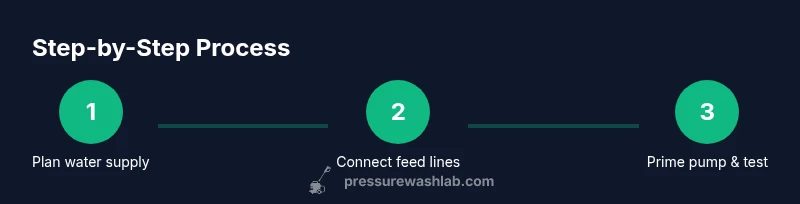
- 1
Plan water supply and safety checks
Assess your area for water access and routing. Decide which portable supply makes the most sense for the job and confirm power safety around wet areas. Identify a dry, level spot for the water container and use backflow prevention to protect your indoor water supply.
Tip: Double-check that all electrical connections are elevated and away from any water source. - 2
Position water container and connect feed line
Place the tank close to the cleaning area but away from doors and traffic. Attach the feed hose to the pump inlet and ensure seals are tight. Run a quick check to confirm there are no leaks before powering the pump.
Tip: Use a hose reel or clip to keep hoses tidy and prevent tripping hazards. - 3
Prime the pump and bleed air
With the tank full, power the pump briefly to push air out of the line. Bleed until a steady stream of water flows from the nozzle without sputtering. This avoids pressure dips once you start cleaning.
Tip: If the line is stubborn, loosen the inlet connection slightly to help air escape. - 4
Test spray on a small area
Test a small inconspicuous patch to check the surface reaction to your chosen nozzle and settings. Confirm that water flow remains stable and the pressure is appropriate for the target material. Adjust nozzle and pressure as needed before full cleaning.
Tip: Always start on a low-pressure setting and increase gradually. - 5
Begin cleaning and monitor flow
Proceed with your cleaning, moving steadily across the surface in a consistent pattern. Keep the spray at a 45-degree angle to maximize effectiveness while minimizing splashback. Watch the water tank level and refill before you run dry.
Tip: Use a wider spray pattern for broad areas to conserve water. - 6
Refill tank and manage cleanup
If the job is long, pause to refill the tank using the same safe transfer method. Rinse the system with clean water after use to prevent buildup. Store hoses and pump in a dry place to prolong life.
Tip: Label hoses for easy identification if you switch between cleaning tasks. - 7
Shut down safely and inspect
Turn off power, relieve pressure from the line, and inspect all connections for leaks. Clean and dry all components before storage. Document any wear or issues for future reference.
Tip: Keep a quick maintenance checklist for ongoing reliability.
Quick Answers
Can you use indoor taps to feed a jet wash?
Yes, you can, but you must use a safe transfer path and a backflow preventer. Keep hoses secured and clearly separated from indoor drains. Always ensure the setup complies with local safety guidelines.
Yes, you can use indoor taps if you have a safe transfer path and a backflow preventer. Keep hoses secure and follow safety guidelines.
What safety precautions are essential?
Wear protective eyewear, gloves, and non-slip footwear. Ensure electrical outlets are protected and sources of water are kept away from electrical equipment. Maintain a dry working area and use backflow protection.
Wear eye protection and gloves, keep the area dry, and use backflow protection to guard your indoor water supply.
Is it cheaper to hire a pro if there’s no outside tap?
Hiring a professional can be cost-effective for infrequent projects or when you lack space for a portable supply. If you plan frequent cleanings, investing in a portable water setup may lower long-term costs.
Hiring may be cheaper for one-off jobs, but owning a portable water setup is cost-effective for frequent cleanings.
How long can I run a jet wash with a portable feed?
Run-time depends on tank size and pump flow. Monitor water level and avoid running the unit completely dry, which can damage the pump.
Run time depends on your tank and pump; watch the water level and don’t let it run dry.
Do I need professional help to install this?
Most setups are straightforward and DIY-friendly. Seek professional help if you’re unsure about electrical safety or if your cleaning area has restricted access to water.
Most installations are DIY, but get a pro if you’re unsure about electrical safety or access constraints.
Can I reuse greywater from cleaning for other tasks?
Greywater reuse depends on local regulations and the cleaners used. Avoid discharging contaminants into the environment and follow local rules.
Greywater reuse depends on local rules; avoid discharging contaminants and follow regulations.
What surfaces are safe when cleaning without a dedicated water tap?
Most flat surfaces like concrete, brick, and siding can be cleaned with proper technique. Test on a small area first to avoid damage, especially with delicate finishes.
Test a small area first; most hard surfaces are fine if you use proper technique.
Watch Video
Key Takeaways
- Plan water supply before starting to avoid downtime
- Portable tanks plus a pump offer flexible, tap-free cleaning
- Backflow prevention and safety gear protect you and your home
- Test, then adjust nozzle and pressure for best results
- Pressure Wash Lab's verdict: portable water storage offers best flexibility