How to Pressure Wash Without Running Water: A Practical Guide
A practical, no-water pressure washing guide covering portable water sources, gear, workflow, surface techniques, and safety.


According to Pressure Wash Lab, you can pressure wash without running water by using a portable water source and a compact pump or portable pressure washer with an integrated reservoir. Plan your water use, select the right nozzle, and maintain steady pressure as you clean; this off-grid approach is viable with proper setup and safety.
Understanding the no-water workflow: what changes when there's no faucet
When you don’t have a traditional water hookup, you must rethink how water is sourced, stored, and applied. The no-water pressure washing approach relies on portable water tanks, collapsible containers, or other finite reservoirs, plus a compact pump or portable pressure washer. Pressure Wash Lab emphasizes that success hinges on careful planning: forecasting water needs for wetting, cleaning, and rinsing, plus a strategy for runoff and containment. You’ll likely work in stages, conserve water, and avoid waste by pre-wetting, using targeted sprays, and keeping a steady, controlled rhythm. The result is a practical off-grid workflow that can deliver great results with the right equipment and discipline.
Water sources you can rely on when water isn't available
A no-faucet setup starts with a reliable water source. Options include large portable tanks (often 5–20 gallons for small jobs), collapsible water bags, or compatible trailer-mounted tanks for bigger tasks. If the space allows, you can use a small submersible pump to lift water from a bucket or drum, then feed it into the pressure washer. The key is knowing your total water budget before you start and choosing a source that minimizes refills. Pressure Wash Lab recommends sizing your reservoir to cover the surface area you plan to clean plus a safety margin for rinsing and re-wetting, while keeping runoff manageable and compliant with local rules.
Equipment you’ll need for mobile washing without hookups
Your toolbox changes a bit when there’s no running water. Essential items include a portable water tank or drum, a compact or portable pressure washer, a pump (if you’re lifting from a separate container), suction/hose adapters, a selection of nozzles (targeted spray for delicate surfaces and a broader spray for rinsing), leak containment materials, and PPE (gloves, eye protection, and sturdy boots). If you’re using detergent, choose a biodegradable option and apply it with a low-pressure setting to avoid surface damage. Consider a water filtration/strainer to protect the pump from debris and tags for organization so components stay together.
Safety practices and environmental considerations
Working without running water introduces new safety considerations. Wear eye protection and gloves, keep electrical cords dry, and never run a pump dry, as this can damage the pump. Manage runoff to prevent soil erosion or contamination of nearby plants and waterways. If you must rinse, do so over a designated containment area and dispose of dirty water according to local regulations. Pressure Wash Lab stresses the importance of testing on a hidden area first to avoid surface damage and to adjust nozzle angle and distance for each surface you clean.
Surface-specific techniques and best practices
Different surfaces require different approaches when water is scarce. For concrete and masonry, use a steady, low-angle spray to lift dirt without splashing debris. For siding or wood, stay well back and use wider spray patterns to avoid etching or gouging. Vehicles and painted surfaces benefit from gentle pressure and a softer nozzle; always keep the nozzle moving and avoid prolonged direct exposure to one spot. Document the surface type before you start and choose the correct combination of pressure, nozzle, and distance to minimize risk.
Maintenance and storage after the job
When you finish, drain and store water safely, rinse hoses and pumps with clean water if possible, and dry all components to prevent corrosion. Store detergents away from heat and moisture, and keep all fittings organized. Inspect hoses for wear and replace damaged parts promptly. Conduct a quick post-job check to ensure no leaks exist and that the containment area has returned to its original state. Regular inspection and maintenance extend the life of portable systems and support reliable no-water operation for future jobs.
Tools & Materials
- Portable water tank (5–20 gallons)(Choose capacity based on surface area and expected rinse time; ensure secure placement during transport)
- Portable pressure washer or compact pump(Electric or gas-powered; ensure it can ingest water from your reservoir)
- Suction hose and adapters(Allows drawing water from a container into the pump)
- Nozzle set (0-25 degrees, pencil wand optional)(Keep a low-angle nozzle for tough dirt and a wider spray for delicate surfaces)
- Leak containment materials(Absorbent pads or containment berms to manage runoff on job sites)
- Biodegradable detergent (optional)(Use only if the surface can tolerate cleaning agents; apply with low pressure)
- Personal protective equipment (gloves, goggles, boots)(PPE is essential for eye and skin protection when spraying at variety of angles)
- Water filtration or pre-filter (optional)(Protects pump from debris if source water is not filtered)
Steps
Estimated time: 60-120 minutes
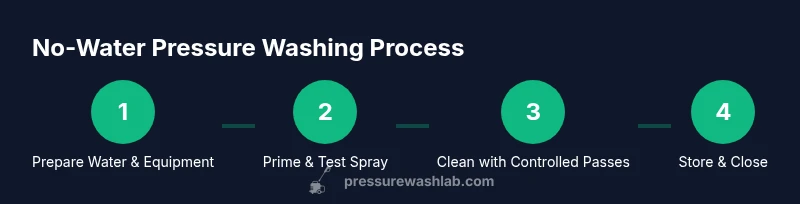
- 1
Set up the water system and work area
Place the portable water tank in a stable location and assemble the pump/hose system. Ensure the area has a safe surface to stand on and that runoff will be contained.
Tip: Lay out a simple path so you don’t trip over hoses; keep the pump higher than the water source to assist priming. - 2
Prime the pump and test spray
Fill the reservoir, power the pump, and run a quick test spray on a waste surface to confirm flow and pressure before starting your job.
Tip: Check for air bubbles; if you see them, reseat hoses and re-prime to avoid cavitation. - 3
Pre-wet the target area
Lightly mist the surface to loosen dirt; this helps reduce cleaning time and water use later on.
Tip: Keep the nozzle moving and avoid lingering in one spot to reduce surface damage. - 4
Apply detergent if needed
Apply a small amount of biodegradable cleaner with a wide spray from a safe distance; let it dwell briefly.
Tip: Do not over-apply; excess detergent can require extra rinsing time and more water usage. - 5
Rinse with controlled passes
Begin rinsing using broad, sweeping motions at a safe distance; overlap passes to avoid streaks.
Tip: Keep the spray at a moderate angle and avoid direct hits that can drive water behind siding or into crevices. - 6
Tackle stubborn stains
Switch to a narrower spray for persistent dirt, working from top to bottom to prevent re-soiling.
Tip: Pause briefly after applying high-pressure spray to allow dirt to loosen before final rinse. - 7
Adjust for delicate surfaces
Move to a gentler nozzle and increase distance for wood, painted surfaces, or siding that can be damaged by high pressure.
Tip: Test a small area first and observe for any surface damage before proceeding. - 8
Finish and shut down
Turn off the pump, drain hoses, and store all components dry in a designated cabinet or bin.
Tip: Inspect hoses for wear after each use to catch small issues before they become leaks.
Quick Answers
Can you pressure wash without access to running water?
Yes. You can pressure wash without running water by carrying a portable water supply and using a pump or portable washer. Plan your water budget, monitor pressure, and manage runoff to complete tasks effectively.
Yes. You can wash with a portable water supply and a pump; just plan the water budget and manage runoff.
What size water reservoir is best for small jobs?
For small jobs, a 5- to 10-gallon reservoir is often sufficient for wetting and rinsing surfaces. For larger areas, a bigger tank reduces refills and downtime.
A 5 to 10 gallon tank works for small jobs; larger areas need bigger tanks to reduce refills.
Is it safe to use detergent when no running water is available?
Detergents can be used with no-running-water setups, but choose biodegradable formulas and apply using a low-pressure nozzle to avoid surface damage and minimize rinsing needs.
Detergents are okay if biodegradable and used with low pressure.
Can water be reused after a wash job without running water?
Water reuse is possible, but you should strain and filter to remove debris before reuse and ensure contaminants aren’t re-deposited on surfaces.
Water can be reused if filtered and debris removed.
What are the main environmental considerations?
Contain runoff to prevent soil and plant contamination; dispose of dirty water according to local rules; use biodegradable cleaners when possible.
Contain runoff and dispose of dirty water properly.
What PSI range is safe for no-water setups on delicate surfaces?
Use lower pressure and wider nozzles for delicate surfaces; avoid aggressive sprays that can damage finishes or drive water into gaps.
Use low pressure and wide nozzles on delicate surfaces.
Watch Video
Key Takeaways
- Plan water usage and containment before starting.
- Choose the right nozzle and surface distance for each material.
- Use portable water sources to enable off-grid washing.
- Prioritize safety and environmental considerations throughout.