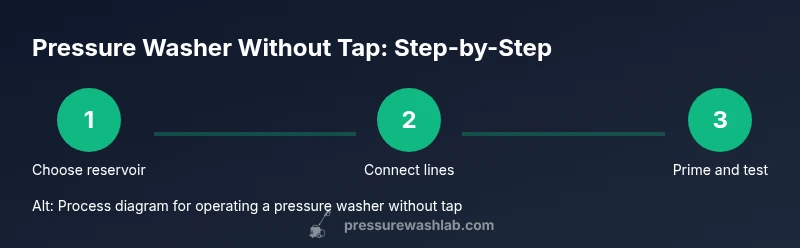
Pressure Washer Without Tap: Run It Anywhere Safely
Learn to run a pressure washer without a direct water tap using portable reservoirs, safe priming, and steady flow. Practical sourcing, setup, safety, and maintenance tips for homeowners and DIYers.


With no direct water tap, you can run a pressure washer without tap by using a portable water reservoir, a gravity-fed or pumped supply, and the right fittings to maintain steady flow. Choose a clean container of 5–20 gallons, connect hoses and a backflow preventer, then prime the system before spraying. This guide walks you through setup, operation, and safe shutdown.
pressure washer without tap: Practical setup
Operating a pressure washer without a direct water tap is entirely feasible, but it requires planning and proper equipment. According to Pressure Wash Lab, using a portable reservoir can deliver reliable pressure and continuous work time without secondary taps. The key is to design a simple loop where water is drawn from a temporary source, delivered to the machine with minimal air gaps, and expelled through a safe nozzle. In this section, we outline the core principles and the workflow you can apply on a typical driveway or garage floor. Start by selecting a clean, portable container in the 5–20 gallon range and ensuring the container has a secure lid to minimize debris and evaporation. Treat the setup like a small, temporary water supply station: keep the reservoir accessable, stable, and on level ground to prevent air intrusion into the pump. For most residential tasks, a mid-sized reservoir strikes a balance between portable convenience and spray time. Wire up the inlet hose to the pump with a backflow preventer and a small inline filter if possible to preserve pump life. Always verify all connections are tight and free of leaks before you power the unit. The intent is simple: steady, uninterrupted water flow that supports your chosen nozzle and PSI without drawing air or running dry.
Water source options: from buckets to barrels
When you don’t have a tap, you have multiple practical water source options. Gravity-fed systems rely on height: place the reservoir higher than the pump so gravity helps push water toward the inlet, while a small pump can push water uphill if needed. A common setup uses a 5–20 gallon plastic container or a labeled tote, placed on a stable surface near the work area. For extended cleaning sessions, you can use a larger reservoir and refuel less often, but be mindful of the weight and transportability. If you have a portable generator, you may also use a compact pump to boost water from the container to the washer. In all cases, make sure the reservoir is clean and free of contaminants that could foul the pump. Consider adding a simple sediment filter at the inlet to capture leaves or grit that might wash into the system during outdoor use. Remember to keep the reservoir away from sources of heat or sunlight, which can accelerate algae growth in stored water. The goal is a clean, dependable supply that doesn’t require a tap and minimizes interruptions during cleaning tasks.
Reservoir sizing and flow considerations
Reservoir size directly affects how long you can spray before needing a refill, and it also influences the pump’s duty cycle. A common practical range is 5–20 gallons, with 10 gallons offering a good compromise for small to medium jobs. If your pressure washer has a higher GPM rating, you’ll want a larger reservoir to prevent rapid cycling and loss of pressure; conversely, a smaller reservoir can work for quick touch-ups or light cleaning. The pump will draw water in as needed; if the level drops too low, pressure can drop and air may enter the system. Pressure Wash Lab analysis shows that keeping water supply near the pump and avoiding long suction hoses can minimize cavitation and maintain more consistent PSI. When calculating needs, consider the surface area you’ll clean and the time you expect to work in one session. For example, a typical driveway job may consume between 1 and 4 gallons per minute depending on nozzle choice and surface resistance. Always plan for refills and carry a secondary, sealed container for backup water.
Priming, filtration, and maintaining flow
Priming is essential when you’re not hooked to a tap. With the reservoir in place, start by opening the system’s valve and letting water fill the suction line until you see a smooth stream exiting the nozzle, then switch to the chosen spray tip. If your unit has a built-in filter or you added an inline filter, ensure it’s clean and not obstructed, as a clogged filter reduces flow and can overheat the pump. A simple filtration setup helps prevent grit or debris from entering the pump. If you notice intermittent flow, check all connections for air leaks and tighten where necessary. If you’re using a detergent reservoir, be mindful of dilution ratios and compatibility with the unit’s seals; never run detergent through an unfiltered supply line unless your manufacturer explicitly allows it. Regularly inspect the inlet hose for cracks and replace it if you see signs of wear. In practice, the most reliable operation comes from keeping the water surface clean, avoiding bending and kinking the suction hose, and testing your spray pattern on an inconspicuous surface before tackling larger areas.
Safety and best practices when running without a tap
Working without a fixed tap adds specific safety considerations. Always use a backflow preventer to avoid back-contamination, and wear eye protection and gloves to guard against chemical splashes or debris. Elevate the reservoir to optimize gravity-assisted flow, but ensure it’s stable and cannot tip over. Do not run the pressure washer near electrical outlets or wet surfaces; use GFCI-protected outlets if you’re working outdoors. Keep detergents and chemicals in labeled containers away from heat or open flames, and clean up spills promptly to prevent slip hazards. If your model is not rated for detergent use, skip additives and rely on water to flush the system. When you finish, release the pressure safely, drain the reservoir, and store hoses and fittings in a dry place to prevent weathering. If you’re in a dusty environment, consider a pre-rinse to reduce dirt load before applying pressurized cleaning. Finally, maintain a steady stance and avoid reaching or leaning into the spray zone to prevent accidental kickback. Following these safety practices helps minimize risks and promotes effective cleaning without a direct tap.
Real-world use cases: driveways, patios, vehicles
A tap-free setup shines in situations where access to water is limited: cleaning a concrete driveway, clearing patio tiles, or rinsing a vehicle when a hydrant isn’t nearby. Start with a light spray to test the surface’s reaction, then widen the nozzle to cover larger areas. For tough stains like oil or tire marks, step up to a higher PSI with a suitable nozzle, maintaining a safe distance to avoid etching the surface. When washing vehicles, keep the nozzle at a comfortable distance to prevent soap or water from forcing under trim and seals. If you’re using detergents, apply them from a separate reservoir and rinse with clean water only after allowing dwell time. In all scenarios, keep an eye on the water supply and refill before you lose pressure. A well-planned approach minimizes downtime and ensures you don’t stretch the reservoir too thin, which could lead to air ingress or pump overheating.
Troubleshooting common issues
If you encounter no water flow, re-check the reservoir height, tighten all fittings, and ensure the suction hose is fully submerged and not air-bound. Low pressure can signal a partially closed valve, a dirty filter, or suspension of the inlet hose; inspect these components and clean or replace as needed. Leaks around connectors or hoses often stem from loose fittings or worn gaskets; reseal with appropriate thread sealant or replace faulty parts. A surprising cause of poor performance is air in the line; bleed the system by loosening a quick-connect slightly until water jets out steadily before tightening again. Finally, keep the reservoir sealed when not in use to prevent algae growth, and store the setup in a shaded area to protect the water source from heat and contaminants.
Advanced tips and maintenance cues
To maximize life and performance, periodically inspect the pump seals for wear and replace as recommended by the manufacturer. Use only clean, potable water to prevent mineral buildup, especially if your area has hard water. If you anticipate frequent off-tap cleaning, consider investing in a compact inline filter and a larger capacity reservoir to reduce refills. After each use, flush the system with clean water and relieve any residual pressure to minimize wear on seals. If you notice consistent cycling or unstable pressure, review the nozzle selection, ensure the water source is stable, and confirm that the backflow preventer is functioning correctly. Regular maintenance is essential when you rely on a portable water source, and keeping a saved checklist can help you avoid common problems.
Tools & Materials
- Portable water reservoir (5–20 gallons)(Clean, potable water; choose a container with a secure lid)
- Inlet suction hose for pressure washer(Match inlet size to your machine; ensure min suction depth)
- Backflow preventer or check valve(Prevents contaminated water from returning to source)
- Garden hose with compatible fittings(Use a hose with proper connectors to avoid leaks)
- Pressure washer supply hose and quick-connects(Ensure compatibility with your unit)
- Water filtration/strainer (optional)(Helps keep debris out of pump)
- Detergent appropriate for cold-water use (optional)(Only if your unit supports detergent)
- Safety gear: gloves and goggles(Always wear PPE)
- Tarp or mat to catch overspray(Protect surfaces)
Steps
Estimated time: 60-90 minutes
- 1
Position reservoir and inspect setup
Place the water reservoir on stable ground near the cleaning area. Check all hoses and fittings for wear, and ensure the backflow preventer is installed correctly before powering the unit. This step reduces leaks and air ingress, helping maintain steady flow.
Tip: Use a level surface and avoid placing the reservoir on soft ground that could cause tipping. - 2
Connect supply line to reservoir with fittings
Attach the suction hose to the reservoir and ensure the connection to the pump inlet is secure. Install the backflow preventer if not already integrated, and fit any inline filter if used. Double-check all clamps and connectors for tightness.
Tip: Avoid long, loose suction hoses; keep the path short and straight to minimize air pockets. - 3
Prime the system and purge air
Turn on water flow and allow the line to fill until you see a continuous stream exiting the nozzle. If air remains, loosen the inlet fittings slightly to purge pockets, then tighten securely. This prevents air cavitation which damages the pump.
Tip: If your washer has a priming valve, use it to speed up the purge. - 4
Attach nozzle and perform a test spray
Fit the chosen tip for the job (start with a wide spray). Test on a small, inconspicuous area to verify water intake and spray pattern. Check for leaks or drips at every connection and stop if you see any risk of damage.
Tip: Keep a safe distance from the surface to avoid splatter and potential etching. - 5
Begin cleaning with technique and flow control
Work in sections, maintaining a consistent distance from the surface. Use overlapping strokes and avoid sanding or gouging delicate materials. Pause to refuel water if the reservoir runs low, resuming once pressure stabilizes.
Tip: Vary nozzle pattern to optimize coverage and reduce wear. - 6
Shutdown, drain, and store
Release pressure on the system before disconnecting hoses. Drain the reservoir completely and rinse the lines with clean water to prevent mineral buildup. Store hoses and fittings off the ground in a dry location.
Tip: Never store the unit with residual moisture; dry it to prevent rust.
Quick Answers
Can I run a pressure washer without a direct water tap?
Yes. You can operate a pressure washer using a portable reservoir and proper fittings. A backflow preventer and a suitable inlet hose are essential for reliable, safe operation.
Yes, you can operate a pressure washer without a direct water tap by using a portable reservoir and proper fittings. You'll also need a backflow preventer and the correct inlet hose.
What reservoir size do I need for typical tasks?
A 5–20 gallon reservoir is typical; choose based on the scope of your project and how long you plan to spray before refilling.
A 5 to 20 gallon reservoir is common; pick size based on how long you’ll spray before needing a refill.
How do I prime the system without a tap?
Open the supply valve and let water fill the suction line until a steady stream exits the nozzle, purging air in the process.
Open the valve and let water fill the line until the water comes out steady, removing air.
Is it safe to use detergents with a portable setup?
Only use detergents approved for pressure washers and compatible with portable water setups. Follow manufacturer guidance to avoid damage.
Only use approved detergents and follow your unit's guidance to avoid damage.
What maintenance tips help extend life when off-tap?
Flush after use, inspect hoses for wear, replace worn filters, and store the system dry to prevent corrosion or algae growth.
Flush after use, check hoses, replace worn filters, and keep everything dry when storing.
Watch Video
Key Takeaways
- Use a portable reservoir (5–20 gal) for on-site washing.
- Prime and purge air to maintain steady flow and pressure.
- Install a backflow preventer to protect your water source and equipment.
- Prioritize safety: PPE, stable setup, and proper distances.