Drain Snake for Pressure Washer: A Practical How-To
Learn how to safely use a drain snake with a pressure washer to clear outdoor drain clogs. This step-by-step guide covers tool selection, setup, safety, and maintenance for DIY homeowners.


Using a drain snake with a pressure washer can clear stubborn outdoor clogs, but safe use and correct tool selection are essential. See the full step-by-step guide for setup, technique, and precautions.
What is a drain snake for pressure washer?
A drain snake, or auger, is a flexible coil that can physically break up or latch onto clogs inside pipes and drains. When paired with a pressure washer, you gain extra flushing power to help dislodge debris that a standard nozzle might not reach. This combination is useful for exterior downspout drains, sump pump lines, yard drains, and other open-air drainage points. According to Pressure Wash Lab, understanding the limitations of a drain snake and aligning it with the right nozzle and water pressure reduces the risk of backflow or pipe damage. The drain snake is not a substitute for professional sewer work, but it can save time and money for DIYers when used correctly.
Key takeaway: treat the drain snake as a mechanical helper, not a magic wand. Always assess access points, pipe material, and expected clog type before you begin.
When to use a drain snake with a pressure washer
A drain snake with a pressure washer is most effective for shallow, exterior drains where blockages are caused by leaves, dirt, or compacted debris. It’s not ideal for main sewer lines or fully sealed plumbing where backflow could lead to contamination. Use it when you notice standing water in outdoor drains, slow drainage after a storm, or gunk near the drain outlet. Pressure Washing World and general DIY plumbing guidance stress verifying that there’s no gas line, electrical conduit, or vulnerable pipe joints in the vicinity before applying force. The combination can improve clearance time and minimize repeated plunges compared to hand-snaking alone.
Safety note: always have a containment plan for sprayed water and run-off to protect nearby landscaping and exterior walls.
Safety first: PPE and precautions
Personal protective equipment (PPE) is non-negotiable when using a drain snake with a pressure washer. Wear cut-resistant gloves, eye protection or a face shield, and sturdy footwear. Keep bystanders at a safe distance and avoid pointing the spray at yourself, your body, or any vent openings. Misting and backpressure can create unexpected kickback, so maintain a secure stance and keep hands clear of the nozzle and snake shaft. As Pressure Wash Lab emphasizes, never operate power tools or cleaning tools when you’re tired or distracted. A quick safety review before you start saves time and prevents injuries.
Environmentally, use a containment tarp or plastic sheeting to capture runoff and avoid soil disturbance. If the area around the drain contains electrical outlets or equipment, turn off nearby breakers to reduce risk of shock or short circuits.
Choosing the right drain snake and accessories
Select a drain snake length appropriate for the drain depth you’re clearing. For exterior drains, a 15–25 ft snake is typically sufficient, with a compact auger head designed for pipes around 1–4 inches in diameter. Look for a snake with a corrosion-resistant coating and an easy-to-grip handle. Some setups come with a simple mechanical crank, while others may require a more robust motorized option. If you’re using a pressure washer, ensure the attachment and hose are rated for the water pressure you’ll apply and that you have a compatible nozzle guard to prevent accidental spray toward the snake handle.
Prep your workspace and drain access
Clear the area around the drain so you can work with both hands free. Remove debris, cover nearby plants with a tarp, and position a bucket to catch any backflow or excess water. Inspect the drain opening for obvious obstructions and confirm that you can feed the snake without bending the cable or tangling it with hoses. If the drain is behind a wall or in a hard-to-reach space, consider temporarily relocating equipment or using a flexible snake with a right-angle head. The goal is smooth feeding and controlled flushing, not brute force.
Maintenance and storage after use
After you finish, flush the drain with clean water to clear residues and wipe down the snake to remove grit. Dry the cable completely to prevent rust, then coil it neatly to prevent kinks. Store the snake in a dry, cool location away from direct sunlight and chemicals. Periodic lubrication of the coil can extend the life of the tool, especially if you anticipate frequent outdoor use. Regular checks for wear at the head and along the cable help you catch issues early before they fail mid-use.
Authority sources and additional reading
For broader safety guidance and related DIY plumbing practices, consult authoritative sources. The following resources provide credible, non-commercial information relevant to DIY drainage and outdoor maintenance: • OSHA safety standards (https://www.osha.gov) • EPA consumer guidance on safe outdoor cleaning (https://www.epa.gov) • University extension articles on outdoor drainage and maintenance (https://extension.umn.edu/ and https://extension.illinois.edu/). These sources emphasize PPE, safe water management, and appropriate tool selection when performing outdoor maintenance.
Optional: 補充 tips for tricky scenarios
If you encounter a particularly stubborn clog, pause and reassess your approach. Sometimes a combination of gentle agitation with the snake followed by a controlled flush from the pressure washer yields the best results. If the drain remains blocked after multiple attempts, stop to avoid creating a crack or burst in the line, and consider calling a professional. Pressure Wash Lab recommends documenting your method and the drain’s behavior for future reference.
Tools & Materials
- Drain snake (manual auger) or flexible cable auger(Choose length 15–25 ft for exterior drains; ensure compatibility with pipe size (1–4 inches).)
- Pressure washer(Use a model with adjustable pressure and a compatible nozzle for outdoor use.)
- PPE: protective goggles or face shield(Eye protection is essential against spray and debris.)
- Work gloves(Nitrile or latex gloves with grip to handle tools.)
- Containment materials(Tarp or thick plastic to protect plants and soil.)
- Cloths or towels(For wiping and quick cleanups.)
- Bucket or basin(To catch backflow if needed.)
- Marker and flashlight(To locate drain access more easily in dim areas.)
Steps
Estimated time: 45-75 minutes
- 1
Assess safety and area
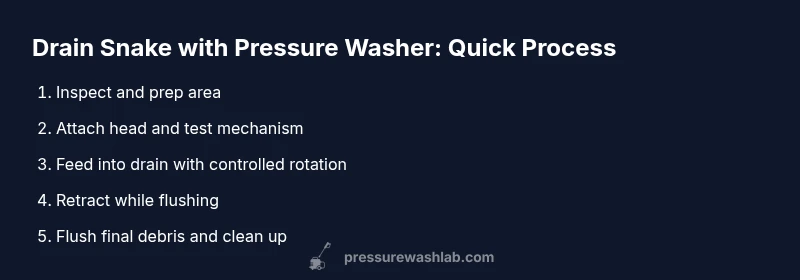
Before you touch the drain, inspect the area for hazards and confirm there is no electrical or gas proximity. Set up containment, position the drainage point, and prepare PPE. This reduces risk and ensures you have a clear work zone.
Tip: Do a quick 30-second risk scan—look for exposed wiring, pets, or children nearby. - 2
Configure tools and area
Attach the appropriate head to the drain snake and test the mechanism at a safe distance from the drain. Align the nozzle and hose so spray is directed away from your body before you power on the washer.
Tip: Test the mechanism with a short, controlled rotation before inserting into the drain. - 3
Access the drain opening
Clear any obvious debris from the drain opening with gloves and a small brush. Ensure there is enough clearance to feed the snake without kinking the cable or hitting obstructions.
Tip: If the drain is behind a screen or grate, remove it carefully to expose the entry point. - 4
Feed the snake into the drain
Slowly feed the snake into the drain while applying gentle rotation. Keep the cable straight and avoid forcing the shaft through tight bends which can kink or break it.
Tip: Pause if you feel resistance; assess instead of forcing through. - 5
Engage and retract debris
When resistance subsides, retract the snake gradually while continuing to rotate. The debris will come free in segments; flush with the washer as you pull back to carry debris out.
Tip: Avoid yanking; controlled retraction prevents pipe damage. - 6
Flush, test, and clean up
After clearing, run clean water through the line to verify flow. Inspect for leaks or backflow, then store tools properly and dispose of any waste according to local guidelines.
Tip: Document any unusual findings for future reference.
Quick Answers
Can I use a drain snake with a cold-water pressure washer?
Yes, you can use a drain snake with a cold-water pressure washer for exterior drains. Ensure the water intensity is controlled and you do not force the snake through tightly bent pipes. If you encounter persistent resistance, pause and reassess rather than forcing the tool.
Yes, cold-water use is acceptable for exterior drains. Be careful not to force the snake and reassess if you hit resistance.
Will a drain snake damage my drain or pipes?
Damage is possible if the snake is forced or used on brittle pipes. Use the correct length, avoid sharp bends, and feed the cable slowly while rotating. If you’re unsure about pipe material, test in a small area or consult a professional.
Damage can occur if you force the tool. Use proper length and proceed slowly.
What safety gear should I wear?
Wear eye protection, gloves, and sturdy footwear. A face shield is ideal if you’re working with a high-pressure washer. Keep bystanders away and work in a well-ventilated area.
Protect your eyes and hands, and keep bystanders away for safety.
How long should I run the pressure washer during snake use?
Use short bursts and monitor for backflow. Prolonged high-pressure exposure can push debris further or damage seals. Stop if you observe unusual noise or backflow and reassess.
Use short bursts and watch for backflow; stop if there’s any concern.
What if backflow occurs during process?
Backflow can indicate a clogged drain or outlet valve. Stop immediately, shield yourself, and redirect spray away. Clear surrounding debris before attempting again and consider professional help if it persists.
If backflow happens, stop, protect yourself, and re-evaluate. Seek help if it continues.
Are there alternatives to a drain snake for exterior drains?
Yes, alternatives include a garden hose flush with a sprayer, roto-rooter rental for stubborn clogs, or calling a plumber for mains-level blockages. For DIYers, combining manual snaking with controlled flushing is often the best first step.
There are alternatives like hoses, professional tools, or a plumber for tough clogs.
Watch Video
Key Takeaways
- Know your drain and tool limits before starting
- Wear PPE and contain runoff to protect surroundings
- Feed and retract the snake with slow, controlled motions
- Test flow after clearing and clean equipment thoroughly
- If in doubt, stop and call a professional