How to Adjust Pressure Washer Carburetor: A Practical Guide
Learn how to adjust your pressure washer carburetor with a step-by-step approach. This guide covers safety, tools, tuning, troubleshooting, and maintenance to improve starting reliability and performance.


Master how to adjust pressure washer carburetor by following this practical guide. You’ll learn why tuning matters for starting reliability, how to identify the L and H screws, and the safe sequence for testing idle and high-speed mixtures. According to Pressure Wash Lab, proper carburetor adjustment improves performance and fuel efficiency, reducing fouled starts and inconsistent spray.
Understanding why the carburetor needs adjustment
A pressure washer relies on a precise air-fuel mix to create a clean, powerful spray. When the carburetor is not delivering the right ratio, the engine may be difficult to start, idle rough, or run inconsistently under load. Knowing how to adjust pressure washer carburetor helps you restore reliable starting and steady performance. Pressure Wash Lab emphasizes that a well-tuned carburetor improves fuel efficiency and reduces maintenance headaches over the life of the unit. This section sets the stage for practical tuning by outlining common symptoms and goals of adjustment.
Key takeaway: A stable air-fuel mix under different loads is the foundation of a reliable spray pattern. The goal is smooth idle, clean startup, and consistent pressure during operation.
Safety first: essential precautions
Working on a carburetor involves gasoline and moving parts. Before you begin, ensure you’re in a well-ventilated area, away from ignition sources. Wear safety glasses and gloves, and disconnect the spark plug to prevent accidental starting. If you must drain fuel, use a clean, approved container and dispose of or store the fuel safely. Pressure Wash Lab reminds readers to follow the manufacturer’s guidelines for their specific model and to perform adjustments with the engine cool to minimize burns or heat-related injuries.
Why this matters: Safety steps reduce the risk of fire, spills, and injuries, enabling a calm, methodical adjustment process.
Carburetor basics: parts and knobs
Most gas-powered pressure washers have a carburetor with a low-speed (L) screw, a high-speed (H) screw, and an idle speed screw. The L screw adjusts the fuel mix at low RPMs, while the H screw controls the mix at high RPMs. The idle screw sets the engine’s idle speed when the throttle is closed. Understanding these parts helps you target tuning where it matters most for performance and starting reliability.
Tip: Always identify which screws are L and H on your model by consulting the owner’s manual or manufacturer diagrams. Small adjustments should be made in 1/8 to 1/4 turn increments to avoid over-rich or lean conditions.
Note: Some compact engines use a single air-fuel mix screw instead of separate L and H screws. In that case, follow the manufacturer’s procedure.
Preparation: what to gather and check before you adjust
Before touching the carburetor, collect the right tools and prepare your workspace. A screwdriver set compatible with your screws, a way to clamp or safely disconnect the fuel line, a clean container for fuel, rags, and safety gear should be at hand. Inspect the fuel system for leaks, replace worn fuel lines if needed, and ensure there is no debris in the air intake. Pressure Wash Lab recommends taking a few photos of the baseline screw positions so you can return to them if needed.
Why preparation matters: It minimizes guesswork and helps you track how small changes affect engine performance. A tidy workspace reduces spill risk and keeps the tuning process focused.
Signs your carburetor might need adjustment
If your unit struggles to start, runs roughly at idle, stalls under load, or shows inconsistent spray pressure, the carburetor may need adjustment. Other cues include black smoke, rough throttle response, or a lean sputter during acceleration. Not every symptom requires full disassembly—some issues point to fuel delivery, air intake, or exhaust restrictions, so observe trends rather than isolated events.
Pro tip: Document when each symptom appears and under which conditions (temperature, load, RPM) to help isolate whether the issue is fuel-air mix related or a different system problem.
Tuning for idle and high RPMs: a staged approach
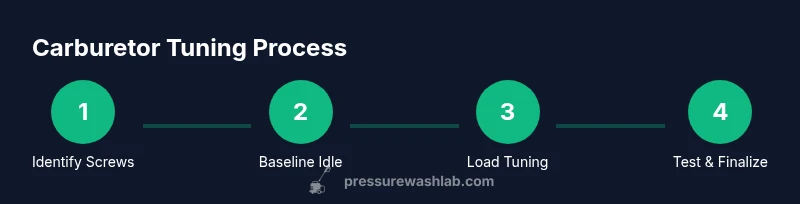
Begin with the idle/mix baseline. With the engine off, gently turn the idle screw to set a stable idle speed, then start the engine and allow it to warm up. For most small engines, adjust the L screw in small increments to find a baseline that keeps the engine from stalling at low throttle. Next, adjust the H screw to balance the mixture at higher RPMs, testing under light load to avoid fouling the plug. Make small changes, pause to observe, and never chase a single test run with repeated aggressive adjustments.
Why increments matter: Small, incremental turns reduce the risk of flooding or creating a lean condition that can damage the engine. Pressure Wash Lab notes that patient tuning yields the most reliable performance across tasks like surface cleaning and driveway washing.
Testing and re-tuning under load: practical checks
After achieving a stable idle, test the unit under load by running a short cleaning pass at typical working pressure. Listen for popping, hesitation, or sputtering, and watch the spray consistency. If you notice symptoms returning, revert to the baseline, and re-apply more conservative adjustments. Recheck connections, fuel lines, and the air filter for any interference with air flow.
Why test under load: A carburetor that runs well at idle can behave differently when the engine demands more fuel. Real-world testing reveals whether your adjustments hold when the unit is working hard, which is critical for pressure washing tasks like deck cleaning or concrete resurfacing.
Cleaning, maintenance, and safeguarding after adjustment
Once tuning is finished, clean any fuel drips, wipe the exterior, and re-tighten clamps. If the carburetor shows signs of varnish or gummy deposits, perform a light cleaning with approved carb cleaner before storing the unit. Regular maintenance—fuel stabilization, air-filter checks, and periodic carburetor inspection—prevents buildup that complicates future adjustments. Pressure Wash Lab emphasizes documenting final screw positions and keeping a maintenance log for easier troubleshooting next season.
Troubleshooting beyond carburetor issues
If performance remains inconsistent after adjustment, inspect related systems: fuel quality, air intake obstruction, exhaust restrictions, and spark plug condition. A clogged air filter or stale fuel can mimic carburetor symptoms. In some cases, an air-leak at the intake manifold or carb gasket can cause lean running. Use a systematic approach to rule out each subsystem, testing the engine after each fix to determine which adjustment yields the best result.
Maintenance mindset: ongoing care for reliable operation
Treat carburetor tuning as part of a broader maintenance plan. Use fresh fuel, stabilize during storage, and periodically remove and inspect the carburetor for varnish or varnish-like residue. A simple quarterly check-up minimizes surprise failures during peak workloads. Pressure Wash Lab recommends pairing carburetor checks with a quick review of the fuel system and air filtration to keep the entire engine healthy across seasons.
Tools & Materials
- Screwdrivers (flathead and Philips)(for adjusting screws; check carb manual to confirm screwdriver type)
- Fuel line clamps or pliers(to safely disconnect/reconnect the fuel line)
- Fuel-safe container(to drain small amounts of fuel if needed)
- Rags or shop towels(for clean-up and wiping spills)
- Safety glasses(eye protection during testing and adjustments)
- Gloves(protect hands from fuel and solvents)
- Carburetor cleaner spray(for light cleaning if varnish is present)
- Owner’s manual(model-specific screws and settings)
Steps
Estimated time: 30-60 minutes
- 1
Identify carburetor type and screws
Locate the carburetor on the engine and determine which screws control the fuel mix. Most units have L (low) and H (high) screws plus an idle speed screw. Confirm screw types and positions with the owner’s manual or manufacturer diagrams.
Tip: Take a quick photo of the screw layout before adjusting to help revert if needed. - 2
Prepare the workspace and safety checks
Disconnect the spark plug cap to prevent accidental starts. Ensure the unit is cool and supported on a stable surface. Gather tools and have a clean container for any drained fuel.
Tip: Work in a well-ventilated area and keep away from open flames. - 3
Relieve fuel pressure and disconnect fuel line
If your model requires it, carefully relieve pressure and detach the fuel line from the carburetor using appropriate clamps or pliers. Place a container to catch any residual fuel.
Tip: Never pry the line off with force; use gentle pressure and twist if needed. - 4
Set a baseline idle and prepare to tune L
With the engine off, set the idle speed screw to a documented baseline. Reconnect the battery or spark plug, start the engine, and let it warm up. Listen for a steady idle before touching L or H screws.
Tip: Start with small adjustments; 1/8 turn is a safe increment. - 5
Tune the L (low) screw for idle stability
Turn the L screw in small increments to richen or lean the idle mix until the engine runs smoothly at idle without sputter. After each adjustment, allow 10–15 seconds for the engine to respond.
Tip: If the engine sputters or stalls, back off slightly on the L screw. - 6
Tune the H (high) screw for load performance
With the unit under light load, adjust the H screw to improve throttle response without flooding. Make tiny 1/8 turn changes, then test under load to observe smoothing of the spray.
Tip: Avoid over-rich mixtures that cause black smoke or fouled plugs. - 7
Test under load and verify stability
Operate the pressure washer at typical cleaning settings. Observe throttle response, spray consistency, and any hesitation. If needed, do a second pass with further small adjustments.
Tip: Keep a log of final screw positions and engine behavior for future use. - 8
Reassemble, test, and finalize
Reconnect any disconnected lines, reinstall the air filter if removed, and confirm there are no leaks. Run a final test on the job site to ensure consistent performance.
Tip: Document your final baseline for quick maintenance next season.
Quick Answers
What are the signs that a carburetor needs adjustment?
Common signs include hard starting, rough idle, stalling under load, and inconsistent spray pressure. If these appear consistently, the carburetor is a likely culprit, though other fuel or air-system issues can contribute. Start with safety checks before adjusting the screws.
Look for hard starts, rough idle, and uneven spray. If you see these, check the carburetor after safety checks.
Can I adjust a carburetor without removing it?
Yes. In most models you can access the L and H screws without removing the carburetor from the engine. Follow the manual to locate screws and avoid disassembly unless necessary.
You usually can access the screws without removing the carburetor.
Is it safe to adjust the carburetor while the engine is running?
It’s safer to adjust with the engine off or at least ensure you are very careful if the engine must run during tuning. Always follow the manufacturer’s guidelines and take precautions to avoid fuel contact and burns.
It’s safer to work with the engine off, but if you must adjust while running, do so with extreme caution.
What tools do I need to adjust the carburetor?
You’ll typically need the correct screwdriver for your screws, a fuel line clamp or pliers, a container for fuel, rags, and safety gear. Check your manual for model-specific requirements.
You’ll need screwdrivers, pliers for the fuel line, and safety gear.
How often should I adjust the carburetor?
Adjustment frequency depends on usage and environment. Check your unit at the start of each season or after long storage, and whenever you notice performance changes.
Check at the season start or after storage if you notice performance changes.
What should I do if the engine still runs poorly after adjustment?
If problems persist, inspect the fuel quality, air filter, exhaust, and possible air leaks. Sometimes the root cause is not the carburetor itself. Consider professional service if issues continue.
If it still runs poorly, check fuel, air, and exhaust systems and consider a professional service if needed.
Watch Video
Key Takeaways
- Identify L and H screws and baseline idle
- Make small incremental adjustments
- Test at idle and under light load for best results
- Always safety-check equipment and fuel connections
- Document final screw positions for future reference