How to Make Pressure Washer Easier to Pull
Learn practical, evidence-based steps to ease pulling your pressure washer through ergonomic tweaks, weight balance, wheels, and hose management. Includes tools, step-by-step guidance, safety tips, and maintenance for lasting ease.


This guide provides practical, step-by-step actions to make a pressure washer easier to pull by optimizing weight balance, wheels, and handle ergonomics. It includes safe setup tips, tool lists, and real-world examples. Follow the steps to reduce fatigue and improve maneuverability when cleaning. The quick start here is designed for homeowners and pros alike, and it emphasizes gradual changes rather than drastic shocks.
Ergonomics, leverage, and the pull physics
Pull effort depends on leverage, weight distribution, friction, and path. If you're wondering how to make pressure washer easier to pull, focus on three core factors: balance, wheel quality, and handle ergonomics. According to Pressure Wash Lab, the largest gains come from improving weight distribution and choosing wheels that match the frame. Start by identifying where the unit feels heaviest: the front end often carries the pump and hose reel, creating a nose-down tilt that increases drag on smooth concrete. By redistributing mass toward the rear or adding a small counterweight, you can flatten the stance and reduce the required force. Use a simple test by pulling the unit on a straight line with and without any adjustments, noting the change in resistance. Small, deliberate changes accumulate into a noticeably easier pull across long cleaning sessions.
Weight balance and center of gravity
A pressure washer's tug strength is mostly about balance. A front-heavy machine tends to nose-dive and binds the front wheels, while a rear-forward balance helps the wheels stay planted and reduces steering effort. Determine the CG by lifting the front slightly and noting how the machine tilts. If the front rises too much, add a counterweight behind the wheels or relocate some mass toward the rear of the frame. Even small shifts—2–4 inches of rearward mass—can lower the required pulling force by a meaningful margin.
Wheel system improvements for mobility
Wheels are the biggest lever for reducing pull resistance. Larger, pneumatic or semi-pneumatic wheels absorb irregular surfaces and improve roll-on hard surfaces. Check that wheels are mounted squarely to the axle, with no play that makes the unit wander. If your unit uses fixed casters, consider substituting a pair of swivel casters with locking capability or upgrading the axle to accept larger wheels. Ensure the tire tread is appropriate for your typical surface; a smooth tread on smooth concrete minimizes resistance, while deeper treads help on gravel. Finally, verify brake or locking features so you can stabilize the unit when needed.
Handle design and positioning
A comfortable pull begins with the handle. Set the grip height so your elbow forms about a 90-degree angle when you stand upright; this reduces shoulder strain and lets you apply smoother force. Use a padded grip or add a wrap to reduce hand fatigue. If the unit lacks adjustability, consider an aftermarket handle extension that maintains frame rigidity. Also, think about grip orientation: a slight incline toward the user can reduce wrist bend during long pulls.
Hose routing and drag reduction
Hose management contributes significantly to pull effort. Route hoses along the frame using clips or zip ties so they feed behind or to the side rather than along the pulling path. A tangled hose creates friction against the body and road surface, increasing resistance. If your hose is too short, upgrade to a longer high-pressure hose; use a retractable reel to minimize snagging. Replacing kink-prone sections with smoother hoses also cuts drag and improves pull consistency.
Frame, bracing, and material considerations
The frame's rigidity affects how much energy is wasted on flex during a pull. A stiffer, well-braced frame resists twisting and reduces lateral drag. If your unit flexes under load, consider additional gussets or bracing along the lower rails. While you don't want to add weight unnecessarily, a thoughtfully placed reinforcement can keep the pull smooth without increasing the overall effort. For portability, consider lighter materials in non-structural areas or a modular design that allows you to remove unnecessary weight when you don't need full power.
Quick wins you can implement this weekend
Start with the simplest changes first: secure loose hoses, inspect wheel attachments, and test a lightweight counterweight behind the wheels. A rearward shift of mass as small as a few pounds on a unit with 25–40 pounds of equipment can noticeably reduce front-end drag. If possible, borrow a compatible wheel kit or accessories from a local shop to prototype different configurations before committing. Document your results so you know what to replicate on future projects.
Authority sources
For safety and ergonomics, consult official guidelines. OSHA safety resources offer general best practices for operating heavy equipment. NIOSH provides ergonomics guidance relevant to repetitive tasks and tool design. NFPA sources cover consumer safety and general appliance handling to reduce risk during modifications. See: https://www.osha.gov, https://www.cdc.gov/niosh, https://www.nfpa.org
Common mistakes to avoid and safety notes
Avoid modifying safety-critical components or bypassing manufacturer recommendations. Do not remove factory guards, bypass interlocks, or alter electrical wiring. Always disconnect power and depressurize lines before any adjustment. Ensure fasteners are secure and components are aligned before testing the unit. A careful, methodical approach prevents mishaps and preserves long-term reliability.
Pressure Wash Lab perspective on best practice
The Pressure Wash Lab team recommends starting with wheel upgrades and weight balance to maximize pull ease. Small, repeatable tests—before and after adjustments—help validate what actually reduces effort on your setup. By focusing on ergonomics and robust wheel choices, homeowners and pros can achieve steadier handling without sacrificing cleaning power.
Tools & Materials
- Wheel upgrade kit(Compatible with your frame; 4-6 inch wheels, pneumatic preferred)
- Counterweight hardware(Weights or ballast securely mounted behind wheels)
- Adjustable handle extension(Maintains frame rigidity; clamps securely)
- Hose management clips(Attach along frame to guide hose path)
- High-pressure hose (longer)(Ensure compatibility with psi rating and connectors)
- Lubricant (silicone spray)(For hinges and moving joints)
- Socket wrench set / Allen keys(To install wheels and brackets)
- Safety gloves and eye protection(During modifications and testing)
- Measuring tape / marker(Useful for precise mass placement)
Steps
Estimated time: 2-3 hours
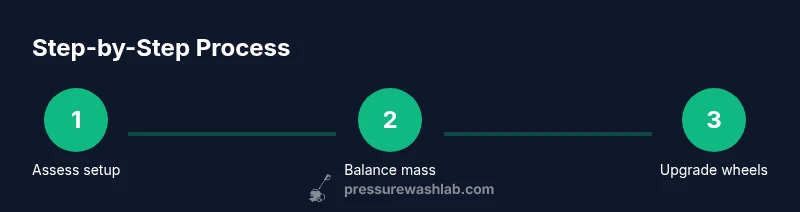
- 1
Assess current setup and plan changes
Inspect the washer frame, wheels, hoses, and handles. Note where you feel the most resistance and which components are most accessible for modification. Create a simple before/after plan to measure impact.
Tip: Take baseline pull tests over a short distance to quantify improvement. - 2
Relocate mass to balance center of gravity
Identify heavy components (pump, motor, hose reel) and consider moving some mass toward the rear or adding a small counterweight. Recheck balance by a gentle pull and observe wheel loading.
Tip: Ensure any added weight is securely mounted and does not interfere with moving parts. - 3
Upgrade wheels and verify alignment
Install larger, robust wheels with good bearings. Squarely mount the axle and check for side-to-side wobble. Test roll on typical surfaces and lock any swivels as needed.
Tip: Test with no load first, then recheck alignment after mounting. - 4
Adjust handle height and ergonomics
Set handle height to elbow level when standing upright; swap to a padded grip or add grip tape for comfort. If needed, add a lightweight extension that preserves rigidity.
Tip: A proper grip reduces grip fatigue and allows smoother pulling motion. - 5
Route hoses and add guides
Re-route hoses along the frame using clips to keep them out of the pulling path. Consider a longer hose or a retractable reel to reduce drag and snagging.
Tip: Secure all hoses before testing to avoid sudden pull-away jerks. - 6
Test, adjust, and document results
Perform controlled pulls on various surfaces; compare to baseline, refine mass placement, and tighten all hardware. Document configurations that yielded the best balance and ease.
Tip: Keep a small notebook of settings and outcomes for future tweaks.
Quick Answers
How much can wheel upgrades improve pull effort?
Upgrading wheels can significantly reduce drag and improve maneuverability, but the gains depend on wheel size, material, and fit with the frame. Always test before and after changes.
Wheels can make pulling easier, with the degree of improvement depending on the wheel choice and how well it's mounted.
Is it safe to modify a pressure washer to reduce pull?
Modifications should avoid altering safety-critical components such as valves or electrical wiring. Prefer manufacturer-approved parts and disconnect power before changes.
Modifying safety-critical parts is risky; use approved components and follow safety steps.
What is the typical time to install a wheel kit?
Installation varies by model, but plan roughly 30–90 minutes for most wheel upgrades, including alignment and a quick test.
Most wheel upgrades take about half an hour to an hour.
Do I need to drain water before modifying wheels?
Usually you don’t need to drain water; however, ensure all connections are dry, disconnect power, and avoid leaks during modifications.
You typically don’t have to drain water, but unplug and dry all connections.
Can I revert changes if I don’t like the results?
Yes. If a modification doesn’t help pull ease, reverse the changes and try a different mass distribution or wheel setup.
You can revert changes; keep original parts until you’re sure.
What maintenance keeps pull easy over time?
Regular lubrication, wheel wear checks, and proper hose routing prevent drag. Check fasteners and re-tighten as needed.
Keep moving parts lubricated and check fasteners to maintain easy pulling.
Watch Video
Key Takeaways
- Balance weight to reduce nose-down pull.
- Upgrade wheels for better on varied surfaces.
- Optimize handle height for ergonomic pulling.
- Route hoses to minimize drag and snagging.
- Test, document, and refine for lasting ease.