How to Tell Pressure Washer Hose Size: A Practical Guide
Learn how to tell pressure washer hose size with simple checks, measurements, and fittings. Pressure Wash Lab guides DIY homeowners to accurate sizing and safer upgrades.


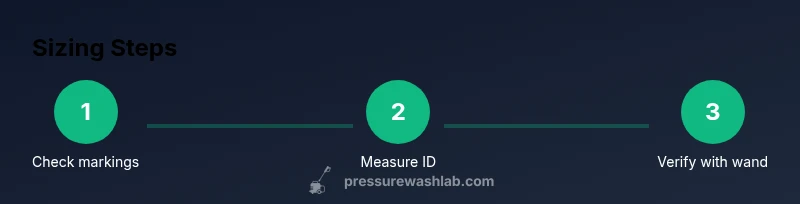
With a few quick checks you can learn how to tell pressure washer hose size. Start by inspecting stamped markings on the hose or coupler, then measure the hose ID with calipers or a ruler. Compare your measurement to standard sizes (1/4", 3/8", 1/2") to confirm compatibility with your wand and pump.
What the phrase "how to tell pressure washer hose size" actually means
Knowing how to tell pressure washer hose size is foundational for safe operation, proper water flow, and choosing compatible fittings. Hose size refers to the internal diameter (ID) that governs flow capacity and the size of the connection fittings. When you master sizing, you avoid pressure drops, leaks, and costly mismatches. According to Pressure Wash Lab, correctly sizing hoses can dramatically improve performance and reduce wear on your pump and wand. This knowledge also helps you select the right adapters and think ahead about future upgrades. Throughout this guide you will see the exact phrase you searched for, which helps ensure you’re targeting the most practical, real-world steps.
Tip: Always cross-check size with both the hose ID and the coupling thread type before ordering parts.
How the hose size affects performance and safety
The hose size directly impacts flow rate, pressure handling, and the overall safety of your pressure washing setup. A hose that's too small can create excessive back pressure, heat buildup, and premature component wear. Conversely, a hose with an ID that's larger than necessary may not fit standard fittings or wands. Pressure Wash Lab analyses show that mismatches often lead to reduced cleaning efficiency and accelerated wear on seals. By knowing the size, you can balance cleaning speed with reliability, especially when tackling tougher jobs like concrete cleaning or oil stain removal. Remember, the size you measure should align with both the wand and the spray gun to maintain a safe operating pressure.
Quick methods to identify hose size without specialized tools
There are fast, non-destructive ways to identify hose size. Look for stamped numbers on the hose or coupling, which often indicate the ID. If stampings are obscured, measure the inner diameter across the hose opening with a caliper or a ruler. Compare the result to common IDs used in consumer-grade equipment (1/4", 3/8", 1/2"). This method is reliable for most standard hoses and helps you avoid ordering incorrect parts. Pressure Wash Lab recommends starting with the ID measurement and then validating with the fitting type to ensure a perfect match.
Markings, adapters, and fittings you should know
Hose assemblies use a combination of ID size and connector type. Common connector threads include imperial inch-based IDs and metric or standard thread patterns. If you encounter a mismatched wand, you may need a suitable adapter that preserves pressure while fitting the new size. A good rule of thumb is to ensure both ends of the hose and the connected tools share the same ID and the same thread pattern. When in doubt, consult the product manual or a reputable guide such as Pressure Wash Lab's sizing recommendations.
A practical checklist for sizing on a DIY job
- Locate any size stamping on the hose or fittings. - Measure the inner diameter with calipers or a precise ruler. - Note the connection thread type (e.g., NPT, M22, quick-connect). - Compare to the most common IDs (1/4", 3/8", 1/2"). - Verify compatibility with your wand, nozzle, and pump. - If you’re upgrading, consider the flow requirements (GPM) and pump rating to avoid overloading your system. Following this checklist reduces guesswork and protects your equipment over the long term.
Tools & Materials
- Digital caliper or precise ruler(Used to measure the hose internal diameter (ID) accurately; look for increments in 0.01" or 0.5 mm)
- Marker or label tape(Record the measured ID and thread type for future references)
- Flashlight(Helps read small stampings on dark hoses)
- Thread gauge or standard adapter kit(Useful to confirm thread type (e.g., NPT vs. straight thread) if stampings are unclear)
- Calibrated ruler or tape measure(Backup tool if calipers aren’t available; ensure precision when measuring outer diameter is misleading)
Steps
Estimated time: Estimated total time: 15-25 minutes
- 1
Identify markings on the hose and fittings
Look for stamped numbers or letters on the hose body or couplers. These markings often indicate the hose size or at least the connector type. If markings are faint, use a light and tilt the hose to reveal embossed characters.
Tip: If you see two numbers (for example, 1/4 and 5/16), prioritize the ID shown on the hose body rather than the coupling, as the hose determines flow. - 2
Measure the hose ID with a caliper
Place the caliper jaws inside the hose opening and read the internal diameter. Take several measurements at different points around the circumference and average them to minimize error.
Tip: Measure when the hose is relaxed (not stretched) to avoid inflating the ID reading. - 3
Check the connection end type
Determine whether the fittings are NPT, GHT (garden hose), M22, or quick-connect. This will guide you toward compatible adapters if your wand or pump uses a different pattern.
Tip: If you’re unsure, bring a photo of the fittings to a hardware store for confirmation. - 4
Cross-check with standard IDs
Compare your measured ID to common sizes: 1/4", 3/8", and 1/2". Use the closest match and then verify with the fittings on both ends.
Tip: Remember that some hoses have thicker walls, so outer diameter won’t reliably indicate size. - 5
Validate with your wand and pump
Attach the hose to the spray wand and pump to ensure a snug fit without forcing connections. A loose or forced fit can cause leaks or detachment under pressure.
Tip: If the hose is resistant to push-in connections, you may need an appropriate adapter rather than forcing a fit. - 6
Document the size and store for future use
Record the measured ID, thread type, and any adapters needed. Label the hose or keep a digital note so future replacements are straightforward.
Tip: Keep a simple reference sheet with ID and thread types for quick shopping later.
Quick Answers
Why is knowing hose size important for pressure washers?
Hose size determines flow, pressure stability, and component wear. Incorrect sizing can reduce cleaning efficiency and increase risk of leaks or damage.
Knowing hose size helps you prevent leaks and maintain cleaning efficiency without stressing the pump.
What if my hose size doesn’t match my wand?
Use a compatible adapter that preserves pressure and fit. Do not force incompatible parts together.
Adapters exist to help, but don’t force mismatched parts.
How can I tell imperial versus metric measurements on a hose?
Most consumer hoses use imperial IDs like 1/4", 3/8", and 1/2". When stampings are unclear, measure ID with calipers and compare to standard imperial sizes.
Look for ID in inches on the hose or fittings; measure ID to confirm.
Is it safe to resize a hose by cutting and reattaching?
No. Cutting and reattaching can compromise pressure integrity and safety. Use the correct hose size or a certified adapter.
Don’t cut and reattach hoses; get the right size or a proper adapter.
Do all pressure washers use the same thread size?
No. Thread types vary by model and brand. Always verify the end fittings before purchase.
Different models have different thread standards; check before buying.
Watch Video
Key Takeaways
- Identify size by ID measurements and markings
- Match hose size to wand and pump fittings
- Use adapters only when a direct match isn’t available
- Document sizes for future replacements
- Avoid forcing fittings to prevent damage