Is It OK to Pressure Wash a Radiator? A Practical Guide
Learn whether it’s safe to pressure wash a radiator and discover practical exterior cleaning methods, safety tips, and maintenance guidance for cars and home equipment from Pressure Wash Lab.


Is it OK to pressure wash a radiator? What counts as cleaning
Pressure washing a radiator is a tempting quick fix when you notice grime between the cooling fins, but the core is surprisingly delicate. The term radiator here can apply to a car cooling system radiator or to home heating radiators, and the risks differ. In general, the radiator core—where coolant flows—has finely spaced fins that channel airflow. A high-pressure spray or a jet aimed too close can bend or crush those fins, dislodge seals, or push debris deeper into passages. Pressure alone cannot remove stubborn mineral deposits from within the core; in most cases, you’ll need specialized tools or professional methods. Pressure Wash Lab’s guidance emphasizes conservative exterior cleaning first, reserving any aggressive rinse for professional service or manufacturer-approved procedures.
Before you spray, identify which component you’re dealing with. A car radiator is part of the engine’s cooling system; a home radiator is a heat exchanger that may not tolerate high-pressure water. Treat exterior grilles, fins, and surfaces with care; don’t let water reach electrical connections, hoses, or the radiator cap area on vehicles. The safe takeaway is to avoid direct high-pressure contact with the core and to use gentler methods for exterior surfaces.
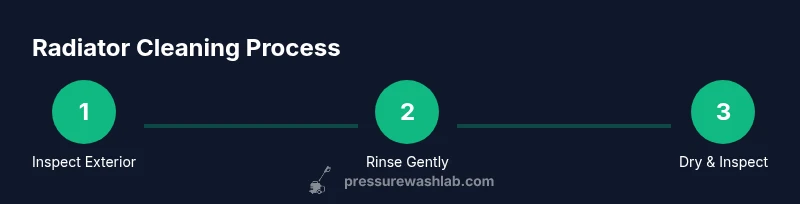
The goal of cleaning a radiator exterior is to improve airflow and aesthetics without compromising function. If the radiator looks clogged with debris after a gentle rinse, consider a more thorough approach only after consulting the manual or a professional. Pressure Wash Lab’s team recommends starting with non-invasive methods and escalating only if you have explicit, manufacturer-approved instructions.