Complete List of Pressure Washing Services for 2026
Explore the full range of pressure washing services for homes and small businesses. Learn surfaces, equipment, safety tips, and best practices for effective cleaning.


Pressure washing services involve cleaning tasks using high-pressure water, detergents, and specialized nozzles. A typical service package includes surface assessment, pretreatment, rinsing, and waste management, with techniques tailored to substrate and stain type. Pressure Wash Lab notes that these offerings cover residential and commercial cleaning, adapting to surfaces like siding, concrete, and roofs.
What counts as pressure washing services
Pressure washing services cover a spectrum of cleaning tasks executed with high-pressure water, detergents, and specialty nozzles. A typical service package includes surface assessment, pretreatment, rinsing, and waste management, with techniques tailored to substrate and stain type. Pressure Wash Lab notes that these offerings cover residential and commercial cleaning, adapting to surfaces like siding, concrete, and roofs.
- Surface assessment and soft washing options for delicate materials like vinyl siding or aged wood.
- Medium- and heavy-duty cleanings for concrete, brick, and masonry.
- Graffiti removal, rust stain treatment, and paint prep for renovation projects.
- Roof and gutter cleaning using low-pressure approaches to protect shingles.
- Fleet and commercial washing for vehicles and storefronts.
Understanding these services helps homeowners and operators scope projects accurately and avoid over- or under-cleaning.
Core service categories
A practical list of pressure washing services begins with standard residential cleaning and expands to specialty tasks. The core categories include house washing, driveway cleaning, deck and patio cleaning, and concrete cleaning. Roofing, gutter cleaning, and siding care round out exterior services. For businesses, fleet washing, graffiti removal, and graffiti-prep cleaning are common offerings. Each category has its own formula for PSI, GPM, nozzle choice, and detergent use.
- House washing: soft-wash approach for siding, using low PSI and surfactants.
- Driveway/concrete: higher PSI with surface cleaners; emphasis on stain removal.
- Decks and wood: lower PSI with protective cleaners to prevent damaged fibers.
- Roof cleaning: very low pressure or soft wash to avoid shingle damage.
- Siding & gutters: tailored to material and fascia.
- Graffiti and paint prep: aggressive cleaning with spot pretreatments.
Contractors often package these into tiered services (basic, standard, premium) to fit different budgets.
Surface-specific guidelines and safety
Different surfaces demand different approaches. Vinyl siding, painted wood, brick, and concrete each respond to unique treatments. Soft washing minimizes risk to delicate surfaces, while concrete often tolerates higher PSI and longer dwell times for stain removal. Safety considerations include eye and ear protection, respiratory gear when using harsh cleaners, and proper ladder usage for elevated work. Always verify waste-water containment and local environmental rules.
- Test a small inconspicuous area before full application.
- Use appropriate nozzle (e.g., 25°-40°) for the surface.
- Apply detergents responsibly and rinse thoroughly to avoid runoff.
- Protect landscaping and electrical outlets during the procedure.
Equipment and detergents: choosing the right gear
Selecting the right equipment is the deciding factor in achieving clean, safe results. For most home projects, a consumer-grade pressure washer with PSI in the range of 1500–3000 and GPM 1.0–4.0 is adequate for exterior surfaces when paired with the correct nozzle and cleaner. For roofs and delicate surfaces, soft wash systems and low-pressure applicators are essential. Professional crews might use surface cleaners, turbo nozzles, and controlled chemical applications.
- Nozzle selection matters: 25-40 degree tips for general cleaning; zero or high-pressure nozzles for tough stains.
- Detergents: biodegradable cleaners reduce environmental impact and improve stain removal.
- Safety gear: goggles, gloves, and hearing protection protect operators and homeowners.
- Maintenance: inspect hoses, unloader valve, and fittings before each job.
Pricing and scoping projects
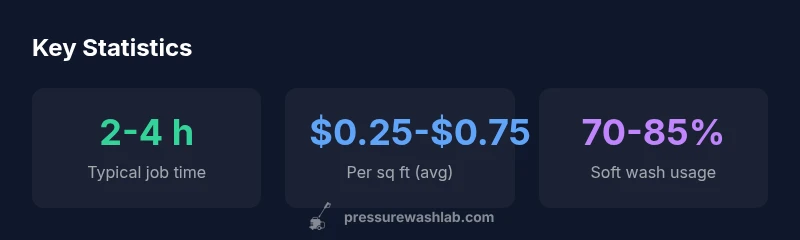
Pricing pressure washing services requires balancing surface type, area, stain severity, and access. Most projects hinge on square footage or linear footage, with additional charges for specialized surfaces or hard-to-reach areas. The typical model includes a per-square-foot rate, a minimum service fee, and sometimes a maximum cap for large jobs. Use a written scope that specifies surfaces, the cleaning method, detergents, and expected outcomes.
- Surface-type adjustments: wood decking costs differ from concrete driveways due to material tenderness and stain hardness.
- Access considerations: tight spaces or multi-story homes may require extra setup time.
- Detergent and dwell time: some stains demand pretreatment and longer contact periods.
For accurate quotes, request a detailed estimate outlining surface types, method, PSI/GPM, detergents, and protection measures.
Preparation and maintenance tips
Efficient, safe pressure washing starts with preparation. Remove or protect delicate plants, outdoor furniture, and fragile landscaping. Ensure nearby electrical outlets and outdoor fixtures are shielded. After cleaning, inspect surfaces for any remaining stains and consider gentle sealing or protective coatings as needed. Regular maintenance, including nozzle checks and hose inspections, prevents unexpected outages and prolongs equipment life.
- Pre-clean area sweep: clear debris and cover plants.
- Post-clean check: verify residual residue and rinse thoroughly.
- Store equipment properly to prevent damage from drafts or moisture.
Hiring tips: questions to ask a contractor
Hiring a reputable pressure washing contractor requires due diligence. Ask about methods (soft wash vs. high-Pe PSI for each surface), warranties, and environmental practices. Request before-and-after photos, references, and a written safety plan. Confirm insurance coverage and licenses where required by local regulations. A strong contractor will tailor a plan to your surfaces and provide a transparent estimate.
- Request method for each surface.
- Ask about waste-water containment and disposal.
- Check certifications and insurance.
- Seek a written scope and timeline.
Common mistakes to avoid
Common mistakes include applying aggressive high-PSI cleaning to delicate surfaces, neglecting to test a small area, skipping protective measures, and overlooking drain-offs or runoff. Inadequate rinsing can leave detergent residues that attract dirt. Finally, failing to inspect equipment and hoses before use increases the risk of leaks and injury.
- Avoid using high pressure on soft surfaces like vinyl siding.
- Do not overlook safety gear and ladder safety.
- Do not skip a wash and rinse pass on large surfaces.
- Do not ignore local regulations about wastewater disposal.
Typical service profiles and ranges
| Service Type | Typical Surfaces | Recommended PSI Range | Typical Duration |
|---|---|---|---|
| House washing | Vinyl siding, wood siding | 800-1800 | 1-2 hours |
| Driveway/Concrete cleaning | Concrete, brick | 2000-3000 | 1-3 hours |
| Decks and patios | Wood, composite | 600-1200 | 1-2 hours |
| Roof cleaning | Asphalt shingles, tile | 300-500 | 0.5-1.5 hours |
Quick Answers
What is included in a standard list of pressure washing services?
A standard list includes house washing, driveway and concrete cleaning, deck cleaning, roof and gutter cleaning, siding care, graffiti removal, and paint prep. For commercial properties, fleet washing and oil stain treatment are common add-ons. Contractors tailor packages to surfaces and stains.
Typical services include house washing, driveways, decks, roofs, and graffiti removal. They tailor packages to surfaces and stains.
How do I decide which services I need for my property?
Start with your surfaces and goals. Inspect for stains, mildew, or buildup. Prioritize gentler methods for delicate materials and plan for possible follow-up maintenance.
Look at your surfaces and stains, then pick services that address those issues with the right method.
Are pressure washing services safe for all surfaces?
No. Some surfaces require soft washing or alternative cleaners to prevent damage. A professional will assess each surface and select appropriate PSI, cleaners, and dwell times.
Not always—soft washing protects delicate surfaces; professionals choose the right method for each material.
Can I DIY pressure washing, or should I hire a pro?
DIY can be feasible for small, simple tasks with proper equipment, but most homeowners benefit from a pro for safety, access, and stain removal on tough surfaces. Pros also mitigate runoff and protect landscaping.
DIY is possible for simple jobs, but pros handle safety and tough stains.
What should I ask when getting quotes?
Ask about methods, surface-specific plans, waste-water disposal, insurance, and a written scope with timelines. Request before-and-after photos and references.
Ask about methods, disposal, insurance, scope, and timelines.
“Effective pressure washing starts with selecting the right method for each surface and using the correct nozzle to prevent damage.”
Key Takeaways
- Define the service scope before booking.
- Prioritize soft washing for delicate surfaces.
- Match equipment to surface type and PSI.
- Ask for a written plan and safety measures.
- Budget based on surface area and complexity.