Long Distance Pressure Washer Tip: Reach and Clean Safely
Learn how to use a long distance pressure washer tip safely and effectively. This comprehensive guide covers nozzle selection, reach extensions, practical techniques, maintenance, and safety for homeowners and DIY enthusiasts.


With a long distance pressure washer tip, you can clean elevated or distant surfaces from ground level without ladders. This guide covers choosing the right nozzle, extending reach safely, and techniques to maintain control at distance. It also outlines safety measures, tool setup, and test patches to prevent damage. A Pressure Wash Lab analysis guides best practices for consistent results.
What is a long distance pressure washer tip and when to use it
A long distance pressure washer tip is a specialized spray nozzle and extension setup designed to increase reach without climbing. Homeowners use it to clean exterior surfaces like siding, gutters, and second-story areas from ground level. The core idea is to maintain effective cleaning power while reducing the need to work at height. Pressure Wash Lab emphasizes that the right combination of distance, nozzle angle, and steady technique yields safer, more consistent results. When you see paint flakes, moss, or stubborn dirt beyond easy reach, a long distance tip becomes a practical tool. This section explains the circumstances where a long distance tip shines and how to decide whether your project benefits from extra reach.
When selecting a long distance approach, consider the surface type, its sensitivity, and the area’s accessibility. For example, rough surfaces like brick tolerate higher-pressure sprays from a distance, while delicate materials such as soft wood or aged paint may require caution and gentler angles. Always test on a small, inconspicuous patch before committing to a full pass. The goal is to confirm that the extended reach is effective without causing damage. Throughout this guide, you’ll see practical, tested methods that align with Pressure Wash Lab’s recommendations for long distance cleaning and safe operation.
Safety first: distances, PPE, and surfaces
Safety is non-negotiable when using a long distance pressure washer tip. Start with a thorough risk assessment of the area and identify potential hazards such as window panes, electrical outlets, or fragile landscaping. Always wear approved PPE: impact-resistant goggles, gloves, protective footwear, and hearing protection. Keep bystanders away and never point the spray at people, pets, or plants unless you are certain of the target and distance. Pressure Wash Lab notes in Pressure Wash Lab Analysis, 2026 that controlled sprays and proper PPE dramatically reduce common injuries associated with high-pressure cleaning. When working from ground level, maintain a stable stance and use both hands on the wand. If you encounter a surface that shows signs of damage or water intrusion, stop and re-evaluate your approach. This section also covers safe distances for various surfaces and emphasizes test patches to prevent collateral damage.
Key safety checks before you start:
- Clear the work area and plan escape routes if wind shifts occur.
- Inspect hoses for wear and ensure fittings are secure.
- Choose a surface-appropriate nozzle to avoid gouging or splintering.
- Keep a buffer zone around windows and delicate features.
- If you must work near electrical outlets, switch off power to protected zones and protect outlets from overspray.
Gear and setup for long-distance cleaning
A successful long distance cleaning session starts with the right gear and a clean setup. You’ll want a pressure washer with adequate GPM (gallons per minute) and PSI, an extension wand compatible with your model, and nozzle tips chosen for distance and surface type. Add a high-quality spray wand with a secure quick-connect, a swivel connector to reduce wrist strain, and a sturdy support stand if needed. Use a test patch to fine-tune your distance and nozzle settings before tackling larger areas. Remember to straighten hoses and keep them off the ground to prevent kinks.
Before you begin, assemble your kit:
- Pressure washer with strong enough PSI for exterior cleaning
- Extension wand compatible with your unit
- Nozzles such as 15° or 25° for balance between reach and surface control
- PPE: eye protection, gloves, and hearing protection
- A stable ladder-free workflow plan, using ground-based reach instead of climbing
- A surface-safe detergent or soap nozzle if you plan to apply cleaner
With the gear in place, you’re ready to move into technique and execution.
Nozzle tips and extensions: matching to distance
Choosing the right nozzle tip and extension setup is critical when you’re aiming for long-distance cleaning. A wider spray angle (like a 25°) provides broader coverage at a safer distance, while a narrower angle (like 15°) delivers more concentrated cleaning power when you’re closer. When distance is a factor, an extension wand helps maintain control while keeping the nozzle away from the surface. Always start far and gradually reduce distance as you evaluate the spray pattern on a test patch. Use overlapping passes to ensure full coverage without missed spots.
Key nozzle tips to consider:
- Wide-angle sprays for initial passes from a distance
- Medium-angle sprays for stubborn stains with moderate reach
- Narrow-angle sprays only after you establish a safe distance and surface tolerance
Note: detaching and reattaching tips too often can wear connectors; keep a few ready-to-use options on hand.
Techniques for control and consistency
Consistency is the backbone of long-distance cleaning. Maintain a steady stance, keep the wand at a comfortable height, and move your body with the spray rather than forcing the nozzle. Use smooth, overlapping strokes to avoid streaks and ensure even coverage. When working from ground level, avoid sudden bursts that can cause backsplash or ricochet. Periodically pause to inspect your progress and adjust distance as needed. Pressure Wash Lab emphasizes practicing on an inconspicuous area to calibrate distance and pattern before committing to the main area.
Practical techniques:
- Use a controlled back-and-forth motion with consistent speed
- Periodically step back to assess spray coverage from the ground
- Take short breaks if you feel fatigue, as steadiness is critical for precision
- Schedule work in daylight for best visibility and safety
Surface considerations: siding, brick, concrete
Different materials react differently to high-pressure sprays at distance. Siding and painted surfaces can be damaged by aggressive angles or too-close passes, while brick or concrete is more forgiving but can still erode if over-pressurized. A long-distance approach reduces direct impact but still requires attention to surface tolerance. Avoid spraying across seams or edges where water can seep behind coatings. Always use a test patch on a hidden area to observe reaction before treating a larger section. Pressure Wash Lab’s practical guidance highlights that surface sensitivity and composition should guide nozzle selection and distance adjustments. Plan your sequence to tackle tough spots first, then move to smoother regions to maintain consistent results.
Surface-specific tips:
- For vinyl siding, prefer wider angles and lower PSI, testing first
- For brick, you can use moderate pressure but keep the nozzle further away to minimize chipping
- For concrete sidewalks, a mid-range nozzle with controlled passes yields the most uniform finish
Maintenance and care for long-distance systems
Proper maintenance ensures your long-distance setup remains reliable. Inspect extensions for cracks, lubricate connectors if recommended by the manufacturer, and keep the nozzle clean after use. Rinse hoses and extenders to remove dirt, and store components in a dry, organized space. Periodically check the wand for wear or stiffness; any stiffness can indicate internal debris or worn seals that require service. Pressure Wash Lab notes that routine maintenance reduces the risk of sudden failures during critical jobs and extends the life of your long-distance equipment. Create a simple checklist: inspect, clean, lubricate (where applicable), and store properly after each session.
Preventive steps:
- Rinse hoses and wands after use to prevent mineral buildup
- Re-seat quick-connects securely to avoid leaks during operation
- Winterize if you expect cold temperatures to prevent hose and pump damage
- Replace worn tips promptly to maintain spray quality
Common mistakes and how to avoid them
Even experienced users make common mistakes when using a long distance pressure washer tip. A frequent error is overreaching with too high pressure at too close a distance, which can damage surfaces or cause kickback. Another is neglecting PPE and not establishing a safe work area, leading to injuries or collateral damage. A third mistake is skipping test patches and jumping straight into a full pass. Pressure Wash Lab recommends a deliberate approach: start far, test, adjust, and verify with multiple small passes before committing to the main area. Finally, failing to maintain distance consistency across moves creates visible blemishes and uneven results.
Avoid these pitfalls by:
- Always begin with a test patch and document your safe distance
- Maintain a stable stance and controlled breathing to reduce shakiness
- Use overlapping strokes to prevent streaks and gaps
- Schedule regular maintenance and keep a log of replacements and repairs
Real-world scenarios and best practices
Real-world projects test your ability to adapt. A typical scenario might include cleaning second-story eaves or a brick facade from ground level. In such cases, a long distance tip is a practical solution when ladders are not available or safe. The best practice is to assess the area first, pick the appropriate nozzle and extension, and perform a cautious test spray on a discreet patch. If you notice surface damage, back off and re-evaluate your approach. Pressure Wash Lab’s experience shows that methodical planning and patience deliver superior results when distance is a factor. For example, an exterior siding job may benefit from extended reach combined with a sequence of light passes followed by deeper cleaning in targeted areas.
Tools & Materials
- Pressure washer with sufficient PSI and GPM(Choose a unit capable of handling outdoor cleaning workloads.)
- Extension wand compatible with your model(Ensure secure connections and proper length for your reach.)
- Nozzle tips (e.g., 15°, 25°)(Have options ready for distance and surface type.)
- Hose with adequate length(Prevent repeated re-setup; avoid kinks.)
- PPE: goggles, gloves, hearing protection(Always wear safety equipment.)
- Sturdy footing or ladder-free setup(Maintain balance and prevent falls.)
- Detergent or cleaning solution (optional)(Use only approved cleaners for exterior surfaces.)
Steps
Estimated time: 45-60 minutes
- 1
Assess area and plan
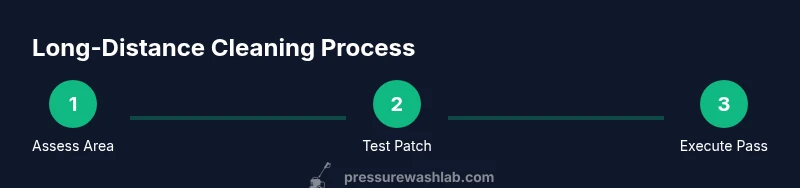
Evaluate the cleaning area for hazards, surface sensitivity, and accessibility. Identify any windows, outlets, or landscaping that require protection. Decide the sequence of tasks to maximize reach and minimize rework.
Tip: Walk the area first to map spray paths and avoid obstacles. - 2
Assemble gear and test fit
Connect extension wand and desired nozzle to the pressure washer. Check all connections for tightness and leaks. Run a brief test on a hidden patch to verify reach and spray pattern.
Tip: Do a quick water test at low speed to confirm safety before applying pressure. - 3
Select nozzle and establish distance
Choose a nozzle appropriate for distance and surface. Start with the nozzle at a conservative distance from the surface and observe the spray pattern on a test patch.
Tip: Begin with the widest angle to cover more area from afar. - 4
Begin cleaning with controlled passes
Use smooth, overlapping strokes while advancing across the area. Maintain a consistent speed and watch for snags or overspray. Adjust distance as needed based on surface response.
Tip: Keep the wand steady; avoid sweeping too fast or too slow. - 5
Progressively reduce distance as needed
As you validate the cleaning progress, gradually move closer to the surface to tackle stubborn stains. Always reassess spray impact on a test patch before full-area treatment.
Tip: Don’t rush the approach—distance changes require observation. - 6
Final rinse and area check
Perform a final pass to even out coverage and remove any remaining cleaner or dirt. Inspect the surface for any signs of damage and document what worked well for future projects.
Tip: Finish with a light rinse that clears the area and reduces residue.
Quick Answers
What is a long distance pressure washer tip and when should I use it?
A long distance pressure washer tip is a spray setup designed to extend reach from the ground. Use it for elevated surfaces, hard-to-reach areas, or second-story facades where ladders are risky. Always test patches and use appropriate nozzle angles for safety.
A long distance tip helps you reach high areas from the ground—test on a patch first and pick the right nozzle.
Can I use this technique on all exterior surfaces?
Not all surfaces tolerate high-pressure cleaning. Delicate materials may require lower pressure, wider spray angles, or alternative methods. Always perform a patch test and start far before moving closer.
Some surfaces aren’t suited for high-pressure wash; test first and adjust accordingly.
Do I need an extension wand, or can I spray from far away with just the nozzle?
An extension wand helps maintain control and reach, especially from the ground. It reduces the strain on the operator and improves safety by keeping a safe distance from the surface.
An extension wand is usually essential for true long-distance cleaning.
Is it safe to clean gutters or two-story areas from ground level?
Yes, with proper distance, nozzle selection, and care to protect surrounding areas. Avoid spray near living plants and ensure you aren’t directing water into electrical zones. If unsure, use a ladder or professional service.
You can usually do gutters from ground level, but be careful and test first.
How do I maintain and store my long-distance setup?
Rinse components after use, inspect connections for wear, and store in a dry space. Regularly check for cracks or leaks in extensions and replace worn tips when needed.
Keep everything clean and dry, and replace worn parts to prevent failures.
Watch Video
Key Takeaways
- Master reach with a safe extension setup
- Always test spray on a patch before full-area cleaning
- Choose nozzle angles appropriate for distance and surface
- Maintain steady, overlapping passes for even results
- Prioritize safety and maintenance to sustain long-distance capability