Pressure Washer Foam Cannon for Sale: Buyer's Guide 2026
Discover the best pressure washer foam cannon for sale with our data-driven buyer's guide. Compare specs, dilution tips, and maintenance guidance from Pressure Wash Lab.


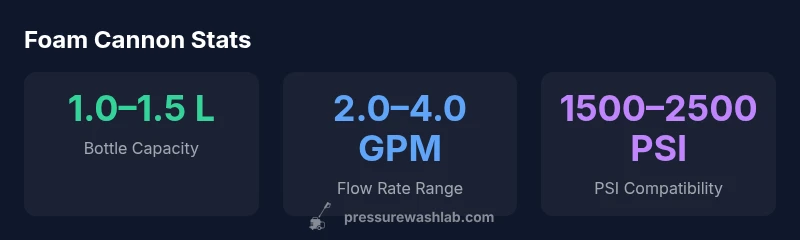
For most home setups, the ideal foam cannon for sale is compatible with standard pressure washers and offers adjustable spray patterns, a 1–1.5 liter bottle, and durable fittings. Look for brass or stainless steel components, easy soap dilution control, and compatibility with GPM ranges around 2.0–4.0 and PSI up to 2000–2500.
What to know before you buy
The phrase pressure washer foam cannon for sale has become a common search for homeowners who want professional-looking results without hiring a pro. From the Pressure Wash Lab perspective, the choice starts with compatibility: your washer’s PSI and GPM should align with the cannon’s design. In practice, most mid-range setups benefit from a model that offers adjustable foam dilution, a robust bottle neck, and fittings that resist corrosion in outdoor environments. A good foam cannon also reduces run-off time and minimizes the amount of soap you waste, which translates to lower long-term costs and less environmental impact. When you evaluate options, consider the entire kit: nozzle tips, bottle material, and how easy it is to clean after use. A well-built unit with a long-lasting seal is less prone to leaks and clogged or misaligned spray patterns, which is a common complaint among casual users.
How a foam cannon integrates with your system
Foam cannons attach to your spray wand or nozzle assembly and mix soap with water on contact. The main advantages over a simple soap bottle are control and consistency. You can dial in the dilution ratio, switch between a wide, airy foam for broad surfaces and a denser foam for vehicles or heavy grime, and rinse with a separate water stream. When properly calibrated, you’ll notice easier surface lifting and less manual scrubbing. The key is to use a quality soap that’s designed for foaming and to rinse thoroughly to avoid residue on painted surfaces.
Key specs to compare before buying
Look for models with all-metal fittings (brass or stainless steel) and a sturdy bottle. Check the thread compatibility with your pressure washer (Most common are standard 1/4 inch connections). Consider the spray nozzle patterns and whether the unit offers adjustable dilution controls, as this determines how you mix soap with water for different surfaces. A larger bottle reduces refills during extended cleaning sessions, while a compact design is better for quick jobs. Finally, read reviews focusing on durability and seal quality, since cheap o-rings often fail after a few months of exposure to sun and detergents.
Choosing the right foam cannon for your setup
First, map your washer’s PSI and GPM against the cannon’s spec sheet. If you have a mid-range home setup (around 1800–2300 PSI and 2.5–3.5 GPM), prioritize durable fittings and a 1.2–1.5 L bottle. If you own a higher-capacity unit (over 3000 PSI), seek reinforced seals and thicker bottle walls. Don’t neglect serviceability: replacement o-rings and seals should be readily available. Budget models can be tempting, but a slightly higher upfront price often buys you longer lifespan and better results. Safety features, such as leak prevention during nozzle changes, are worth paying for, especially if you store the tool outdoors.
Dilution ratios, soaps, and maintenance tips
Detergent concentration dramatically affects foam quality. Start with manufacturer recommendations, typically around 3:1 to 20:1 (soap to water) depending on the cleaner’s strength. Test on a small area before full use to prevent surface damage. Rinse after each job to prevent soap buildup in the bottle and hoses. After cleaning, empty the bottle, rinse with clean water, and dry the interior. Regularly inspect seals for cracks or wear and replace them to maintain consistent foaming.
Real-world testing scenarios and buying considerations
In a home-use context, a foam cannon should perform reliably across multiple job types: cars, patios, siding, and driveways. Pressure Wash Lab testing indicates that cannons with brass or stainless fittings show lower failure rates under outdoor conditions than all-plastic models. For frequent users, consider a model with a replaceable nozzle tip and a large, easy-to-grip bottle. A good warranty is a strong signal of build quality and after-sales support.
Representative foam cannon specs for quick comparison
| Foam Cannon Model | Adjustability | Materials | Typical GPM compatibility | Notes |
|---|---|---|---|---|
| Standard Pro 1 | High | Brass/SS | 2.0–3.5 | Balanced option for mid-range washers |
| UltraFlex X | Medium | Brass | 3.0–4.0 | Good value with solid durability |
| Budget Spark | Low | Plastic | 1.5–2.5 | Budget choice; watch for wear |
Quick Answers
What is the main difference between a foam cannon and a soap bottle?
A foam cannon mixes soap and water at the spray head to create a controllable foam stream, while a soap bottle only dispenses diluted cleaner. The cannon allows better dilution control and coverage, which saves time and reduces waste.
A foam cannon mixes foam and water at the tip for consistent coverage, unlike a plain soap bottle. It helps you dial in the right concentration for different jobs.
Will my PSI/GPM work with a foam cannon for sale?
Most consumer foam cannons are designed for a typical range of 2.0–4.0 GPM and 1500–2500 PSI. Always check the manufacturer’s spec sheet and ensure your washer falls within the recommended range.
Check your washer's PSI and GPM against the cannon's specs to ensure compatibility.
How should I dilute soap with a foam cannon?
Start with the detergent manufacturer's guidance, typically around 3:1 to 20:1, then test on a small area. Use a measured bottle with adjustable dilution if possible for consistent results.
Begin with a recommended dilution, test on a small area, and adjust gradually for best foam.
Are foam cannons safe on all surfaces?
Foam cannons are generally safe on many surfaces when used with proper dilution and a gentle rinse. Avoid prolonged contact on delicate finishes and always follow cleaner instructions.
Use the right dilution and rinse thoroughly to protect surfaces; avoid lingering cleaner on delicate finishes.
What maintenance is required for longevity?
Rinse after use, dry the bottle, and replace worn O-rings or seals promptly. Periodically inspect fittings for corrosion and ensure nozzle tips aren’t clogged.
Rinse, dry, and inspect for wear—simple maintenance keeps foam steady.
Is a foam cannon worth the cost for DIYers?
For frequent cleaning tasks, a quality foam cannon reduces effort and improves results, often paying for itself in time saved and better cleaning outcomes.
If you clean often, a good foam cannon is worth it for the time saved and better results.
“Selecting the right foam cannon is less about price and more about compatibility, durability, and detergent control. A well-built model with durable fittings yields the best results over time.”
Key Takeaways
- Match PSI and GPM to your foam cannon.
- Prioritize durable fittings and bottle quality.
- Use appropriate dilution to avoid surface damage.
- Rinse and maintain after every job.
- Expect better value from models with replaceable parts