Pressure Washer Hose Repair Kit: A Practical How-To Guide
Learn how to pick, assemble, and use a pressure washer hose repair kit to stop leaks, restore performance, and extend hose life with safe, proven techniques. Pressure Wash Lab outlines compatibility, tools, and best practices for DIY fixes.


This guide shows you how to select and use a pressure washer hose repair kit to seal leaks and restore performance. It covers compatibility, tools, and a safe step-by-step approach. Whether you’re a DIY homeowner or maintenance professional, you’ll learn practical checks, safe handling, and how to extend hose life with reliable repairs.
Why a Pressure Washer Hose Repair Kit Matters
According to Pressure Wash Lab, having a dedicated hose repair kit on hand can reduce downtime, quickly stop leaks, and extend the life of a high-pressure hose. Leaks often originate at couplings, end fittings, or small cracks along the liner. A kit designed for the right hose size lets DIYers seal leaks without replacing entire sections, saving time and money over the long run. In practical terms, a repair kit gives homeowners and small business operators a salvage path when a hose develops a weak point, rather than rushing to buy a new assembly. This section lays the groundwork for understanding when a repair makes sense and how a kit fits into routine maintenance.
What’s in a Typical Hose Repair Kit
Most hose repair kits for pressure washers include a combination of fittings, sleeves, and clamps designed to restore a sealed end or compromised section. Common components are replacement end fittings or couplers, a compression sleeve or heat-shrink sleeve, hose clamps or mechanical bands, and an adhesive or gasket material for sealing. Some kits also include O-rings, thread sealant, and simple repair instructions. The exact contents vary by hose diameter and connector type, so match the kit to your hose size (e.g., 1/4", 5/16", or 3/8"). When Pressure Wash Lab evaluates kits, we look for clear instructions and durable materials that withstand typical pressure levels in residential setups.
Compatibility Factors for Hose Repairs
Before buying a kit, verify three core compatibility factors: hose diameter, end fitting type, and operating pressure range. Measure the hose outer diameter at the point of damage and identify the connection type on the hose end (barbed, threaded, or quick-connect). Ensure the kit’s sleeves or couplers fit the diameter snugly and that any clamps or bands can be tightened without over-stressing the hose. If you use a hot water washer, confirm the kit components and materials are rated for high temperatures and compatible with the hose’s rating. Proper compatibility minimizes failure risks and maximizes repair longevity.
Inspecting the Hose for Damage
A thorough inspection helps you decide whether a repair is feasible. Look for straight cracks, bulges, or delamination along the hose wall; assess the coupling region for looseness or corrosion; check for soft spots near bends that may indicate internal damage. If the damage is restricted to the end near a fitting, a repair kit is often appropriate. Widespread cracking, long splits, or valve-related issues typically indicate replacement is a safer choice. Document the damage for reference and plan your repair on a dry, clean work surface.
Safety Gear and Prep
Safety comes first when working with high-pressure hoses. Put on protective gloves and safety glasses, and ensure the washer is powered off with the trigger released to relieve any residual pressure. Work in a well-ventilated, uncluttered area on a stable surface. Keep a damp rag handy to wipe away oil, hydraulic fluid, or residue from the hose surface. If the hose is hot from recent use, allow it to cool before handling. These precautions help prevent burns, cuts, or unexpected jerks during disassembly and reassembly.
Choosing Between Repair Methods: Couplers, Sleeves, and Clamps
Repair options vary by damage type and hose design. A compression sleeve or heat-shrink sleeve is common for small to moderate leaks near the end, providing a tight seal without cutting the hose. End-fitting replacements are used when the existing connectors are damaged or corroded, restoring a clean, leak-free interface. Mechanical clamps or hose bands can secure sleeves or fittings but require correct torque to avoid crushing the hose. In all cases, ensure materials are rated for water pressure and temperature and that fittings align with the wand or trigger gun.
Step-by-Step Repair Process Overview
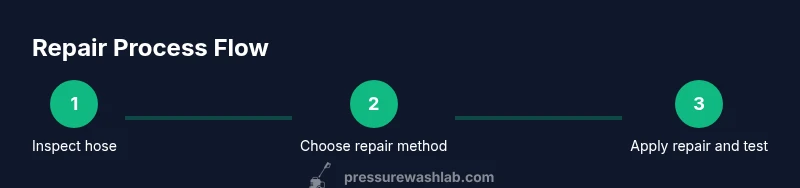
In many repairs, you’ll cut away the damaged end, deburr the edge, install the new sleeve or end fitting, clip on clamps, and test the assembly at low pressure before returning to full operation. The exact sequence depends on the kit type and hose diameter, but the common thread is a methodical approach that preserves the hose’s integrity. The following STEP-BY-STEP section provides granular actions; this overview is meant to give you the flow of activities and what to expect during the repair.
Common Mistakes and How to Avoid Them
Avoid common pitfalls such as selecting an undersized kit, misaligning fittings, over-tightening clamps, or using incompatible adhesives. Rushing a repair without cleaning and drying the hose can trap debris and create weak points. Never exceed the hose’s rated pressure or temperature, especially with hot-water washers. Record the repair work so future maintenance knows what was done and when to inspect again. If in doubt, start with a small test and verify the seal before resuming full use.
Maintenance After Repair
Post-repair maintenance helps extend the life of the hose and the repair itself. Rinse the hose to remove debris, inspect the repaired area after each use, and store hoses in a cool, dry place away from kinks and sharp edges. Avoid exposing repaired sections to direct sunlight for extended periods, which can degrade the material. Regular inspection routines—especially before high-demand tasks—catch issues early and save costly downtime.
Environmental and Use-Case Considerations
Different environments influence repair decisions. Harsh chemical exposures, extreme temperatures, or frequent vertical bending can accelerate wear near repaired joints. For jobs involving long runs or frequent spool use, consider upgrading to reinforced hoses or higher-grade kits that better resist abrasion and pressure cycling. Pressure Wash Lab emphasizes choosing components designed for your typical tasks and keeping spare fittings handy to quickly address issues as they arise.
Cost and Value: When to Repair vs Replace
Repairing a hose with a kit can be a cost-effective option for minor damages or end fittings that can be salvaged. If the hose shows multiple weak points, extensive fraying, or persistent leaks after a repair, replacement often provides better long-term reliability and safety. Consider the total cost of ownership, including downtime, labor, and potential warranty impacts. A well-executed repair can extend hose life and delay replacement, but it isn’t a substitute for a hose with significant internal damage.
Quick Test and Validation
After completing the repair, reattach the hose to the pressure washer and run at a low setting to check for leaks. If no leaks appear after a 15–30 second test, gradually increase to normal operating pressure while watching the repaired area. Look for any seepage at the fittings, sleeve edges, or clamp tabs. If you notice any leaks, power down, relieve pressure again, and recheck the connections. A careful, staged test helps ensure the fix holds under real-use conditions.
Tools & Materials
- Pressure washer hose repair kit(Match hose diameter (1/4", 5/16", 3/8" etc.) and connector type)
- Adjustable pliers(For gripping and tightening fittings)
- Safety gloves(Nitrile or work gloves for grip and protection)
- Safety glasses(Eye protection during cutting and tightening)
- Wire brush or scouring pad(Clean the hose ends before sealing)
- Hose cutter (optional)(Cuts cleanly through damaged sections)
- Marker or tape(Marks diameter or cut lines for accuracy)
- Lubricant (optional)(Light lubricant for fittings; avoid residue inside the hose)
Steps
Estimated time: 60-90 minutes
- 1
Power down and relieve pressure
Turn off the pressure washer and release pressure by triggering the spray into a safe area while the wand is pointed away from you. This step prevents unexpected bursts when you disconnect or reattach fittings.
Tip: Always wear gloves and safety glasses during this step. - 2
Remove damaged section or end fitting
Carefully determine whether you can salvage the end by replacing only the fitting or if you must cut back to sound hose. Use the correct tool to detach the old end without nicking the hose core.
Tip: If you cut, trim straight to minimize edge fraying and ensure a clean seal. - 3
Clean and dry the hose end
Wipe the cut or end surface with a clean rag and, if needed, use a wire brush to remove debris. A dry, clean surface promotes better bonding of sleeves or end fittings.
Tip: Avoid moisture during assembly to prevent seal failure. - 4
Install the repair sleeve or end fitting
Slide the sleeve over the hose end or thread on the replacement end fitting according to the kit instructions. Ensure orientation is correct to align with the hose spray path.
Tip: Check that the sleeve seats fully without gaps before tightening. - 5
Secure with clamps or bands
Place clamps or bands around the joint and tighten to manufacturer-recommended torque. Do not overtighten, which can crush the hose wall or damage fittings.
Tip: Use a tightening pattern that alternates across the clamp to avoid uneven compression. - 6
Reattach to wand and check alignment
Reconnect the hose to the spray gun or wand ensuring the assembly aligns with the nozzle and trigger mechanism. Misalignment can cause leaks or kinks under pressure.
Tip: Double-check the hose path to avoid rubbing against sharp edges. - 7
Test at low pressure
Power on and run the system at a low pressure setting for 15–30 seconds to observe for leaks. This helps identify immediate issues without risking a blowout.
Tip: If leaks appear, power down and recheck the clamps and seal area. - 8
Test at full operating pressure
Gradually increase to normal operating pressure while monitoring the repaired joint. Ensure smooth operation without seepage or bulging.
Tip: If any failure occurs, stop and reassess; repeating the repair may be unsafe.
Quick Answers
Can a damaged hose be repaired with a hose repair kit?
Repair is feasible for end-damage or small cracks near the fitting, provided the hose shows no extensive internal wear. If the hose has widespread cracking or delamination, replacement is safer and more reliable.
Yes, for minor end damage or small cracks near fittings, but if you see widespread wear, replace the hose.
Will a repair kit restore full high-pressure performance?
A repair kit can restore a sealed connection and restore usable performance, but it may not reclaim the original maximum pressure if the hose or fittings have degraded. Always test and monitor.
A kit can restore sealing and usable performance, but it may not recover the original max pressure if wear is extensive.
How do I know what size hose repair kit to buy?
Measure the hose diameter at the repair site and verify the end fittings. Choose a kit with sleeves and fittings that match those specifications and confirm compatibility with hot-water or cold-water use as needed.
Measure the hose diameter and check fittings to pick the right kit. Ensure it supports your washer’s temperature range.
Are repairs safe for hot-water washers?
Only if the kit and hose are rated for hot-water use. Hot conditions can accelerate wear, so verify temperature ratings and test for leaks after installation.
Only use hot-water rated kits and hoses, then test for leaks after installation.
Is professional repair necessary?
Not always. For minor, end-damage repairs, a DIY kit is often sufficient. Complex damage or high-risk hoses may require professional assistance or replacement.
Often you can DIY minor repairs, but complex damage may require a pro.
How long does a repaired hose usually last?
Life after repair varies with usage and environment. A well-executed repair can extend life compared to a completely worn hose, but it is not a guarantee against future failure.
It depends on usage; repairs extend life but aren’t guaranteed to last forever.
Watch Video
Key Takeaways
- Identify damage type before choosing a repair method
- Match hose diameter and fittings for a reliable seal
- Test repairs at low then full pressure to confirm safety
- Save time and money by fixing minor leaks rather than replacing entire hose
- Prioritize safety with proper PPE and careful work procedures