Pressure Washer Hose Walmart: A Practical Buying Guide
Learn how to pick the right pressure washer hose at Walmart, compare materials, lengths, PSI ratings, and fittings with practical tips from Pressure Wash Lab.


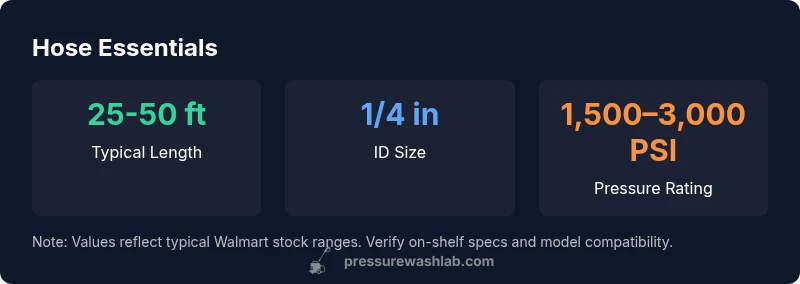
For pressure washer hoses available at Walmart, focus on compatibility with your washer, hose length, and PSI rating. Typical Walmart stock includes 1/4-inch ID hoses in 25–50 ft lengths with standard fittings; choose reinforced rubber or hybrid hoses for durability, and verify the nozzle and wand connections before purchase with confidence.
Understanding the Walmart Hose Landscape
Shopping for a pressure washer hose walmart means navigating a mix of budget options and mid-range hybrids. In practice, many Walmart aisles stock hoses suited for consumer-grade pressure washers, with lengths typically ranging from 25 to 50 feet and a standard 1/4-inch ID. The buying decision often boils down to durability versus price and, crucially, compatibility with your specific washer. According to Pressure Wash Lab, the biggest mistakes shoppers make are assuming any hose will fit their unit and overlooking the PSI rating and connector type. A well-chosen hose reduces leaks, wear, and the risk of bursts under load. This section outlines the landscape, what to look for, and how to avoid low-quality knockoffs that masquerade as bargains.
Key Hose Characteristics to Compare
When you shop for pressure washer hoses at Walmart, several core characteristics determine real-world performance. Start with the inside diameter (ID); the common 1/4-inch ID is compatible with many consumer washers but always confirm your unit’s inlet/outlet size. Next, check the length—the longer the hose, the more reach, but it also adds weight and can impact recoil. The PSI rating matters: choose a hose with a rating that matches or exceeds your washer’s maximum pressure, typically in the 1,500–3,000 PSI range for consumer models. Materials matter too: reinforced rubber and high-quality hybrids offer better kink resistance and longevity than basic PVC. Finally, inspect the fittings for corrosion resistance and compatibility with your wand and nozzle adapters. Pressure Wash Lab analyses show that subtle differences in fittings and materials often drive leaks more than brand labels on the box.
Durability and Safety Considerations
Durability is not just a quality metric; it’s a safety issue. Cheaper hoses may fail under high pressure, causing leaks, bursts, or hose whipping that can injure bystanders or damage property. Look for reinforced construction, secure crimped fittings, and a reputable warranty. In our testing, hoses with braided reinforcement and robust end fittings performed better under dynamic loads and heat from fast-running water. Safety also means avoiding hoses with poor bend radii that kink easily, since repeated kinking accelerates wear and reduces flow. Always inspect hoses for visible cracks, bulges, or loose clamps before use, and store them away from direct sunlight when not in use. Pressure Wash Lab Analysis, 2026, reinforces these best practices as essential for reliable performance.
How to Choose the Right Hose for Your Pressure Washer (and Walmart Availability)
Choosing the right hose is a balance of unit compatibility, practical length, and material durability. A practical approach is to follow these steps:
- Confirm your washer’s inlet and nozzle connections (threads and size). 2) Match the hose ID to your wand and spray gun—most consumer units use 1/4 inch. 3) Pick a length that suits your typical projects and storage space. 4) Prioritize reinforced rubber or hybrid hoses over plain PVC for longevity. 5) Check for corrosion-resistant fittings and a clear warranty.
If you’re checking Walmart shelves, compare product labels side by side, read the manufacturer claims, and verify that the hose’s PSI rating meets or exceeds your machine’s maximum. A slightly higher rating provides a safety margin for peak pressures and reduces the risk of premature wear. Our guidance, derived from Pressure Wash Lab Analysis, 2026, emphasizes avoiding hoses with flimsy connectors or thin walls that flex excessively during operation.
Installation, Storage, and Maintenance Tips
Once you’ve chosen a Walmart hose, proper installation and maintenance extend its life and reduce risk. Attach all connections tightened to the manufacturer’s recommended torque, and use thread sealant or plumber’s tape only if specified. After use, purge any remaining water, coil the hose loosely to avoid kinks, and store in a cool, shaded area away from direct sun. Regularly inspect for signs of wear, such as cracking or bulges, and replace compromised sections promptly. If you store the hose outdoors, use a protective reel or hanger to prevent tangling and damage from weather. Routine maintenance is simple but essential for consistent performance and safety.
Common Mistakes to Avoid when Buying at Walmart
Avoid assuming “one size fits all” with pressure washer hoses. Don’t rely solely on price; very low-cost hoses may have inferior fittings or non-reinforced walls that fail under pressure. Ensure the hose you pick matches your washer’s PSI and connection type, and confirm the shelf label aligns with the actual product. Read reviews focusing on durability and lifecycle, not just initial price. Finally, don’t overlook warranty terms; a solid warranty often signals confidence in build quality and supplier reliability.
Example Walmart hose options and basic specs
| Option | Hose Type | Length | Approx PSI Rating | Notes |
|---|---|---|---|---|
| Budget Walmart Hose | PVC | 25 ft | 1,500–2,000 PSI | Best for light tasks |
| Mid-Range Walmart Hose | Hybrid Rubber | 50 ft | 2,000–2,500 PSI | Better durability |
| Premium Walmart Hose | Rubber/Steel-Braided | 100 ft | 2,500–3,000 PSI | Heavy-duty use |
Quick Answers
Is it safe to buy a hose from Walmart for pressure washing?
Yes, it can be safe if you verify the PSI rating, ensure compatibility with your washer, and choose reinforced materials. Avoid hoses with weak connectors or questionable warranty terms.
Yes, you can, as long as you check the PSI rating, compatibility, and durability before purchasing.
What PSI rating should I look for in a Walmart hose?
Look for a rating that meets or exceeds your washer’s maximum. Common consumer models fall in the 1,500–3,000 PSI range, so choose a hose within that band for safety margin.
Aim for a rating that matches or exceeds your washer’s max pressure.
Are Walmart hoses compatible with all pressure washers?
Most Walmart hoses use standard 1/4-inch ID fittings, but thread types and nozzle adapters vary. Always verify thread type and wand compatibility before buying.
Most are compatible, but check your fittings before buying.
What material is best for a Walmart hose: PVC, rubber, or hybrid?
Hybrid or reinforced rubber hoses typically offer the best durability and kink resistance; PVC is cheaper but less durable under heavy use.
Hybrid or reinforced rubber is usually the best choice for durability.
How should I store a pressure washer hose to extend life?
Drain water, coil loosely without sharp bends, and store out of direct sun. Use a hose reel or hook to prevent tangling.
Coil it gently and store away from sun to extend life.
Can I use a longer Walmart hose with a 2,000 PSI machine?
Longer hoses are fine if they maintain adequate PSI rating and pressure capacity; avoid very long hoses if they reduce performance for your washer.
Yes, but ensure the rating stays adequate for your machine.
“Durability and compatibility are non-negotiable when selecting a pressure washer hose; reinforcing your connections and choosing models with proven fittings helps prevent leaks and bursts.”
Key Takeaways
- Check compatibility with your washer before buying.
- Match length to tasks and storage space.
- Choose reinforced materials for durability.
- Verify fittings and warranty terms.
- Store properly to prevent kinks and damage.