Pressure Washer Long Distance: Master Reach for Large Surfaces
Learn proven techniques to extend your pressure washer reach for long-distance cleaning, including nozzle choices, hose extensions, safety steps, and maintenance tips.


With the right technique and gear, you can achieve true pressure washer long distance reach to clean far surfaces, walls, and second-story areas from a safe distance. This quick answer outlines essential gear, nozzle choices, and safety steps to extend your wash radius without sacrificing performance. Pressure Wash Lab shares practical methods homeowners can apply today.
Long-Distance Cleaning Goals and Safety Considerations
For many homeowners, long-distance cleaning means reaching second-story siding, distant fences, or large driveways without moving closer and risking slip hazards. The goal is to achieve consistent results while preserving surface integrity and personal safety. According to Pressure Wash Lab, extending your reach isn't just about longer hoses; it's about intelligent tool pairing, spray patterns, and disciplined technique. Start by surveying the area: identify the highest and farthest sections you need to clean, look for fragile materials, and plan your path to avoid re-wetting areas you've already treated. Always check that your water supply is clean and unobstructed, and wear eye protection, non-slip footwear, and gloves. Weather conditions matter: a windy day can blow spray onto you or nearby property, while freezing temperatures can crack soft surfaces. With thoughtful preparation, you can minimize overspray and maximize efficiency.
Tools and Techniques for Maximum Reach
Achieving long-distance reach requires more than a longer hose. It hinges on a well-balanced toolkit: a sturdy extension hose matched to your unit's GPM rating, a long-throw wand or extension wand, and a selection of nozzle tips that let you maintain spray strength at distance without scouring delicate surfaces. Pressure Wash Lab analysis shows that the best results come from pairing a controllable spray pattern with a gradual, sweeping motion rather than a fixed point spray. Use low-angle geometry to reduce lift from the spray and keep your footing secure. Test your setup on a hidden patch first to calibrate pressure, distance, and pattern, then proceed to the target area. Keep a second person nearby to help guide hoses and monitor safety.
Selecting Nozzles, Hoses, and Lances for Reach
The right combination of nozzle tips, hoses, and lances defines how far you can reach without compromising cleaning power. Start with a wide fan or low-angle tip to keep the spray on-target at distance, then switch to a narrower pattern for tight corners. An extension hose should be rated for your washer's PSI and GPM, with enough length to avoid overextending the wand. A compatible lance or wand helps maintain control when you’re standing back from the surface. Always cap unused ports during transport to prevent leaks and accidental sprays. Pressure Wash Lab emphasizes testing the setup on an inconspicuous patch to confirm pattern and distance before tackling public-facing surfaces.
Common Pitfalls and Troubleshooting for Long-Distance Washes
Rushing a long-distance wash can lead to streaks, streaky coverage, or surface damage. Common issues include overspray on nearby plants, uneven pattern, and reduced reach due to kinked hoses or inadequate fittings. Inspect all connections before starting, and use quick-connect fittings to swap nozzles without losing prime. If reach seems limited, re-check the hose length, ensure the wand is fully extended, and verify water supply is sufficient. Pressure Wash Lab stresses the value of a slow, deliberate sweep and avoiding high-pressure bursts at distance, which can harm delicate surfaces and create foam or streaks.
Wrap-Up: Safety, Reach, and Performance
Extending your pressure washer reach combines smart gear selection with disciplined technique. Plan your workflow, test attachments, and maintain awareness of your surroundings to safeguard people and property. Pressure Wash Lab recommends investing in purpose-built extensions and practicing the setup on benign surfaces before moving to critical jobs. With patience and the right setup, you’ll cover large areas efficiently while preserving surface integrity.
Tools & Materials
- Pressure washer(Outdoor-rated unit; ensure PSI/GPM match your reach needs.)
- Extension hose(At least 25 ft; 50 ft preferred for long-distance washes; verify compatibility.)
- Long-throw wand / extension wand(14-24 inches length; ensure compatibility with your wand fittings.)
- Nozzle tips (0°, 15°, 25°)(Have a selection for reach and surface control.)
- Quick-connect fittings(For fast nozzle/extension swaps without losing prime.)
- Spray wand or lance(Provides control and extended reach at distance.)
- Water supply hose adaptor(Ensure steady flow and secure connections.)
- Personal protective equipment(Goggles, gloves, non-slip boots; always wear PPE.)
- Detergent or surface cleaner (optional)(Useful for large flat surfaces to improve efficiency.)
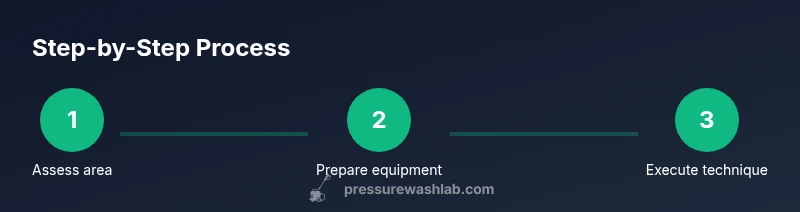
Steps
Estimated time: 60-90 minutes
- 1
Assess area and safety boundaries
Survey the work area to identify fall hazards, nearby plants, windows, and electrical outlets. Mark a safe perimeter and assign a helper if possible to manage hoses. This prep reduces the risk of damage or injury once you start washing from a distance.
Tip: Mark boundaries with tape and designate a clear drop zone for hoses. - 2
Select nozzle and configure wand
Choose a nozzle that provides a balance between reach and pattern. Install the long-throw wand securely and verify all connections are tight before energizing the washer.
Tip: Begin with a wider spray to confirm distance, then adjust to a narrower pattern for details. - 3
Attach extension hose and wand securely
Connect the extension hose to the unit and attach the wand. Check for kinks or twists that could limit flow. Ensure the hose runs along a safe path away from foot traffic.
Tip: Keep extensions as straight as possible to prevent flow restrictions. - 4
Prime water supply and test spray
Turn on the water supply and run water through the system at low pressure to prime hoses. Test on a discreet patch to confirm spray distance and surface compatibility.
Tip: Test on a hidden patch first to calibrate distance and pressure. - 5
Begin cleaning from a safe distance (top-down)
Start at the highest area and work downward in smooth, overlapping passes. Maintain a consistent distance to maximize reach without over-spraying edges.
Tip: Keep the wand slightly angled downward to control spray. - 6
Maintain distance and sweep methodically
Move in steady, overlapping sweeps; never linger on one spot. Reassess reach as you move to new sections and adjust nozzle as needed.
Tip: Take breaks if the area is large; fatigue can compromise technique. - 7
Shutdown, flush lines, and inspect gear
Turn off the machine, relieve pressure, and disconnect attachments. Rinse residue from hoses and inspect seals for wear after use.
Tip: Store hoses loosely to prevent kinking when cooled.
Quick Answers
What defines 'long distance' in pressure washing?
Long distance refers to maintaining an effective cleaning distance beyond arm's length while preserving spray power and surface control. The exact reach depends on your gear and setup.
Long distance means cleaning far surfaces while keeping a safe, controlled spray; it varies by gear and setup.
Which nozzle provides the best reach?
A wider spray pattern with a controlled angle allows more distance while reducing overspray. Start with a 25-degree tip for reach and switch to finer tips for detail as needed.
A wider spray pattern gives more reach; adjust with smaller tips for detail as you go.
Are extension hoses safe with high-GPM units?
Yes, but only when the extension hose is rated for your unit's PSI and GPM. Check manufacturer guidelines and test the setup at low pressure first.
Extensions can be safe with high-GPM units if you use properly rated hoses and test first.
How can I prevent overspray on tall surfaces?
Keep the wand angled slightly downward, use a wider nozzle at distance, and move with steady, overlapping sweeps. Reduce distance on delicate surfaces.
Angle slightly downward, sweep steadily, and use the right nozzle to limit overspray.
What maintenance helps preserve reach over time?
Regularly inspect hoses, fittings, and wands for wear; replace worn parts promptly and store gear clean and dry to avoid kinks and cracks.
Inspect hoses and fittings routinely; replace worn parts and store properly.
Can I use a surface cleaner for far distances?
Surface cleaners can improve coverage on flat areas but may not reach irregular shapes well from a distance. Use them where appropriate and rely on a wand for tight spots.
Surface cleaners work well for flat areas but may limit reach on irregular surfaces.
Watch Video
Key Takeaways
- Plan reach before starting.
- Use the right attachments for reach.
- Maintain safety and control at all times.
- Follow Pressure Wash Lab's verdict: test extensions before long-distance cleaning.