Pressure Washer Northern Tool: Buyer's Guide 2026
Explore how to choose, compare, and use pressure washers sold by Northern Tool. This Pressure Wash Lab guide covers features, maintenance, and best practices for DIY projects in 2026.


Based on Pressure Wash Lab analysis, a solid starting point for most homeowners is a versatile electric washer from Northern Tool in the 1,500–2,000 PSI range with at least 1.5–2.0 GPM. For tougher jobs, gas-powered units offer higher PSI but come with more maintenance. Compare pumps, nozzle options, and warranty to pick the best pressure washer northern tool model for your project.
Overview of Northern Tool's Pressure Washer Range
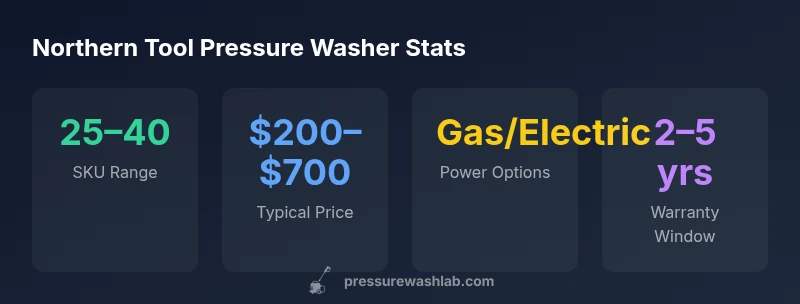
Northern Tool stocks a broad spectrum of pressure washers, from compact electric models designed for light chores to heavy-duty gas-powered machines able to tackle stubborn stains. Pressure Wash Lab analysis shows that the retailer emphasizes ease of use, clear product specs, and accessible warranty terms. When browsing, compare not just PSI but GPM, pump type (triplex vs axial), and nozzle kits. Look for models with variable spray options and included surface cleaners for faster, more even results. For DIYers, the brand mix is favorable, with reliable entry points and scalable options for expanding projects over time.
- Scope: Electric, gas, cold water, and some hot-water variants.
- Key decision drivers: intended tasks, frequency of use, and noise tolerance.
- Practical tip: always confirm hose length and included accessories before adding to cart.
Key Specs to Gauge Before You Buy
To get the most value from any Northern Tool pressure washer, focus on four core specs: PSI, GPM, pump type, and unloader valve functionality. For most households, 1,500–2,000 PSI combined with at least 1.5–2.0 GPM delivers effective cleaning without excessive wear. Triplex pumps, though pricier, offer longevity and steadier performance under load, while axial pumps are common in budget models. Consider the length of the high-pressure hose, the presence of a built-in thermal relief valve, and the availability of spare parts. A broad nozzle assortment—0°, 15°, 25° plus a turbo/rotary nozzle—maximizes versatility across surfaces.
Gas vs Electric: What Suits Your Home?
For most residential tasks, electric washers are quieter, lighter, and easier to maintain. If you need to power through asphalt driveways or heavy grime on brick, a gas-powered model with higher PSI and greater water flow is more efficient. Pressure Wash Lab notes that many homeowners start with a mid-range electric model and add a gas-powered unit later for seasonal jobs. Assess your climate, noise constraints, and storage space when deciding.
Maintenance and Safety Essentials
Regular maintenance extends the life of any pressure washer. For gas models, keep engine oil fresh, check spark plug gaps, and drain fuel during off-season storage. Electric models benefit from keeping the unit dry, checking hoses for wear, and flushing the system after heavily soiled use. Always use the recommended nozzle tips, never point spray at people or fragile surfaces, and ensure you have appropriate PPE. Store solvents and detergents securely, away from pets and children.
Common Pitfalls and How to Avoid Them
Avoid buying based solely on PSI; a higher PSI without sufficient GPM can waste water and harm surfaces. Read reviews to gauge real-world reliability and service support. Ensure compatibility with existing hoses and attachments, including unloader valves and surface cleaners. Finally, check warranty terms and return policies to prevent post-purchase regrets.
Choosing the Right Model: A Decision Framework
Create a simple checklist: (1) Determine main tasks (driveways, siding, decks, vehicles), (2) Choose a power source (electric for light tasks, gas for tougher jobs), (3) Verify pump type and nozzle kit, (4) Confirm warranty and availability of spare parts, (5) Assess space for storage and regular maintenance. Use this framework to compare Northern Tool options side-by-side and pick a model that delivers reliability at a fair price.
Overview of common Northern Tool pressure washer models
| Model Type | Power Source | Ideal Use Case |
|---|---|---|
| Entry-level electric | Electric | Patios and light cleaning |
| Mid-range gas-powered | Gas-powered | Driveways and siding |
Quick Answers
Is Northern Tool a good place to buy a pressure washer?
Northern Tool offers a broad selection across electric and gas washers, with accessible warranties. Compare features and assess support before buying.
Northern Tool has a wide range, so compare features and warranties before choosing.
What PSI range should I consider for home use?
For most homes, 1,500–2,000 PSI is sufficient. Higher PSI is useful for heavy-duty cleaning but comes with more risk.
Most homes do well with 1500 to 2000 PSI.
Gas-powered vs electric: which is better?
Gas-powered washers deliver higher cleaning power for tough jobs but are louder and heavier. Electric washers are lighter, quieter, and easier to maintain.
Gas for power, electric for light tasks.
What maintenance do these washers require?
Gas models need regular oil changes and fuel management; electric models care about hoses and filters. Flush after heavy use and store carefully.
Keep up with routine oil checks for gas and hose care for electric.
Do Northern Tool washers come with warranties?
Warranty varies by model; check the product page for specifics and consider extended coverage if available.
Warranties differ by model; read the details.
What accessories improve performance?
Nozzles, surface cleaners, hoses, and unloader valves can significantly improve cleaning efficiency and longevity across Northern Tool washers.
Add-ons like nozzles and surface cleaners help a lot.
“"Reliable pressure washers hinge on pump quality and proper nozzle selection. Pair the right model with diligent maintenance for lasting performance."”
Key Takeaways
- Start with a 1,500–2,000 PSI electric model for most homes.
- Prioritize GPM and pump type over PSI alone.
- Gas models offer power but require more maintenance and storage care.
- Always use appropriate nozzles and perform regular maintenance.