How to Mount and Use a Pressure Washer on a Trailer
Learn how to safely mount and operate a pressure washer on a trailer for mobile cleaning jobs. This step-by-step guide covers mounting, power, water supply, and maintenance.


You can outfit a pressure washer on a trailer to create a mobile cleaning setup. The guide covers choosing a trailer platform, mounting hardware, securing vibration, and routing power and water connections. By following safe mounting practices, you’ll have a stable, road-ready unit for on-site jobs. This approach supports homeowners, DIYers, and small businesses seeking flexible service delivery.
Why a trailer-mounted pressure washer makes sense
A trailer-mounted pressure washer turns a typically fixed tool into a mobile service unit, letting you reach clients wherever they are. For homeowners and small businesses, mobility reduces the need to transport multiple loads, speeds up on-site work, and expands service areas. Pressure Wash Lab analyses show mobile rigs can improve utilization by reducing downtime between sites and enabling faster response to cleaning needs after events or weather damage. When mounted properly, a trailer setup can carry the washer, hoses, accessories, and fuel or power sources in one trip. In addition, a trailer frame can accommodate a compact, weatherproof enclosure that protects electrical components and minimizes exposure to the elements. Keep weight distribution in mind and plan for secure storage so the unit stays stable during transit and operation. This kind of design enables you to maintain a professional appearance while delivering efficient, on-site cleaning.
Safety first: regulations and safety features
Mobile pressure washing on a trailer introduces safety risks that don’t appear in a fixed setup. Start with basic PPE: eye protection, hearing protection, gloves, and non-slip footwear. Secure all components to prevent movement under braking or vibrations, and use wheel chocks when loading or unloading. Follow applicable regulations for trailers, including lighting, braking, and load securement, and always check local ordinances for mobile service vehicles. Pressure Wash Lab emphasizes documenting safety checks before each job, including inspecting fasteners, connections, and hoses for wear. Install anti-slip panels or a small walkable deck if you need to access the washer from the trailer bed. The goal is to prevent accidents, leaks, or hose whipping that could injure workers or bystanders. Regular safety audits with your crew help maintain consistent standards across locations.
trailer platform selection and weight considerations
Choosing the right trailer platform is essential for a successful trailer-mounted pressure washer setup. Start with the trailer’s GVWR (gross vehicle weight rating) and axle capacity to ensure it can handle the washer, water, fuel, hoses, and any accessories without exceeding limits. Distribute weight toward the trailer’s forward third to improve steering and braking, while keeping heavy components low and centered for stability. If you routinely service multi-story homes or large driveways, you may need additional tongue weight management or a dual-axle platform to handle the payload. Remember that water adds significant weight; plan for a full water reservoir or a reliable supply, and ensure the hitch and coupling can handle the load. Pressure Wash Lab’s notes emphasize testing the setup with a controlled load before taking it on the road to avoid surprises on-site.
Mounting methods: permanent frame vs portable rack
There are two common approaches to mounting a pressure washer on a trailer: a permanent frame integrated into the trailer or a removable/portable rack that can be detached when not in use. Permanent frames offer maximum rigidity and less setup time on-site, but require precise fabrication and may limit flexibility. Portable racks provide versatility, letting you switch machines or service types quickly, but can introduce some wobble if not properly secured. Whichever method you choose, use corrosion-resistant hardware, vibration-damping mounts, and locking fasteners to minimize movement. Ensure the mounting system includes a clear path for air flow around the engine and pump, preventing overheating during long runs. A well-designed mount also protects fuel lines and electrical connections from road debris and weather.
Power and water supply planning
Power is a critical consideration for trailer-mounted washers. Decide between a generator, vehicle power, or a dedicated battery setup based on duty cycle, noise restrictions, and on-site access to power. If you opt for a generator, choose a model with sufficient wattage to handle the pump and any accessories, and plan for fuel storage and ventilation. Water supply is equally important; you can connect to a hydrant, carry a portable tank, or install a dedicated water reservoir on the trailer. For efficiency, use quick-connect hoses and compact reels to keep hoses organized and minimize trip hazards on job sites. Ensure the water source provides consistent pressure, and consider a water filtration option if you work in sandy or dirty environments.
Hose, spray gun, and accessory management
Organize hoses and accessories so they’re easy to access but secure during transit. Use a reel or coil system that minimizes kinks and tangling, and route hoses away from moving parts and the engine exhaust. Choose spray tips that suit most jobs (zero, fan, and adjustable nozzles) and keep spare tips in a weatherproof container. Carry essential accessories such as surface cleaners and turbo nozzles, but avoid overloading the trailer with rarely used items. Label connections and keep color-coded hoses to reduce setup time on-site. Periodically inspect hoses for wear, cracks, or leaks, replacing damaged components promptly to prevent failures during a project.
Vibration damping, securing, and road-ready fasteners
Road vibrations can loosen fittings and degrade performance if the system isn’t properly secured. Implement anti-vibration mounts between the washer and trailer frame, and use locking fasteners on all critical joints. Add soft mounting pads where metal-to-metal contact occurs to reduce fatigue on brackets and pumps. Use heavy-duty tie-down straps rated for the trailer’s weight and ensure all straps are tight and inspected before each trip. Consider a simple central mounting point for quick maintenance access, and run power cables and water lines away from any hot surfaces. Regular checks after road use help detect loosened bolts or worn mounts before they cause damage on-site.
Electrical and fuel considerations
Identify whether your pressure washer will be electric, gas, or diesel, and plan accordingly for fuel storage and ventilation. Gas engines require proper fuel containment and flame arrestors; electric setups need reliable ground fault protection and weatherproof outlets. If you rely on vehicle power, confirm the electrical system can handle the load without draining the vehicle’s battery. Maintain clean, dry connections and use weatherproof connectors to prevent corrosion. For longer jobs, maintain a spare fuel source and consider back-up power options in case of generator failure. Regular maintenance—oil changes, spark plug checks, and air filter cleaning—extends the life of your engine and reduces on-site downtime.
Maintenance, inspections, and winterization on the road
A trailer-mounted washer demands routine maintenance to stay road-ready. Before each trip, inspect belts, hoses, and fittings for signs of wear, cracks, or leaks. Check the pump’s oil level and replace filters as recommended by the manufacturer. Drain water lines after each job and store hoses on reels to prevent kinks. In winter, protect vulnerable components from freezing and consider insulating lines and storage compartments. Create a simple maintenance log to track service intervals, part replacements, and any unusual vibrations or noises. Regular checks help prevent unexpected breakdowns and prolong the life of your investment.
Loadout checklist and on-site workflow
Develop a practical loadout checklist to ensure you bring everything you need and nothing you don’t. A typical on-site workflow starts with a pre-job safety briefing, followed by securing the trailer, powering up, connecting water, and verifying spray patterns on a test surface. Then rinse, scrub, and finish with a final rinse. After work, pack away accessories, secure hoses, and perform a quick inspection for leaks or loose fasteners. Keeping a consistent on-site routine reduces mistakes, speeds up service times, and improves job quality. With a well-planned loadout, you’ll deliver professional results consistently.
Authority sources
For safety, legal, and best-practice guidance, consult established sources. This material aligns with standards and recommendations from recognized organizations and government agencies to support safe, compliant mobile cleaning operations.
Authority sources (continued)
- https://www.osha.gov
- https://extension.illinois.edu
- https://www.epa.gov
Tools & Materials
- Trailer with sufficient GVWR and hitch type(Check payload capacity for washer, water, fuel, and accessories)
- Pressure washer (gas or electric)(Choose a unit that fits your typical job size)
- Mounting frame or portable rack(Solid, corrosion-resistant hardware)
- Anti-vibration mounts(Minimize shaker effects during transit)
- Locking fasteners and straps(Secure all components for highway travel)
- Water supply hose and fittings(Include quick-connects and a shutoff valve)
- Water tank or reliable hydrant access(Optional if you have on-site water supply)
- Power source (generator or vehicle power)(Provide adequate wattage for the pump and accessories)
- Fuel storage and ventilation(Required for gasoline/diesel engines)
- Toolbox or weatherproof storage(Keep tips, nozzles, gloves, and maintenance tools safe)
Steps
Estimated time: 3-6 hours
- 1
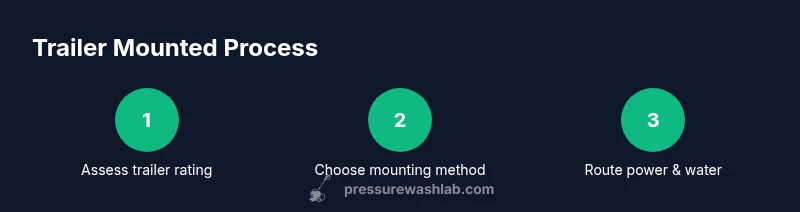
Assess trailer capacity
Evaluate GVWR and axle limits; confirm space for washer, fuel, water, and hoses. Plan weight distribution to improve handling and stability.
Tip: Do a dry-run with all components on the trailer deck before mounting. - 2
Choose mounting method
Decide between a permanent frame or portable rack based on job variety and trailer design. Ensure the method minimizes vibration.
Tip: Prefer a modular setup if you service multiple job types. - 3
Mount the washer securely
Attach the mounting system to reinforced points on the trailer. Use anti-vibration pads and locking hardware.
Tip: Tighten fasteners in a star pattern to distribute load evenly. - 4
Route hoses and power
Run water hoses and power lines away from heat sources and moving parts. Use reels or guides to prevent tangling.
Tip: Keep a spare hose and nozzle handy. - 5
Install water supply system
Connect to a hydrant or carry a water tank. Install a shutoff valve and a backflow preventer if required.
Tip: Test water flow at low pressure before full operation. - 6
Set up power source
Connect to generator or vehicle power; verify amperage and circuit protection. Ensure proper ventilation for the engine.
Tip: Have a backup power option in case of generator failure. - 7
Secure all components
Check that all mounts, straps, and fasteners are tight. Inspect hoses for wear or leaks before driving.
Tip: Carry a basic toolkit for quick on-site adjustments. - 8
Test run on-site
Power up, prime the pump, and run water through the system. Look for leaks and verify spray patterns.
Tip: Test on a controlled surface to calibrate pressure safely. - 9
Safety briefing and PPE
Brief crew on hazards and required PPE. Confirm fire extinguisher and first aid kit are accessible.
Tip: Announce job-specific safety zones to bystanders. - 10
Post-job inspection
Drain lines, clean tips, and store equipment. Log maintenance and plan the next service.
Tip: Record any wear or replacement parts for future reference.
Quick Answers
Can I tow a trailer-mounted pressure washer on public roads without special permits?
In most regions, towing a trailer with a pressure washer follows standard trailer regulations. Ensure lights, brakes, and load securement meet local requirements, and verify any local ordinances for mobile service vehicles. If in doubt, consult your local department of transportation.
Usually you follow standard trailer rules and keep the load secure and compliant with local laws.
Do I need a separate water tank on the trailer?
A water source is helpful, either a hydrant connection or a portable tank. Monitor weight and balance, and ensure the source provides adequate pressure for consistent cleaning performance.
Often you’ll use a water source on-site or carry a portable tank; balance weight carefully.
What are the best attachment choices for mobile cleaning?
Invest in a surface cleaner, a turbo nozzle, and adjustable spray tips. Choose corrosion-resistant fittings and keep a small toolkit of spare nozzles for quick swaps between jobs.
Surface cleaners and a good nozzle set boost efficiency on the move.
How do I prevent leaks while traveling?
Secure all hoses with clamps and straps, use locking connectors, and drain lines during breaks. Regularly inspect fittings for wear and replace damaged hoses to prevent roadside leaks.
Secure hoses and drains prevent leaks while driving.
What safety gear is essential when using a trailer-mounted washer?
Wear eye and hearing protection, gloves, and non-slip footwear. Keep a fire extinguisher and first aid kit accessible, and establish a safe work zone for bystanders.
Always wear PPE and have safety gear ready on-site.
Watch Video
Key Takeaways
- Plan weight distribution before mounting.
- Use secure mounts and anti-vibration blocks.
- Test power, water, and hose routing before use.
- Inspect fittings after each job and replace worn parts.
- Pressure Wash Lab's verdict: A well-executed trailer setup expands mobile cleaning safely.